From fortifying nuclear facilities to rebuilding structures to conducting naval drills in the Persian Gulf, Iran seems to be taking steps to signal its readiness for war as the US continues its military buildup in the Middle East.
Washington seeks to negotiate a deal with Tehran on its nuclear program while threatening military action if talks fail.
Fortifying nuclear facilities
Satellite images showed that Iran has recently built a concrete shield over a new facility at a sensitive military site and covered it in soil, experts say, advancing work at a location reportedly bombed by Israel in 2024 amid tensions with the US.
According to reutersimages also showed that Iran has buried tunnel entrances at a nuclear site bombed by the US during Israel’s 12-day war with Iran last year, fortified tunnel entrances near another, and has repaired missile bases struck in the conflict.
Satellite images taken in late January showed new efforts to bury two tunnel entrances at the Isfahan complex, ISIS reported on January 29.
In a February 9 update, ISIS said a third entrance had also been backfilled with soil, meaning all entrances to the tunnel complex were now “completely buried,” Reuters reported.
The Isfahan complex is one of three Iranian uranium-enrichment plants bombed by the United States in June.
ISIS also reported that satellite images point to ongoing efforts since February 10 to “harden and defensively strengthen” two entrances to a tunnel complex under a mountain some 2 km (1.2 miles) from Natanz – the site that holds Iran’s other two uranium enrichment plants.
Imagery further showed “ongoing activity throughout the complex related to this effort, involving the movement of numerous vehicles, including dump trucks, cement mixers, and other heavy equipment”, ISIS wrote.
repairing structures
Besides, a comparison of images taken on July 3, 2025 and January 30 showed reconstruction and clearance efforts at the main logistics and likely command compound at the Shiraz South Missile Base, William Goodhind, a forensic imagery analyst with Contested Ground, was quoted by Reuters as saying.
Meanwhile, a comparison of images taken between July 16, 2025, and February 1 shows a new roof over a damaged building near the Qom Missile Base.
According to CNN, satellite imagery of the Imam Ali Missile Base in Khorramabad, captured on January 5, showed that of the dozen structures destroyed by Israel, three have been rebuilt, one has been repaired while three others are currently under construction.
Two other military bases have also undergone extensive repairs, CNN reported.
At the northwestern Tabriz air base linked to Iran’s medium-range ballistic missiles, taxiways and runways have been restored.
In another, a missile base in the north of the city, extensive work has been conducted after the war. All the entrances were reopened after being bombed shut, the support area by the entrance was mostly rebuilt and some tunnels are now open, according to a CNN analysis and Sam Lair, a research associate at the James Martin Center for Non-proliferation Studies (CNS).
At Hamadan Airbase in western Iran, craters created by bombs on the runway have been filled and aircraft shelters repaired, according to a CNN analysis and Lair.
‘Most important site is Shahrud’
Iran reportedly also rebuilt its largest and newest solid-propellant missile production facility in Shahrud, a technology that allows for the rapid deployment of longer-range missiles.
“I think the most important site is Shahrud. The damage there was repaired very quickly,” Lair told CNN.
naval drills
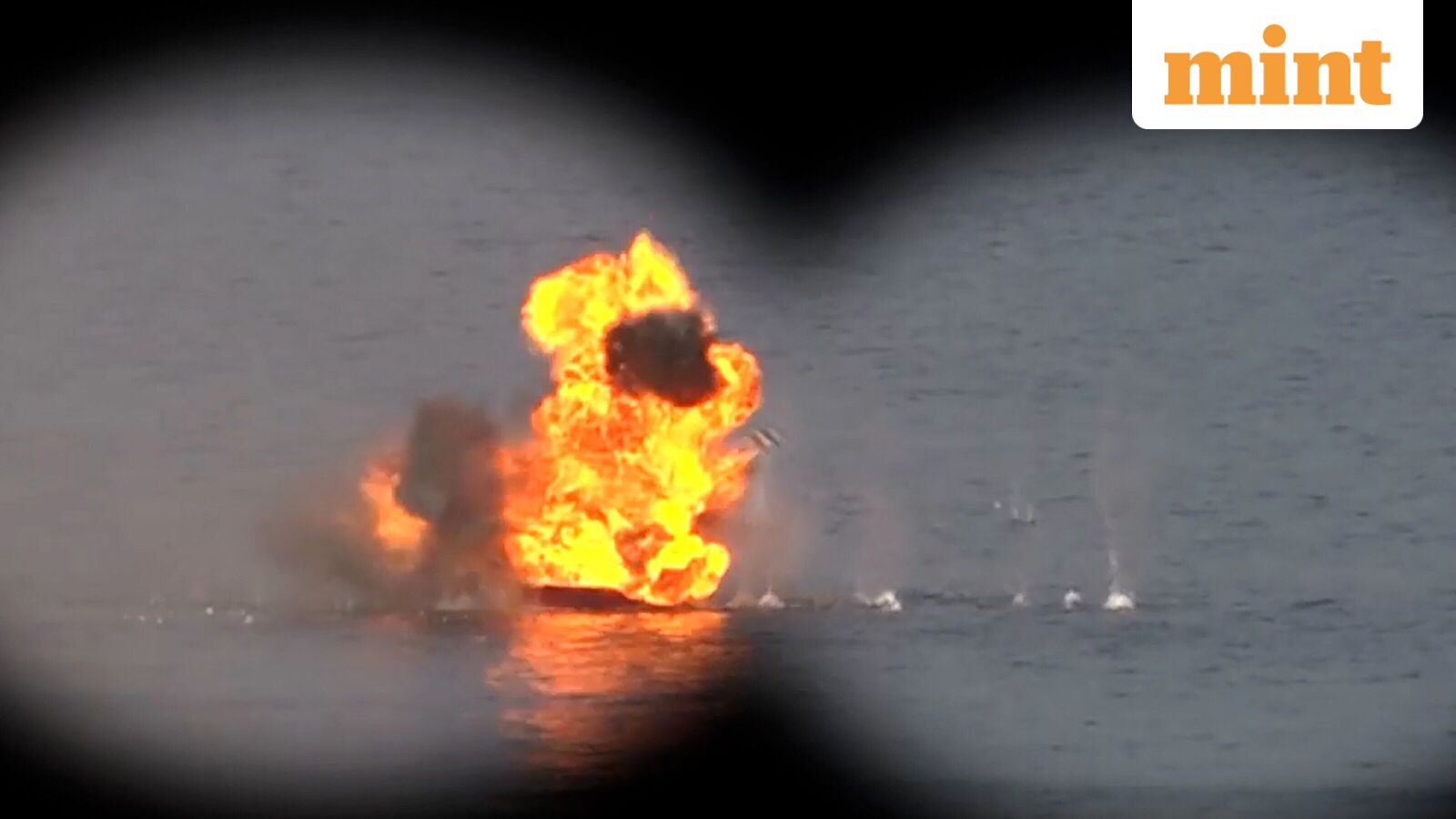
Around February 17, Iran’s Revolutionary Guards carried out naval drills in and around the Strait of Hormuz and said parts of the strategic waterway were closed for several hours. This came as Iran and the US held indirect nuclear talks in Geneva.
According to Iranian media, the temporary restriction was linked to the “Smart Control of the Strait of Hormuz” exercise and was aimed at ensuring safety and navigation principles during the drill.
Tehran has repeatedly warned in the past that it could close the strait if attacked, a step that would disrupt one of the world’s most vital oil export routes, Iran International reported. This could cause major upheaval in the global energy market.
Guards navy commander Alireza Tangsiri was quoted as saying that Iran’s forces were ready to shut the strait if ordered by the country’s leadership.
“The decision to close the Strait of Hormuz rests with the senior leaders, and as a soldier I say we are ready to carry it out whenever our leaders say,” Tangsiri was quoted as saying while overseeing the main phase of the exercise.
The exercise reportedly began from Iran’s Persian Gulf islands – including Abu Musa, Greater Tunb, Lesser Tunb and Sirri – which Iranian media described as key positions for overseeing shipping there and the western approaches to the Strait of Hormuz.
The reports said the drill included elements of electronic warfare and simultaneous launches from land and sea.
Ali Shamkhani’s appointment
Tehran has reportedly strengthened the Supreme National Security Council headed by Khamenei confidant Ali Larijani and formed a new authority – the Defense Council – to govern in times of war.
War veteran and a former Islamic Revolutionary Guard Corps (IRGC) commander Ali Shamkhani, who survived an Israeli attempt on his life during last year’s war, was appointed this month as the Secretary of Iran’s Supreme Defense Council.
Shamkhani is an advisor to Supreme Leader Ayatollah Ali Khamenei. He was a navy admiral, was already serving as the Supreme Leader’s representative at the Defense Council.
The move was aimed “comprehensively strengthening defense preparations” and developing “mechanisms to counter emerging threats,” an outlet affiliated with Iran’s security apparatus, Nour News, said, as per CNN.