
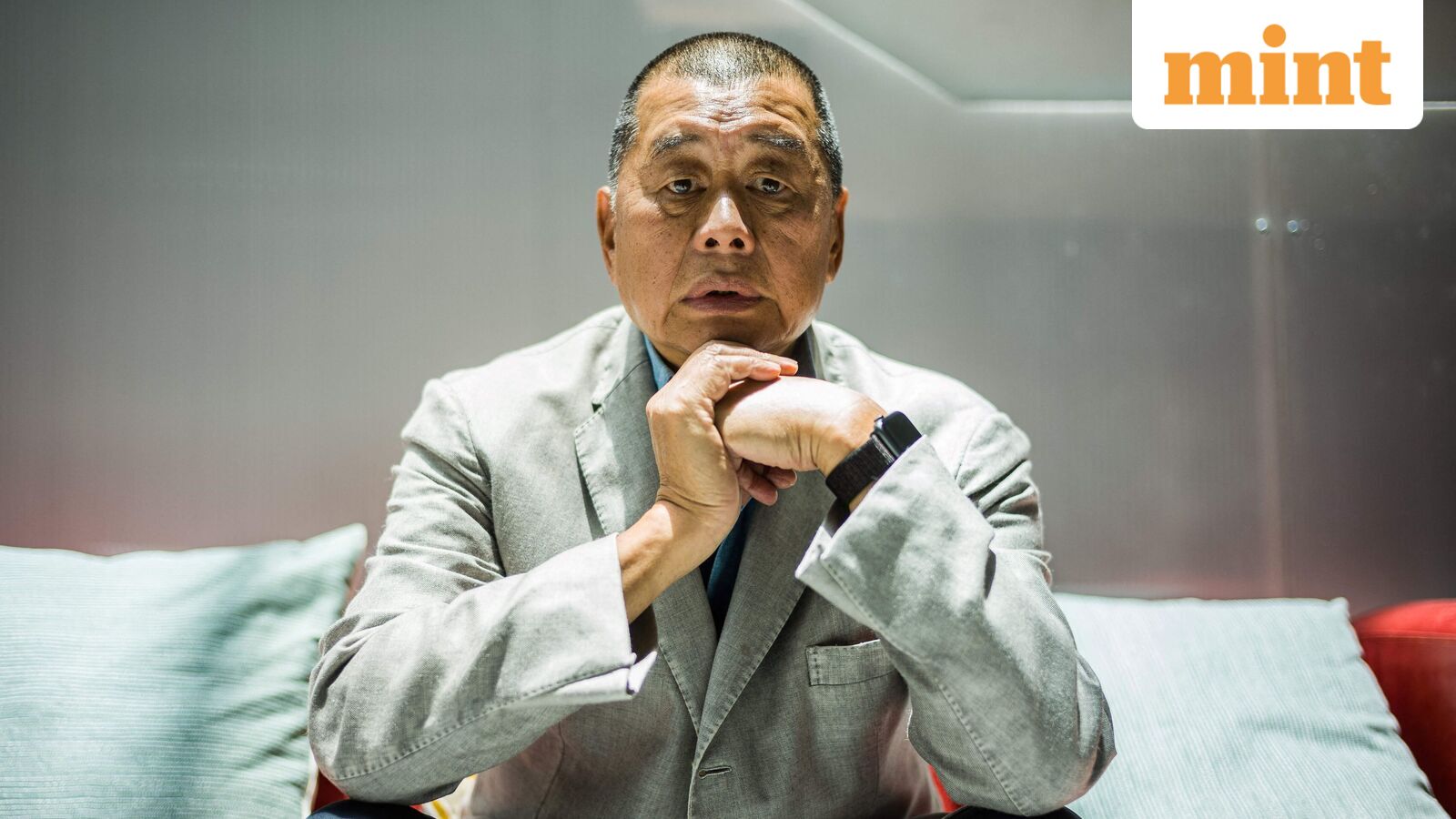
Hong Kong’s former media mogul Jimmy Lai will be sentenced on Monday by a court in a landmark national security case following his December conviction.
Lai, the pro-democracy founder of the now-defunct Apple Daily newspaper, could face up to life in prison in the case against him under a Beijing-imposed national security law.
He was convicted of collusion and sedition charges, with the case receiving criticism from some foreign and Western governments.
The judiciary said on Friday on its website that it’s calling for the sentencing session at 10 AM on Monday, 9 February. It has set aside an hour for the proceedings.
Jimmy Lai, 78, also faces a charge of conspiracy to publish seditious material. He has pleaded not guilty to all the charges.
What are the allegations against Jimmy Lai?
Former media tycoon Jimmy Lai was found guilty of using Apple Daily as a platform to conspire with six former executives and others to produce seditious publications between April 2019 and June 2021.
Among the allegations, he was also found guilty of colluding with foreign forces, including the US, between July 2020 and June 2021.
Lai has been accused of conspiring with activist Andy Li, paralegal Chan Tsz-wah and others to trigger foreign countries to impose sanctions, blockades and more hostile activities against China and Hong Kong.
Jimmy Lai, alongside other co-defendants — six former Apple Daily journalists and two activists — are expected to return to court on Monday to hear about the decision that will shape their future.
The former media tycoon was an outspoken critic of China’s ruling Communist Party and was arrested in 2020 under the national security law that Beijing deemed necessary for the city’s stability following anti-government protests the previous year.
How did foreign countries react?
After the December verdict, several foreign governments, including the UK and the US, criticized the judgment, calling it politically motivated.
British Prime Minister Keir Starmer said he had a “respectful discussion” with Chinese President Xi Jinping about Lai during a recent trip to Beijing, though he declined to provide details.
US President Donald Trump, who had raised Lai’s case with China, said he felt “so bad.”
However, the Chinese government has defended the decision, saying that he was given a fair trial.
Chief Justice Andrew Cheung, Hong Kong’s top judge, has recently said that calls to free Lai prematurely would undermine the city’s rule of law.

