
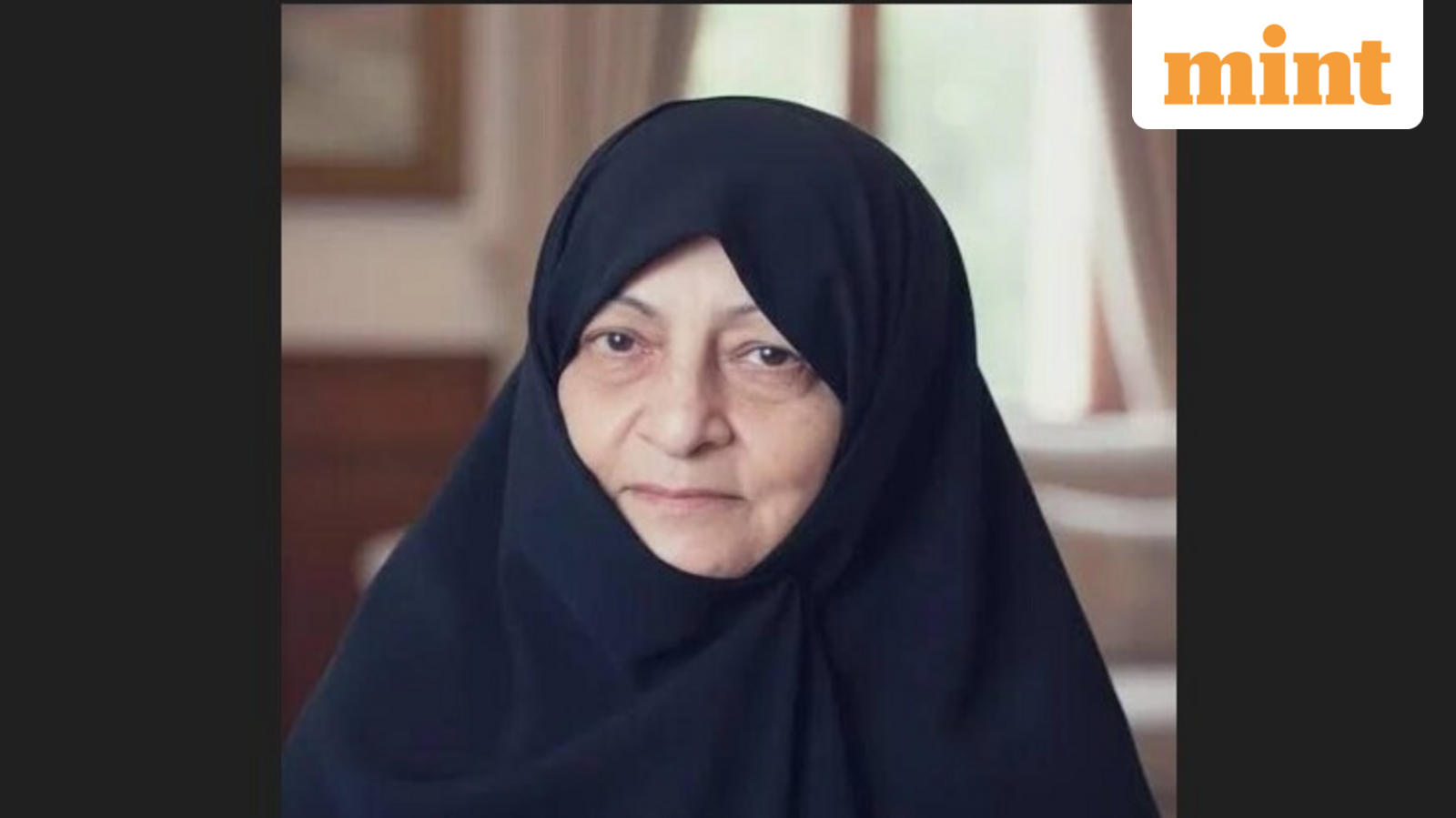
The wife of Iran’s late Supreme Leader, Ayatollah Ali Khamenei, has died after succumbing to injuries she suffered in the recent US‑Israeli strikes, as reported by Iranian media.
Mansoureh Khojasteh Bagherzadeh, 79, had been in a coma since strikes on Saturday killed Khamenei, the Tasnim news agency said, as reported by AFP.
Who was Mansoureh Khojasteh Bagherzadeh?
She was born in 1947 in Mashhad, Iran, into a religious family with a business background. Her father, Mohammad Esmaeil Khojasteh Bagherzadeh, was a well-known merchant in the city. In 1964, at the age of 17, she married Ali Khamenei, and the couple went on to have six children, four sons and two daughters, including Mojtaba Khamenei.
Throughout her husband’s political career, first as President of Iran from 1981 to 1989 and later as Supreme Leader, she largely stayed out of the public spotlight and maintained a very private life.
Khamenei positioned Iran as a firm opponent of Israel and a resolute barrier to US efforts to exert influence in the Middle East. His longstanding distrust and resentment toward the United States, rooted in Washington’s past interference in Iranian affairs and its support of a monarchy that once imprisoned him, shaped Iranian political life throughout his leadership. He frequently described Israel as a “cancerous tumor” in the region and called for its destruction.
Iran-Israel-US conflict
Iran and Iranian-backed militias launched missiles at Israel and several Arab nations, reportedly striking the US Embassy compound in Kuwait, while Israel and the United States carried out strikes on Iranian targets, AP reported.
The conflict escalated Monday, accompanied by defiant statements and rising casualties.
Amid the chaos, the US military reported that Kuwait “accidentally shot down” three American F-15E Strike Eagle jets during a combat operation.
The Iranian Red Crescent Society reported at least 555 deaths in Iran from the US-Israeli campaign, with more than 130 cities affected. In Israel, 11 people have been killed, and in Lebanon, authorities reported 31 fatalities.
Tensions in West Asia
The current conflict is already far more severe than last year’s Israel–Iran confrontation, in which the US became involved near the end by striking Iranian nuclear sites, and Iran responded with a targeted attack on a US base in Qatar.
This time, hundreds of Iranian missile and drone strikes have forced people to seek safety across Gulf nations that had previously experienced relative stability.
The United Arab Emirates reported disruptions at Dubai’s main airport, with residents and tourists reacting to the sounds of interceptors. Saudi Arabia said it had intercepted attacks and summoned Iran’s ambassador. Top diplomats from six Gulf states emphasized their “right to self-defense.”
Oil prices surged sharply on Sunday as traders anticipated potential disruptions in supply from the strategically vital region. Attacks on or near the Strait of Hormuz, a key global oil chokepoint, have further heightened concerns about energy supply.
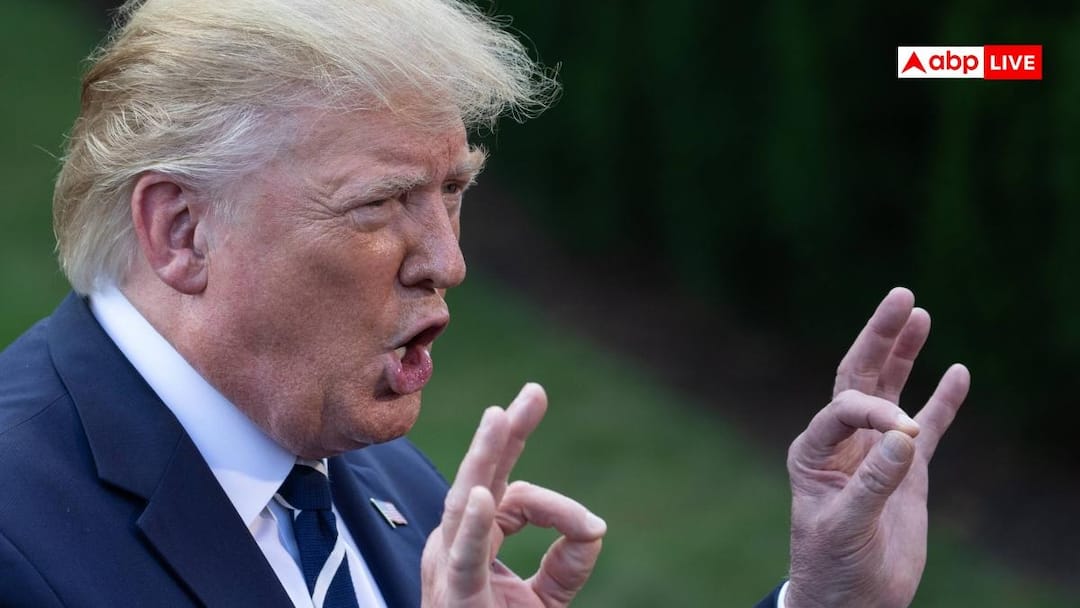
US President Donald Trump and Israeli Prime Minister Benjamin Netanyahu have both called on the people of Iran to rise up and overthrow the government in Tehran — a long‑standing adversary of Israel and the United States since the 1979 Islamic Revolution ousted the pro‑Western shah.
(With inputs from agencies)