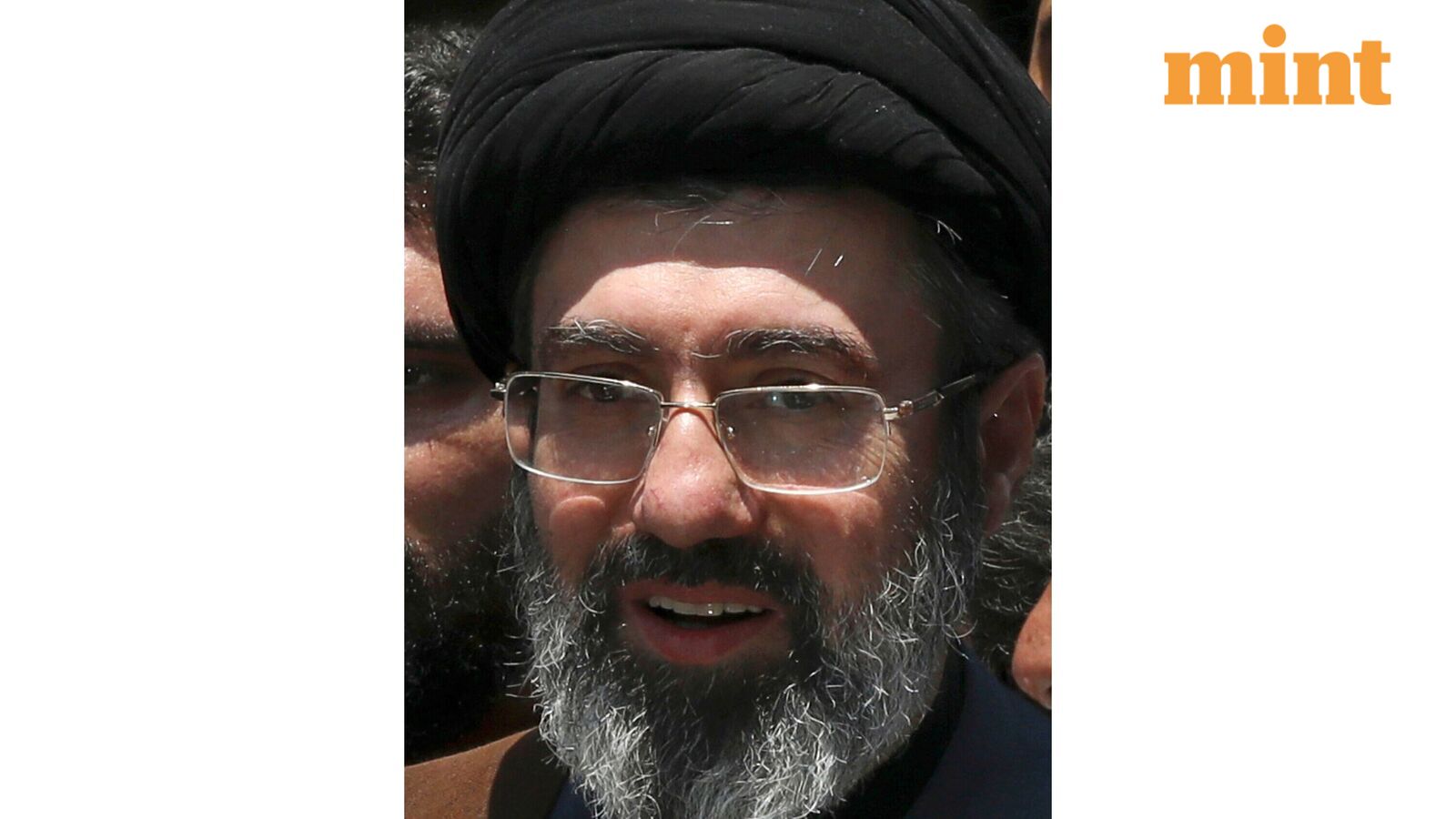
Iran’s powerful Assembly of Experts has elected Mojtaba Khamenei, the son of the slain supreme leader Ali Khamenei, as the country’s next Supreme Leader, according to informed sources cited by Iran International and the New York Times. The reported decision follows days of military escalation and internal deliberation after Ali Khamenei was killed in United States–Israeli strikes on Saturday.
The elevation of Mojtaba Khamenei, a cleric long regarded as influential yet publicly reclusive, signals an attempt by Iran’s ruling establishment to preserve continuity amid war with the US and Israel. It also marks only the second time in the republic’s 47-year history that the Assembly of Experts has selected a Supreme Leader.
Revolutionary Guards’ Backing and Closed-Door Deliberations
The Assembly of Experts — the 88-member clerical body constitutionally empowered to appoint, supervise and, if necessary, dismiss the Supreme Leader — convened two virtual meetings on Tuesday, one in the morning and another in the evening, according to three Iranian officials familiar with the discussions cited by the New York Times.
Those officials said the clerics were weighing whether to announce Mojtaba Khamenei’s appointment as early as Wednesday morning. Some members reportedly expressed concern that a swift declaration might expose him to targeting by the United States or Israel.
The Islamic Revolutionary Guards Corps, commonly referred to as the Revolutionary Guards, is said to have pressed strongly for Mojtaba’s elevation. According to the officials, the Guards argued that he possessed the necessary credentials and political alignment to steer Iran during what they characterized as an existential moment.
Israel struck a building in Qum — one of Shiite Islam’s principal centers of religious authority — where the assembly had been scheduled to meet in person. The building was reportedly empty at the time of the strike, according to Fars News Agency, which is affiliated with the Revolutionary Guards.
A Shadowed Figure Steps Forward
At 56, Mojtaba Khamenei has for years operated within the inner sanctum of Iran’s clerical and security apparatus. Though rarely seen in public, he has been widely viewed as wielding considerable influence behind the scenes, particularly through his close ties to the Revolutionary Guards.
His ascension follows the death not only of his father but also of immediate family members. The Iranian government stated that his wife, Zahra Adel; his mother, Mansoureh Khojasteh Bagherzadeh; and a son were killed alongside Ali Khamenei in Saturday’s strikes.
The decision to elevate him consolidates power within a lineage directly tied to the Islamic Republic’s second Supreme Leader and raises questions about dynastic succession in a system formally grounded in clerical legitimacy rather than hereditary transfer.
Alternative Candidates and the Reformist Undercurrent
Other figures reportedly considered during the deliberations included Alireza Arafi, a cleric and jurist serving on the three-member transitional leadership council formed after Ali Khamenei’s death, and Seyed Hassan Khomeini, the grandson of the Islamic Revolution’s founder, Ayatollah Ruhollah Khomeini.
Both were widely regarded as more moderate alternatives. Seyed Hassan Khomeini in particular has been associated with Iran’s sidelined reformist political current, a faction that has long struggled for influence within the Islamic Republic’s tightly controlled political system.
Their consideration suggests that, even amid external military pressure, internal debates persisted over the ideological direction of the state.
Washington DC’s Response and Regional Stakes
Speaking earlier on Tuesday at a news conference in Washington, President Trump indicated that many individuals previously viewed by his administration as potential Iranian successors had been killed in the recent strikes. “Pretty soon we’re not going to know anybody,” he said.
Asked about a worst-case scenario in Iran, he remarked: “I guess the worst case would be we do this and somebody takes over who’s as bad as the previous person. Right, that could happen. We don’t want that to happen.”
The remarks underlined the uncertainty surrounding Iran’s leadership transition and the broader regional implications. The United States and Israel have framed their strikes as efforts to weaken Iran’s strategic capabilities, yet the rapid consolidation of authority under a figure closely aligned with the Revolutionary Guards could harden Tehran’s posture rather than soften it.
Historical Precedent: Only the Second Selection
The Assembly of Experts last exercised its decisive authority in 1989, when it selected Ali Khamenei as Supreme Leader following the death of Ayatollah Ruhollah Khomeini. At that time, the clerical establishment effectively shaped a newly entrenched theocratic order. Over more than four decades, Ali Khamenei consolidated power across Iran’s political, military and judicial institutions, governing with near-absolute authority.