
Nepal votes on 5 March to elect a new government. The voting will be the first election in the country since deadly youth-led anti-corruption protests toppled the government of then-Prime Minister KP Sharma Oli in September 2025.
The ‘Gen Z’ protests last year killed 77 people and injured more than 2,000. The Himalayan nation has since been governed by an interim government led by former chief justice Sushila Karki, which promised to hold fresh elections and hand over power within six months.
Of the total of 275 House of Representatives (HoR) seats, 40 per cent, or 110 members, are elected through a proportional voting system. Elections are conducted for 165 seats under the First Past the Post (FPTP) or direct voting system.
As many as 65 political parties are in the fray for the 5 March polls.
Here is all you need to know about Nepal’s Elections:
Nearly 19 million of Nepal’s 30 million people are eligible to vote in the March 5 election for the 275-member assembly. There are about 800,000 first-time voters in Nepal.
The voters will elect 275 members of parliament through a mixture of first-past-the-post voting and proportional representation.
More than 3,400 candidates are in the fray. These include more than 1,000 people under 40, according to a BBC report.
Voting will start at 07:00 local time and continue until 17:00 local time.
Polling booths, however, will remain open beyond 5 PM in some parts of the country to allow all those who wish to vote to cast their ballots.
Why two types of ballot?
Nepal has a mixed electoral system introduced in its 2015 constitution.
The first system is known as First Past The Post (FPTP), meaning whoever wins the most votes wins the seat. The second is known as Proportional Representation (PR), which takes into account the proportion of votes cast for a political party.
As many as 165 seats will be filled under the FPTP system, while the remaining 110 will be elected under PR.
The idea of having both systems was to ensure inclusion and proportional representation across society. Basically, the system makes it difficult for one party to win outright. So whoever comes top in the election will likely have to run a coalition government in the Himalayan nation.
What are the main issues of the Nepal Election?
Corruption remains the main issue, Reuters said. Other than this, job creation is also among the main issues, according to analysts in the country, where about a fifth of the population lives in poverty amid high unemployment numbers.
Ties with India and China, which border Nepal and are among its major trade partners, will also be a factor in the election as the landlocked nation negotiates a balance between the Asian powers.
While India accounts for two-thirds of Nepal’s international trade, China accounts for 14% and has also lent the country, among the world’s poorest, more than $130 million, according to the World Bank.
Who are the main players?
For decades, Nepal’s political landscape has been dominated by veteran leaders — many of them former Maoist insurgents — who have taken turns in power since the end of the 10-year civil war in 2006.
KP Sharma Oli, 73, was ousted as prime minister by the uprising but retained enough support to be reelected leader of the Communist Party of India. Nepal-UML (Unified Marxist Leninist).
Another former prime minister, Pushpa Kamal Dahal, 71, heads the Nepal Communist Party, which has roped in several other communist factions since the protests.
Nepali Congress, the country’s oldest party and a member of the former Oli coalition government, elected 49-year-old Gagan Thapa as its new leader in January — sidelining its veteran chief, five-time prime minister Sher Bahadur Deuba, 79.
Gyanendra, 78, the king until he was deposed in 2008 — ending 240 years of monarchy — still resides in Kathmandu and retains pockets of support from the Rastriya Prajatantra Party (RPP), which benefits from nostalgia and public frustration at mainstream politics.
High-profile contenders
Television host Rabi Lamichhane, 50, leads the Rastriya Swatantra Party (RSP), which stunned observers in 2022 by becoming parliament’s fourth-largest force.
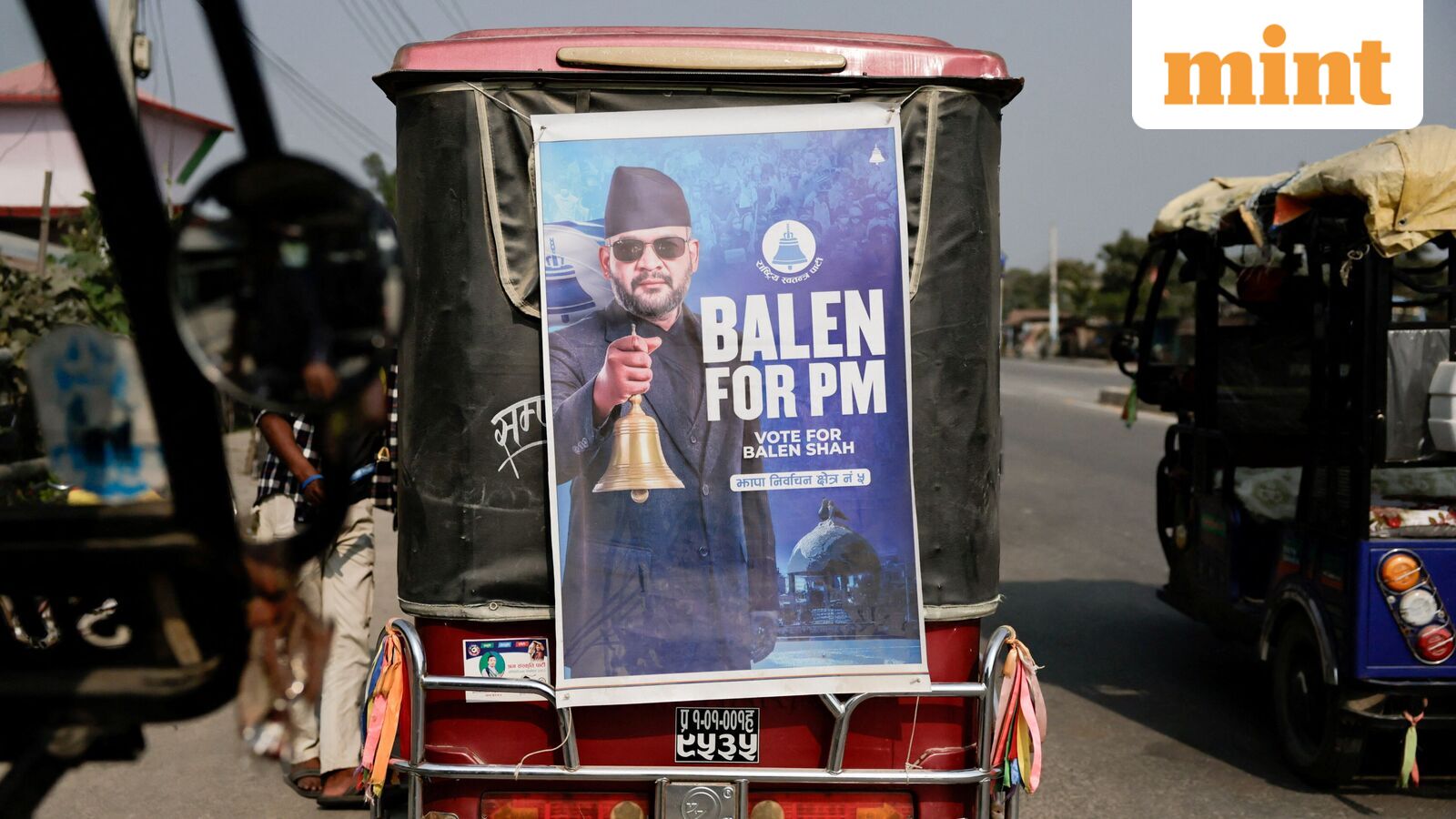
A former deputy prime minister and home minister, Lamichhane has formed an alliance with former Kathmandu mayor Balendra “Balen” Shah, 35, a rapper and civil engineer with a considerable online following.
Shah is the alliance’s candidate for prime minister and is mounting a direct challenge against Oli in his constituency.
Another high-profile contender is Kulman Ghising, the former interim energy minister credited with tackling chronic power outages during his tenure at the Nepal Electricity Authority.
When will the results be announced?
The results of the 165 directly-elected seats are expected to be released within 24 hours of ballot boxes being collected from across the country, the Election Commission of Nepal promised.
Officiating Chief Election Commissioner Ram Prasad Bhandari told local reporters that tallying the results of the proportional representation vote, which determines winners in 110 seats, could take another 2 to 3 days.
However, in Nepal’s 2022 election, it took more than two weeks for the final results to be released.
Why were the elections necessitated?
The general elections were necessitated after KP Sharma Oli resigned as prime minister on 9 September last year, following violent protests by the youth-led Gen Z group against his government over corruption and a ban on social media.
The government of KP Sharma Oli abruptly banned 26 social media platforms (including Facebook, YouTube, and TikTok), citing regulatory non-compliance. The youth viewed this as a blatant attempt to silence dissent and expose government corruption, which had been trending online under hashtags like #NepoBaby.
In the following days, tens of thousands of young protesters—many in school and college uniforms—marched on the Federal Parliament. The march turned violent after the Prime Minister dismissed it as a “staged drama”. and the police response led to dozens of deaths.
Oli resigned as prime minister on 9 September. Former chief justice Sushila Karki, 73, was appointed interim prime minister to lead the Himalayan republic of 30 million people to elections.
Why do Nepal Elections matter for India?
Elections in Nepal are considered most consequential for India-Nepal relations in decades. Because of the shared 1,751-km open border and deep cultural ties, any tremor in Kathmandu is felt in New Delhi.
“Gen Z Uprising” in September 2025 created a security nightmare for India. During the chaos, over 15,000 prisoners escaped, and firearms were looted from police armouries, prompting India to put the Sashastra Seema Bal (SSB) on high alert.
The ‘Gen Z’ protests last year killed 77 people and injured more than 2,000.
A stable government can secure the border and prevent it from being used by third-party actors or criminal elements.