

Every Uruj is in trouble… In fact, this is a common thought (on everyone’s tongue), which keeps reminding us that in this world, every Uruj is in trouble… that is, the fall of every height is certain.
Only a few years have passed since the Council House of the country, which we now remember as the old Parliament House, has become a part of history. For about 75 years, it was the center of the Mahapanchayat of the people of independent India, where laws giving direction to the country were made and the solutions to every problem were debated. The transformation of the glorious present into the past is a continuous process.
North and South Block in the window of memories
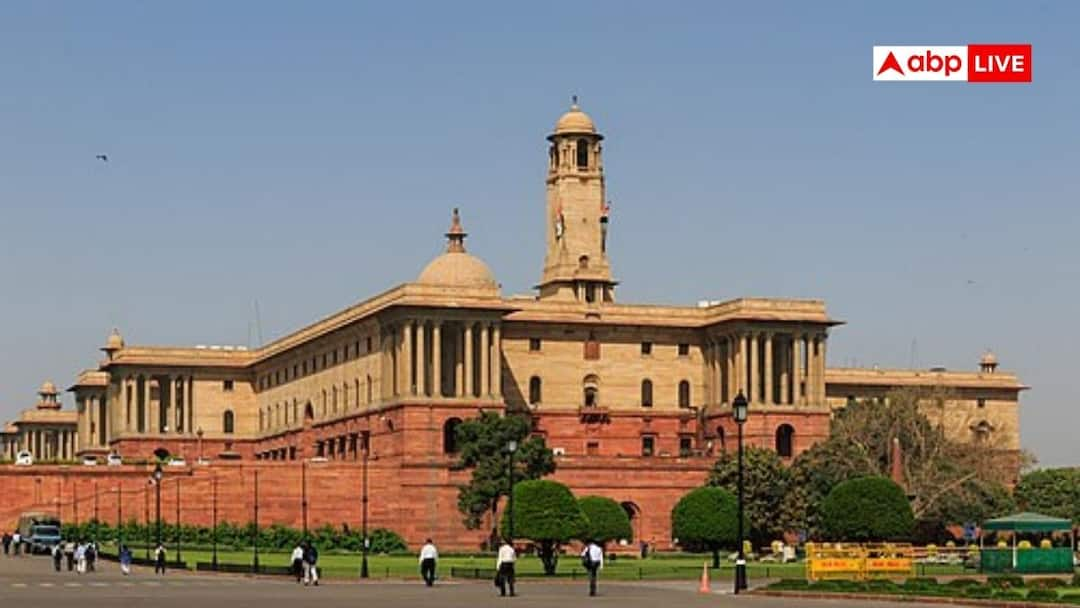
In this sequence, North Block and South Block are also becoming a part of the new journey of history. From the first Prime Minister Jawaharlal Nehru to the current Prime Minister Narendra Modi, South Block was the center of the Prime Minister’s Office. The North Block housed the offices of the Finance and Home Ministries, while the South Block housed the External Affairs Ministry.
Interestingly, while Edwin Lutyens is remembered as the architect of New Delhi, the South Block and North Block were designed by Herbert Backer. He designed two buildings with similar structure, which were the administrative offices of the British rule. These buildings were built near the Viceroy’s House (Rashtrapati Bhavan) on both sides of the duty path.
Like Lutyens, Backer respected the Viceroy’s wishes and incorporated elements of Mughal architecture in the design of the secretariats, such as red sandstone, raised platforms and gateways inspired by Humayun’s Tomb (Nizamuddin, New Delhi).
When Becker and Lutyens’ friendship broke
Backer planned to build both secretariat buildings on high platforms and keep the space between them level. Lutyens did not agree with this, as he believed that this would partially obscure the view of the building from the slope leading to the Viceroy’s House, i.e. today’s Rashtrapati Bhavan. Ultimately Backer’s plan was implemented. The result is that while climbing the hill, the dome of Rashtrapati Bhavan disappears at the bottom of the slope and becomes visible again as one approaches the top.
The dispute over the slope ended a deep and trusting friendship. Backer called it “the saddest aspect of my entire life’s work.” Lutyens wanted a gentle slope so that the building remained visible at all times, but at the insistence of the backer a relatively steep slope was created. This incident became one of the bitter memories of India for Lutyens.
So those memories became fresh…
Today, when a new history is being written, those memories have become fresh, when on 13 February 1931, the British government formally inaugurated the new capital and these buildings were established as the center of administrative system. For a long time, the country’s policies were made from here and the direction of governance was decided. It was here that the destiny of the country was written.
Today things have changed. Now these buildings will not be remembered for writing destiny but for saving destiny. Now these buildings are being converted into museums.

