

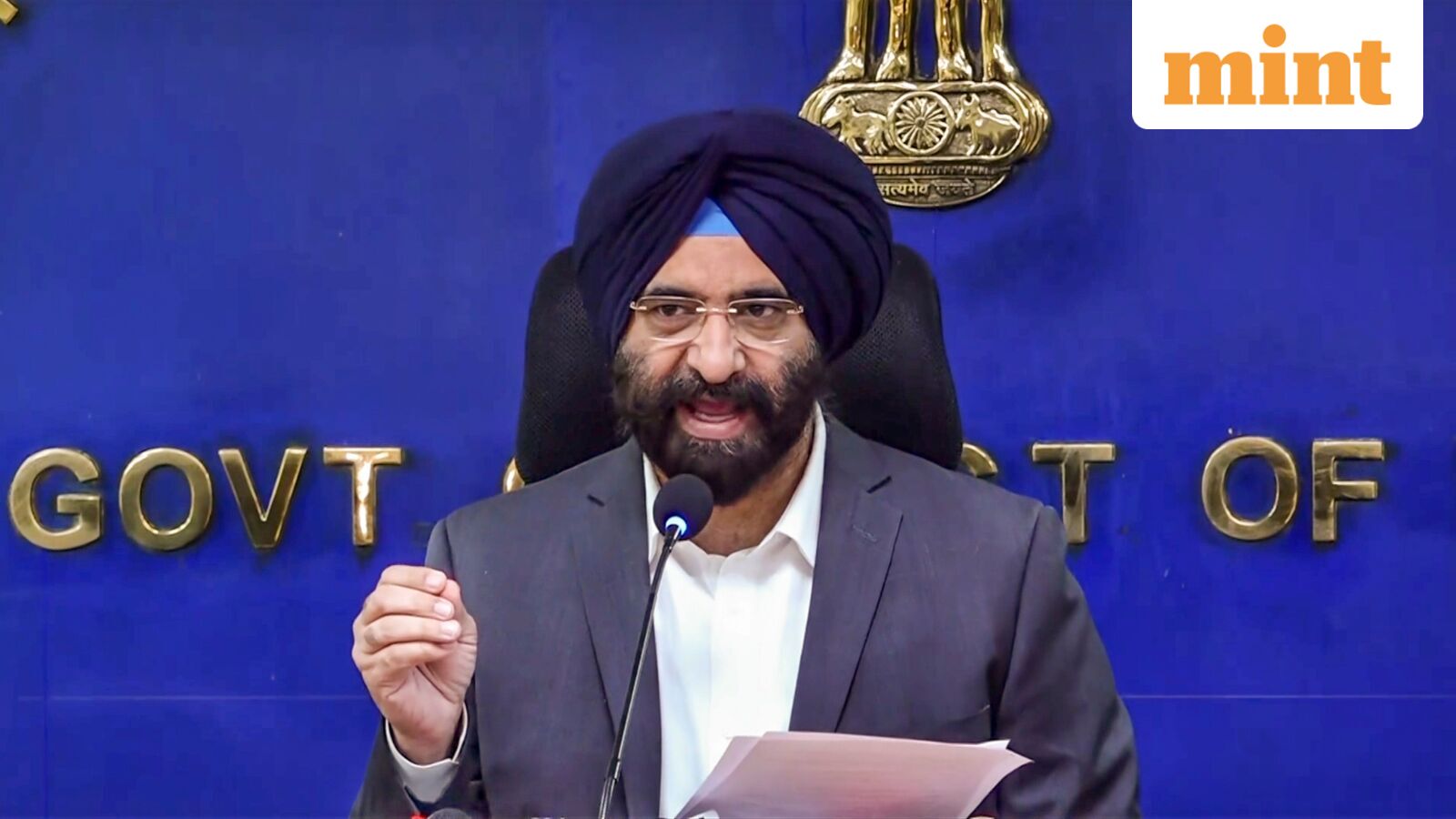
New Delhi: Delhi Environment Minister Manjinder Singh Sirsa on Friday said that while restrictions under Stage 3 of the Graded Response Action Plan (GRAP 3) have been withdrawn, anti-pollution measures on the ground will continue with undiminished intensity across the capital.
Sirsa said the decision to lift GRAP 3 curbs was taken by the Commission for Air Quality Management (CAQM) sub-committee after a significant improvement in Delhi’s air quality. He stressed that enforcement agencies have been directed to maintain sustained action at the field level, with no let-up in monitoring or implementation.
According to an official statement, Delhi’s Air Quality Index (AQI) showed a sharp turnaround, improving from 380 to 236 within a span of 24 hours. Bawana recorded an AQI of 141, placing it in the ‘good’ category and highlighting the impact of intensified anti-pollution efforts.
Noting that GRAP 3 restrictions were lifted on Friday, the minister said the improvement was driven by continuous action targeting major pollution sources, including vehicular emissions, industrial waste, road dust and open dumping.
“We are encouraged by the improvement, but this is not the time to ease our efforts. On-ground operations will continue with the same force to consolidate the gains achieved so far,” Sirsa said.
Data shared by the Environment Department showed that enforcement agencies carried out extensive anti-pollution drives across Delhi over the past 24 hours. As many as 6,596 challans were issued for vehicular emission violations, while nearly 12,000 metric tonnes of garbage were cleared from different parts of the city.
Officials said 6,261km of roads were mechanically swept to reduce dust levels, and 2,315 metric tonnes of construction and demolition waste were collected and transported for scientific disposal. Additionally, 405 inspections were conducted at illegal dumping sites, resulting in 156 enforcement actions.
To ease traffic-related pollution, 40 congestion points were cleared across major corridors, and 99 light motor vehicles were penalized for violating entry norms.
Sirsa added that pollution control teams continue to focus on source-level mitigation, including compliance checks at industrial clusters and the deployment of smog guns and anti-smog vehicles at traffic-heavy stretches and identified hotspots. He said measures such as legacy waste biomining at a rate of 35 metric tonnes per day, along with the expansion of clean technology in the industrial and transport sectors, are beginning to yield measurable results.
Reiterating the government’s resolve, the minister said Delhi’s fight against air pollution remains ongoing, with agencies strengthening and adapting their response daily to ensure cleaner air for residents.

