

India’s market regulator is poised to clear a key hurdle for the initial public offering (IPO) of the National Stock Exchange (NSE), potentially bringing an end to years of regulatory and legal uncertainty surrounding the listing of the country’s largest stock exchange.
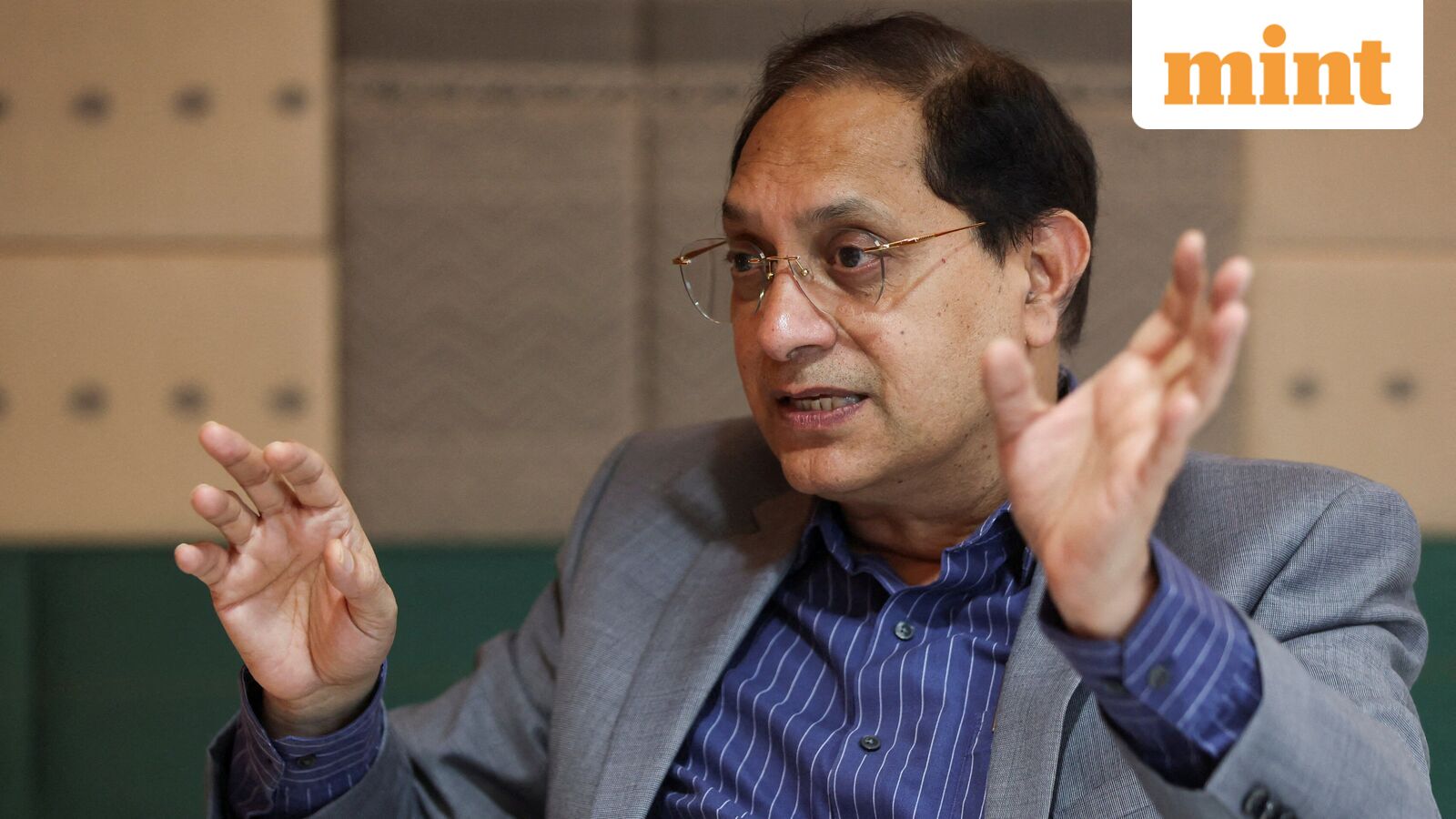
“Sebi’s no-objection certificate will be issued soon, possibly before the end of this month. It is then up to NSE to take the process forward,” Securities and Exchange Board of India (Sebi) chairman Tuhin Kanta Pandey said at a press conference in Chennai on Saturday.
NSE’s IPO hit a roadblock due to the dark fiber case, which involved allegations that certain high-frequency traders received preferential access to the exchange’s co-location servers between 2010 and 2014 through faster private communication lines, enabling quicker trade execution. In April 2019, Sebi directed NSE to disgorge 62.58 crore in alleged unlawful gains and barred senior officials from market-related roles.
SEBI also imposed a 7 crore penalty in 2022, which was later set aside by the Securities Appellate TribunalSebi subsequently challenged the SAT order before the Supreme Court in September 2023 and February 2024,
Unlike ordinary companies, market infrastructure institutions, such as stock exchanges, depositories and clearing corporations, are required to obtain a no-objection certificate from Sebi before submitting their draft red herring prospectus. This additional step reflects their importance to the stability and functioning of India’s financial markets.
Based on InCred data, the unlisted price of NSE stood at 2,045 apiece, translating into a market capitalization of 5.06 trillion, almost five times the size of listed rival BSE, whose market cap stood at 1.09 trillion as of Friday, per exchange data.
NSE had a 92.7% share in the equity cash segment and 74.3% share in the equity options segment as of 30 November, according to exchange data.
The Sebi chief also said the regulator’s efforts to introduce a T+0 settlement framework, under which trades are settled on the same day, have seen limited traction. India became the first country to adopt a T+1 settlement cycle for all listed stocks in January 2023.
Building on this, Sebi introduced an optional T+0 settlement cycle in March 2024, initially for 25 scrips. In December 2024, the regulator announced a phased expansion to the top 500 stocks starting 31 January 2025.
This is creating significant challenges, and few are willing to undertake it. The benefits appear limited, and given the level of disruption it causes, it does not seem worthwhile, said Pandey at the press meet.
MF expense ratio
On mutual funds, Pandey said Sebi will shortly notify a framework to allow performance-linked expense ratios. The proposal was first floated in an October consultation paper as part of broader efforts to improve transparency around fees charged by fund houses.
mint had reported in December that mutual funds are wary of a performance-linked expense ratio as it poses challenges in calculation and predictability of the fees fund houses can charge.
“A notification will be issued in a day or two to enable it. Then Sebi will work with the industry to benchmark the performance. Performance management is the tricky part here,” said the Sebi chief.
corporate bond
Speaking at the 5th Association of National Exchanges Members of India (ANMI) International Capital Market Convention 2026, Pandey also mentioned plans to introduce bond derivatives to deepen the corporate bond market.
“We have taken concrete steps to make the corporate bond market more accessible for issuers and investors. We are examining bond derivatives as another initiative. Growth of municipal bonds is also being facilitated through regulatory reforms and outreach programs,” he said.
On investor onboarding, Pandey said Sebi is looking to simplify KYC processes. “We are looking to further reduce repeat documentation and streamline re-KYC so KRAs ((KYC registration agencies) retain only updated records. Public consultation on these proposals will follow shortly,” he said.
The regulator is also increasingly using artificial intelligence to strengthen market surveillance and investor protection.
“The Sebi Sudarshan system is being used to detect fraudsters on social media posing as registered advisors to mislead investors,” Pandey said. “We are developing an AI tool to analyze cyber audit reports and identify gaps before they become breaches. We have to keep in mind that AI can augment judgment -it cannot replace human accountability.”

