

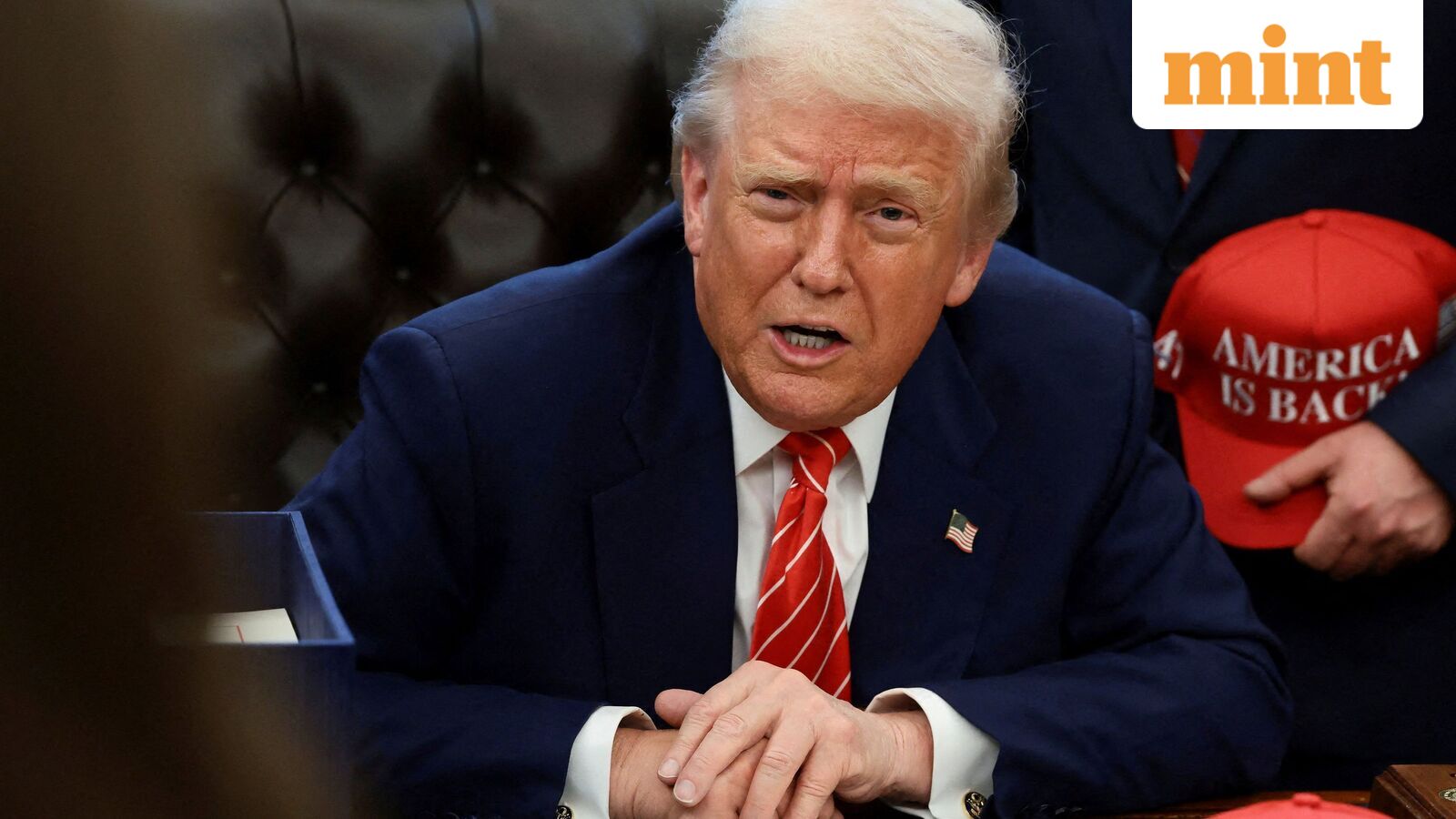
In April 2025, US President Donald Trump announced sweeping, ‘reciprocal tariffs’ on almost every country, as part of his “Liberation Day” economic plan, aimed at making “America wealthy” again.
Almost a year later, several countries are now pivoting towards China as they lose confidence in the US over Trump’s policies. The list also includes German companies investing in China, the South China Morning Post reported, citing an executive at a German chamber of commerce.
Trump has discouraged German businesses from expanding their presence in the US owing to his tariffs, immigration policy, and his most recent plans to acquire Greenland, which would disrupt the North Atlantic Treaty Organization (NATO), according to Oliver Oehms, executive director and board member of the German Chamber of Commerce in North China.
German companies’ investment in China hits a 4-year high
A Reuters report on 27 January 2026 showed that in 2025, investments by German companies in China hit a four-year high, highlighting how Trump’s trade policies are pushing industries and governments to strengthen business ties elsewhere. Citing newly disclosed figures from the IW German Economic Institute, the report said German investment in China exceeded 7 billion euros ($8 billion) between January and November last year, marking a 55.5% increase from the 4.5 billion euros recorded in both 2024 and 2023.
On the other hand, an AFP The report highlighted a decline in German exports to the US due to tariffs in 2025, shrinking to a four-year low.
German investors in China include automakers like BMW and Volkswagen, as well as machinery and mechanical engineering firms.
German Chancellor Friedrich Merz to visit China
The data comes at a time when German Chancellor Friedrich Merz is set to visit China later this month, marking his first official visit to Beijing. The report suggests that he is likely to travel with an entourage of senior business leaders who may raise “structural and sectoral issues” with Beijing.
Further, the top issues would include advancing an “open market environment” to create a “level playing field” for German multinationals and improving intellectual property rights regulation, Oehms said. He further added, “Chinese companies are on the same level or spearheading innovation” compared with their German peers, but are open to working together in artificial intelligence, robotics, and ‘smart’ manufacturing.”
Countries moving away from the US
In the last few months, several Western leaders have also traveled to China, including Britain’s Prime Minister Keir Starmer, who made it his first official visit and the first by any British Prime Minister since 2018. The two sides pledged to strengthen dialogue and cooperation in a sign of warming ties between the two countries.
Canadian Prime Minister Mark Carney and French President Emmanuel Macron have also visited China in recent months, underscoring their commitment to improving ties. In January 2026, Canada and China signed a trade deal that slashed tariffs on electric vehicles and canola.
According to a reuters report, under the trade deal, Canada will initially allow in up to 49,000 Chinese electric vehicles at a 6.1% tariff on most-favoured-nation terms, compared with the 100% tariff imposed by Carney’s predecessor, Justin Trudeau, in 2024.
Amid rising tensions with Washington, Spanish Prime Minister Pedro Sanchez is also expected to travel to Beijing later this year, reflecting a broader reassessment of ties with China.
On 6 February, Reuters reported that South Africa announced that its trade minister had signed an economic partnership agreement during his recent visit to China, which it described as a step toward securing duty-free access to Chinese markets for its exports. South Africa, the largest economy in Africa, faces a 30% tariff from the US, the highest in Sub-Saharan Africa.
South Korea, meanwhile, has announced plans to deepen cooperation with China on critical mineral supply chains. The announcement came days after Seoul attended a US-led Critical Minerals Ministerial event in Washington, aimed at countering China’s dominance in the industry.
Seoul said it aims to secure more reliable access to rare earths and will establish a hotline and a joint committee with Chinese authorities to speed up imports for South Korean companies.

