

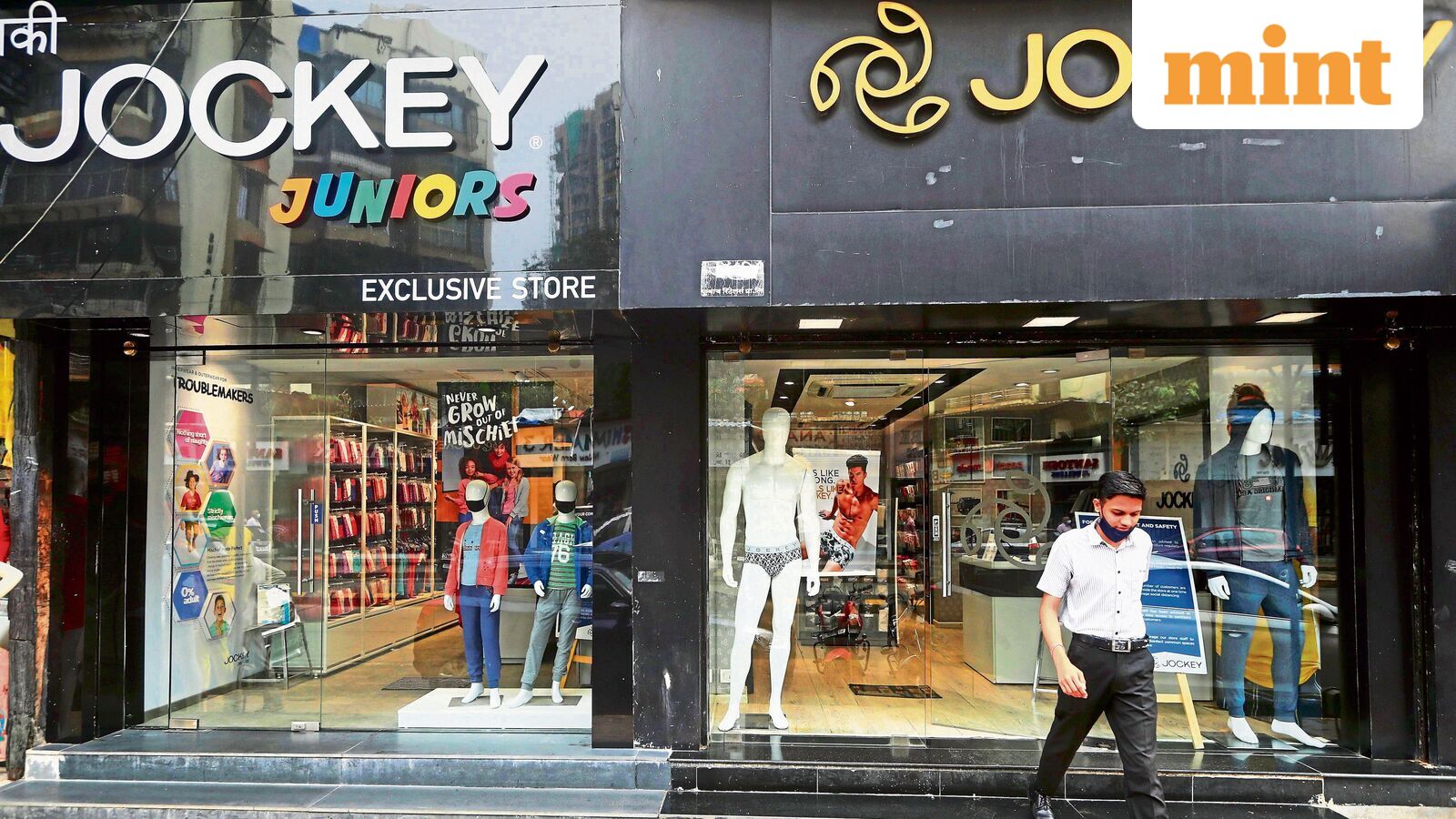
Page Industries Ltd continues to scramble for a crucial lever: sustained volume growth recovery. Its December quarter (Q3FY26) volume growth at 1.4% came in at a multi-quarter low, with units sold touching 58.6 million. Page manufactures, markets, and distributes apparel brands, such as Jockey and Speedo. Due to early Diwali, festive-led demand shifted to Q2. Sequentially, demand in Q3 has improved, and the momentum is expected to continue in Q4, the management said.
Page continues to aspire to return to double-digit growth, led by marketing initiatives, distribution expansion, and new product launches. But in a changing landscape and increased competitive intensity in both menswear and womenswear, this may be easier said than done.
Analysts at ICICI Securities are of the view that Page’s narrative of premiumization-led growth is hitting a demand ceiling, evidenced by persistent deceleration in volume growth. Page’s volume growth has been in the low single digits in the recent quarters.
intense competition
“This fatigue is exacerbated by a two-pronged competitive assault: 1) aggressive trade promotions and discounting from legacy peers; and 2) a rapid rise of D2C brands with niche aesthetics and superior digital engagement, successfully taking away the Gen Z and millennial consumers,” added the ICICI report dated 6 February.
According to the management, there is a behavioral shift in consumers who seem to be transitioning from offline to online channels. “Given the company’s high salience of offline sales, this is a negative,” said Centrum Broking. Plus, weak entry-level demand is also posing near-term challenges. Among channels, E-com still leads growth, while physical channels (exclusive brand outlet, multi-brand outlet) are seeing muted like-for-like trends, the management said.
“With the company’s general trade shelf share still under-penetrated relative to EBOs and providing visible headroom for growth, sentiment pick-up at the lower end of the pyramid from the hosiery-level shoppers for entry-level price points remains a key monitorable as the company tries below-the-line BTL efforts,” added the Centrum report dated 6 February. BTL is a highly targeted, direct, and often personalized promotional strategy aimed at specific consumer groups.
Q3FY26 revenue growth was modest at 5.6% year-on-year, aided by better realisations/average selling price (ASP). ASP uptick was driven by a favorable channel and product mix (high-priced athleisure and winter products).
Bullish outlook
Page maintains its double-digit revenue growth guidance for the medium term. Gross margin was up by around 160 basis points (bps) on-year to 57.9%, led by stable raw material prices and a higher premium product mix. Page did not take any price hikes last quarter, but is closely monitoring potential input cost inflation, especially amid volatility in textile exports. It may consider price hikes only if costs rise steeply.
Despite clocking around 23% Ebitda margin in Q3, the company maintained its FY27 operating margin guidance of 19-21%, as it expects marketing/technology costs to inch up going ahead.
Page continues to focus on expanding the product range. The JKY Groove witnessed its second phase of launch in Q3FY26 with the introduction of the winter 2025 collection and saw a good response. The next phase, the Summer ’26 collection, is scheduled for launch in April.
But as things stand, management’s ambitious growth targets have failed to excite investors. The stock slipped around 2.5% on Friday and has corrected by 20% over the last year. Earnings estimates for FY27/FY28 have been trimmed by some brokerages amid expensive valuations. At FY27 estimated price-to-earnings, the stock trades at a multiple of 45 times, shown Bloomberg data.

