

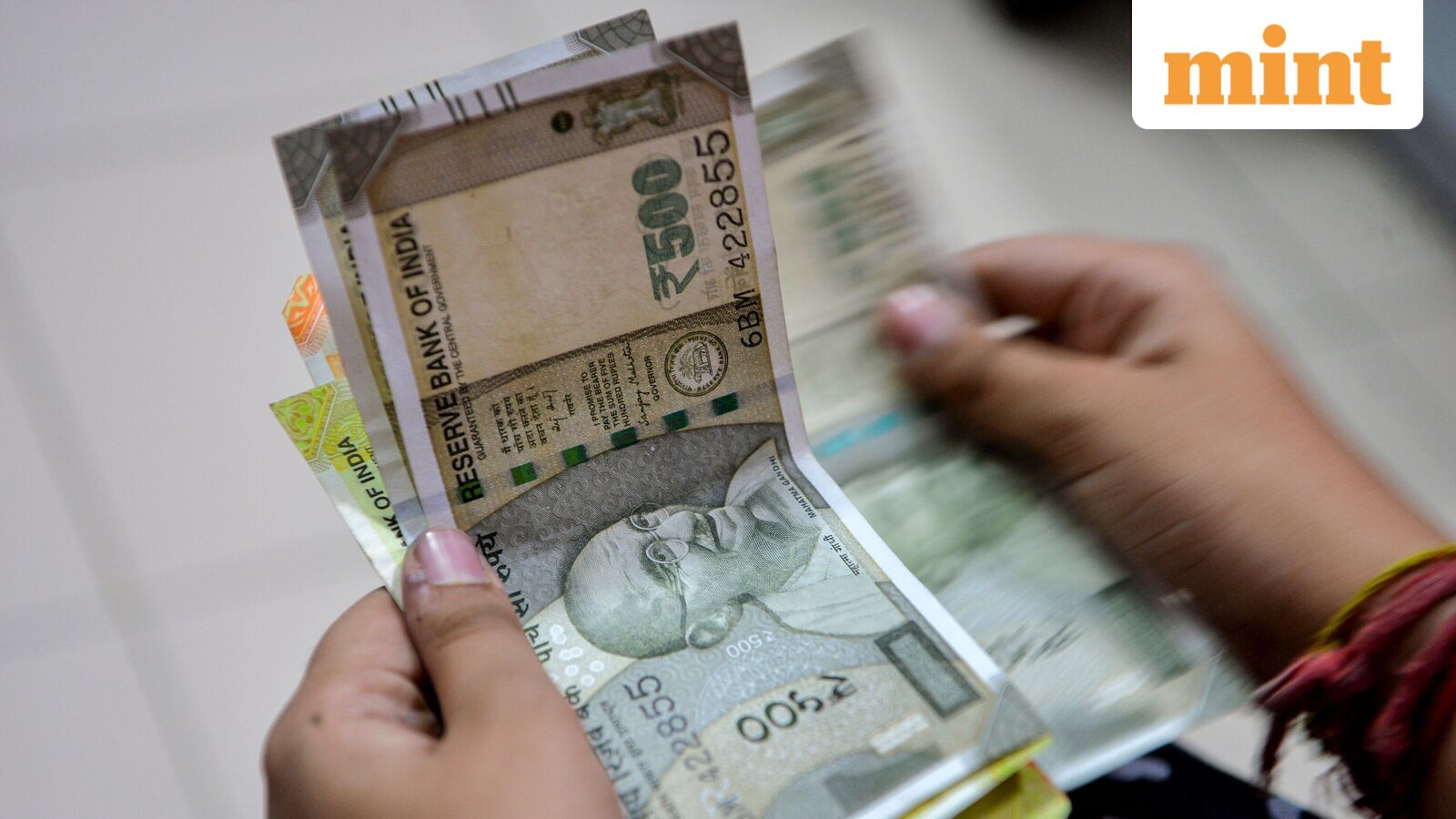
The Indian rupee fell to an all-time low of 92.48 against the dollar on Friday, as a surge in crude oil prices due to the ongoing US-Iran war and a sharp fall in equities weighed on the domestic currency.
The Reserve Bank of India (RBI) likely stepped in to support the rupee, helping avert a sharper decline, foreign exchange dealers said.
The local currency, which opened at 92.3425 per US dollar, touched an intraday low of 92.4788, according to Bloomberg data. It closed at 91.1975 on Friday.
“The rupee has hit an all-time low thrice this week but the good thing is that it is not depreciating significantly. It’s a very controlled depreciation because the RBI is present in the market,” Ritesh Bhansali, deputy chief executive officer at Mecklai Financial Services, said.
Indian stocks wilted on Friday, with the benchmark Sensex shedding nearly 1,500 points, or about 2%, to settle at 74,563.92, as worsening tensions in West Asia sparked a sell-off. The yield on the 10-year benchmark government bond rose as much as five basis points to 6.72%, but eased after the RBI conducted ₹50,000-crore open market bond purchases. Still, the 10-year benchmark yield settled at 6.68%, up 2 basis points from the previous close, according to the Clearing Corporation of India.
India is one of the world’s largest crude importers and is highly sensitive to oil price spikes. Higher crude prices raise its import bill and subsidy burden, strain the current account and government finances, hurting the rupee.
Crude risk
“With the risk of crude staying high, the outlook for the rupee remains cautious as it could create macroeconomic challenges for the Indian economy. In the near term, the rupee is expected to trade within a range of 91.90–92.80, with crude price movements and dollar index trends remaining key drivers,” Jateen Trivedi, vice-president and research analyst of commodity and currency at LKP Securities, said.
Market participants believe that the pace of the rupee’s decline has been modest relative to historical trends despite rising global risks.
“From a percentage perspective it is broadly a 2% depreciation since the war started and crude went up from $70 to $100 per barrel, whereas historically we would have ideally depreciated anywhere between 5-10% under such circumstances. I am positively surprised that the rupee is not depreciating at the same pace it used to earlier,” Bhansali said.
RBI intervention
The central bank has likely been intervening frequently in the foreign exchange market to smooth volatility rather than defend a specific level, market participants said.
Crude prices, which were earlier expected to average $65-70 a barrel for the financial year 2026-27 (FY27), are now projected closer to $80-85, VRC Reddy, treasury head at Karur Vysya Bank, said.
“That $10 increase in the average crude price will definitely put pressure on outflows and the current account,” Reddy said, adding that the key concern for the market is how long this crisis will continue.
In the near term, dealers expect the rupee to trade in a 92–93 per dollar range, with the possibility of testing 93-93.50 if the West Asia tensions escalate. However, they expect the currency to stabilize once geopolitical risks ease.
“If the conflict de-escalates, the rupee could move back towards the 91.5–92 range,” Bhansali said. “But if the tensions persist, 93 cannot be ruled out in the near term.”

