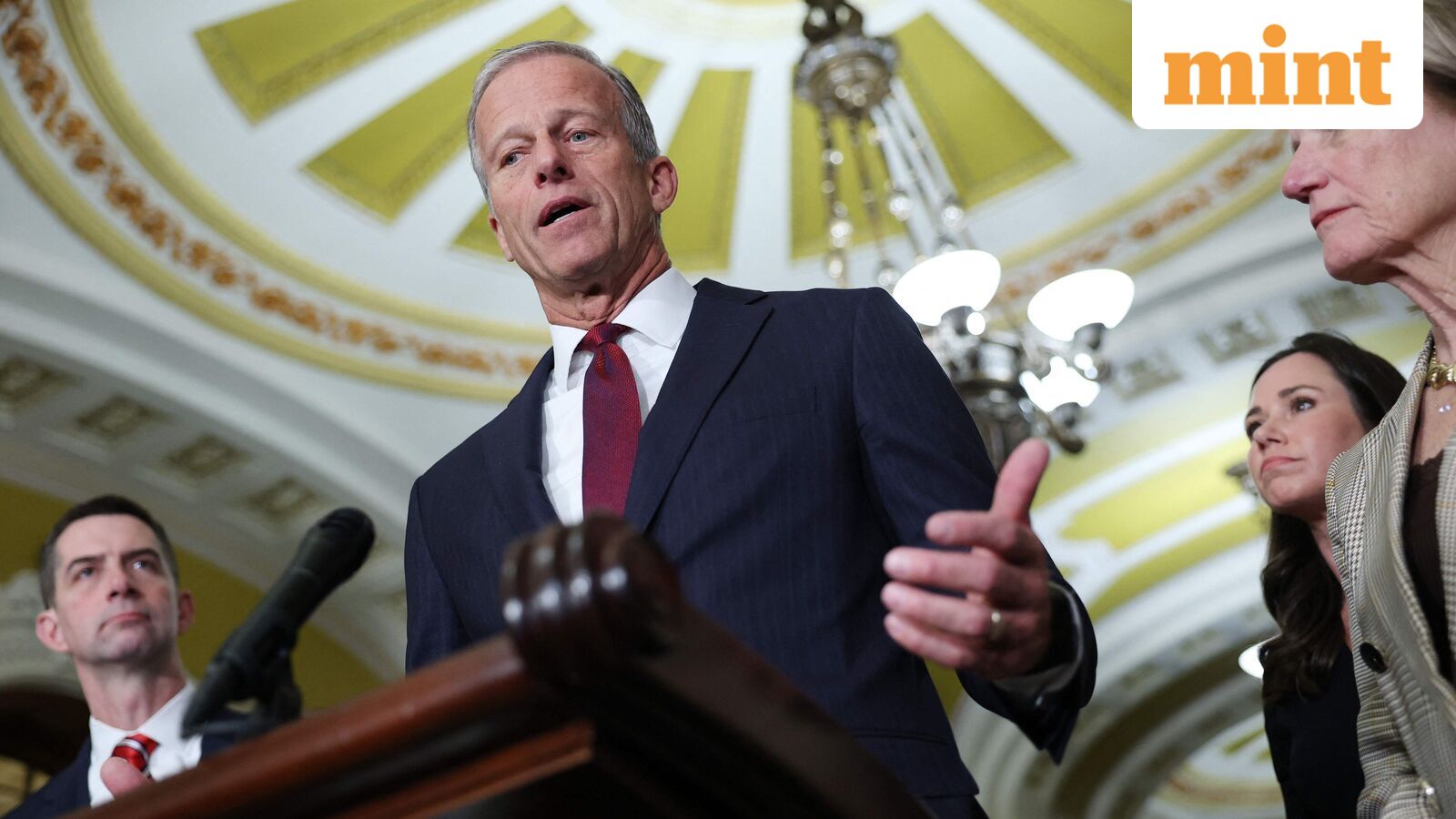
John Thune, the Senate Majority Leader, said the chamber will consider a controversial election bill imposing strict proof-of-citizenship requirements but acknowledged that Republicans do not have enough support to pass it through the procedure sought by Donald Trump.
Speaking to reporters Tuesday, Thune said the Senate does not have the numbers to sustain a marathon talking filibuster, which would require Democrats to hold the floor continuously to block the legislation.
“That’s just a function of math,” Thune said. “For better or worse, I’m the one who has to be a clear-eyed realist about what we can achieve here.”
The bill — known as the Safeguard American Voter Eligibility (SAVE) America Act — would require stricter proof of citizenship for voting in federal elections.
Bill faces unified Democratic opposition
The legislation faces strong resistance from Democrats in the United States Senate, meaning Republicans would need 60 votes to overcome a filibuster. Republicans currently hold only 53 seats.
Trump has pushed aggressively for the bill and warned he will refuse to sign other legislation until it passes.
“It’ll guarantee the midterms,” Trump told House Republicans during a retreat at his Florida golf club. “If you don’t get it, big trouble.”
Democrats argue the proposal could disenfranchise millions of voters who lack ready access to documents such as birth certificates, even though federal law already requires voters in national elections to be US citizens.
Republicans may move ahead with standard vote
Unable to secure the votes needed to change Senate rules or implement a talking filibuster, Republican senators are discussing bringing the bill to the floor under normal procedures as soon as next week — a move that would likely lead to its defeat.
Thune said Republicans still intend to force a vote to put Democrats on record.
Republicans will “have a fight on the floor” and force Democrats to vote on “whether they think noncitizens should vote in American elections,” he said.
Several GOP senators signaled they are ready to proceed even if the bill cannot pass immediately.
“There’s been enough dithering,” said Sen. John Kennedy. “It’s time to go and let the chips fall where they may.”
Some Republicans push harder procedural tactics
A group of conservatives has urged the party to pursue the talking filibuster strategy championed by Trump.
Sen. Mike Lee argued the Senate should still attempt to pass the legislation.
“While passage is not guaranteed, we can be certain that failure will be the outcome if we don’t try,” Lee wrote on X.
Others prefer extended debate without changing Senate rules.
“I think we just go ahead and try to get on the bill,” said Sen. Roger Marshall.
Sen. Ron Johnson also suggested lawmakers should debate the measure for an extended period rather than hold a quick vote.
“Our base would scream about that and that wouldn’t be smart,” Johnson said.
Trump pushes broader agenda
Trump has also suggested expanding the legislation to include other priorities, including a ban on mail-in ballots and measures related to transgender rights, such as restricting participation in women’s sports and limiting gender-affirming surgeries for minors.
“Let’s go for the gold,” Trump told House Republicans.
House Republicans highlight different priorities
Meanwhile, House Speaker Mike Johnson insisted that the party remains aligned with Trump but emphasized other priorities such as lowering costs and tax relief.
“We’re all on the same page,” Johnson said. “The president and I are exactly in lockstep.”
Still, the internal debate underscores growing tension within the GOP as lawmakers try to balance Trump’s demands with legislative realities ahead of the midterm elections.