
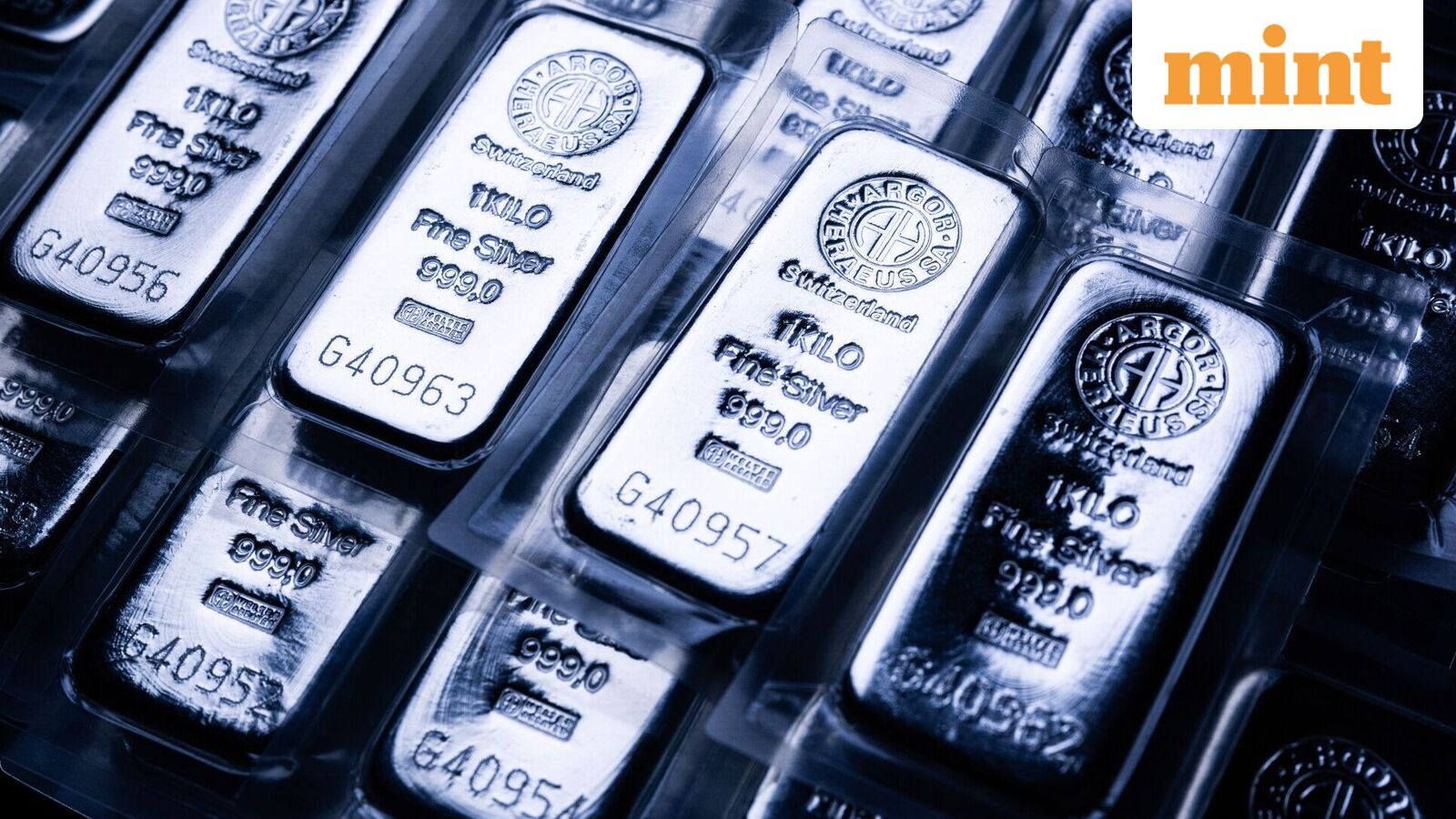
Silver prices have taken a back seat amid the Middle East crisis, declining over ₹5,000 in the spot market this week, as investors overlooked its safe-haven appeal and focused on its industrial metal status.
Silver prices closed at ₹2,66,127 on February 27 (before the war) and ended the week at ₹2,60,856, according to MCX data.
The US and Israel launched major attacks on Iran last Saturday that escalated into a war in the Middle East. The conflict has hit nearly every country in the Middle East, with over a thousand dead so far. It has also disrupted the Strait of Hormuz, the narrow mouth of the Gulf that is bordered on its north side by Iran, which carries almost 20% of the world’s oil, pushing crude and gas prices higher.
These developments have stoked inflation and macroeconomic worries, pushing gold higher as it is seen as a traditional safe-haven asset.
Silver prices, on the other hand, have declined despite a major war, influenced by silver’s industrial demand, which accounts for 50–55% of its usage, primarily in applications such as solar panels and electronics.
“Economic fears related to the Middle East conflict are causing concerns over manufacturing demand, leading to a “war-induced recession” perception. Additionally, silver experienced profit-taking following significant price increases in early 2026, where it became overvalued, and prompting institutional investors to sell,” Aamir Makda, Commodity & Currency Analyst, Choice Broking said.
Additionally, a stronger US dollar and expectations that the US Federal Reserve may keep interest rates higher for longer have also reduced the appeal of non-yielding assets like silver and gold.
Silver prices have been on a tear since last two years. In 2025 alone, the white metal had jumped 170%. In the first month of 2026, the rally remained unhinged as prices rose as high as ₹4,30,000 in the futures market on the MCX. However, the flash crash in silver has pushed the prices to ₹260,000, requiring 70% rally to reclaim this mark.
Is the silver story over?
This brings into the question that, since the war also failed to lift silver, is it safe to consider that the best of the silver rally is behind us? Commodities have a bad reputation for being stuck in cycles. Last time, silver prices had peaked in 2011 and had taken nine years to recover.
Ross Maxwell, Global Strategy Operations Lead, VT Markets, said that large corrections often follow parabolic rallies, so it does not necessarily mean that the silver story is over.
“Longer-term drivers such as industrial demand, electrification, renewable energy, and geopolitical uncertainty still remain supportive of silver prices, though volatility is likely to remain. The current downturn looks more like a cyclical correction within a highly volatile commodity at a highly volatile time for the markets rather than an end to the silver bull narrative,” Maxwell added.
Makda also said that a sharp correction in silver prices could signify a “reset.”
Silver spent a decade under $30; it is now finding a new floor. While a 70% gain to reach old highs is a steep hill, the underlying shortage of physical metal suggests we are in a volatile consolidation phase rather than a permanent decline, he added.
Disclaimer: This story is for educational purposes only. The views and recommendations made above are those of individual analysts or broking companies, and not of Mint. We advise investors to check with certified experts before making any investment decisions.