

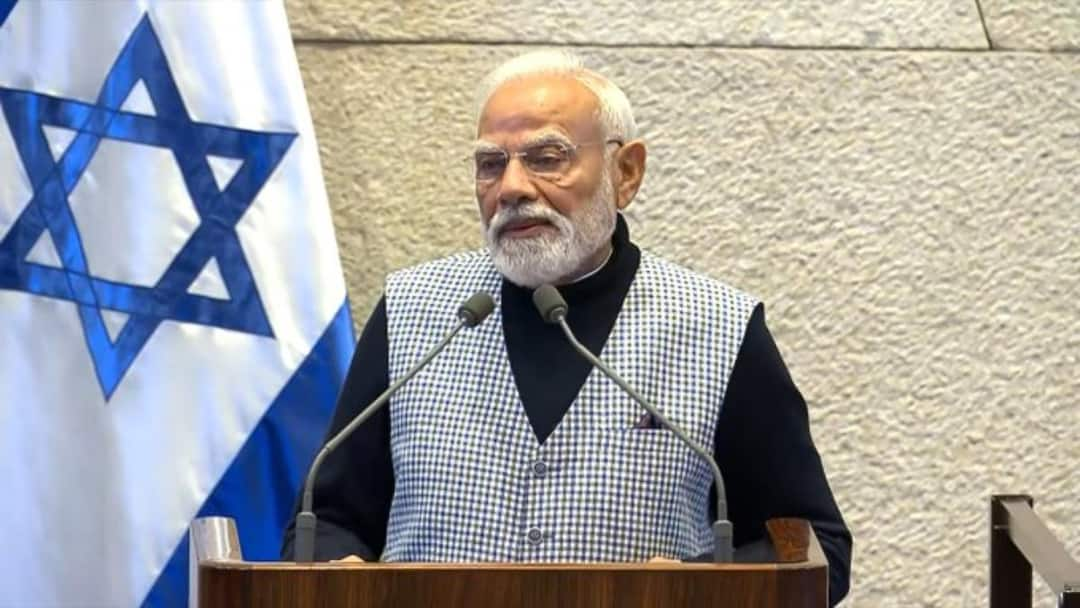
PM Modi About JFR Jacob: Prime Minister Narendra Modi is on a two-day visit to Israel. On Wednesday, he addressed the Knesset, Israel’s parliament, and became the first Indian Prime Minister to do so. Since his first visit to Israel in 2017, relations between the two countries have reached a new level. This time, a clear glimpse of these strong relations was seen in the addresses of the Prime Ministers of both the countries.
Before Prime Minister Modi, Israeli Prime Minister Benjamin Netanyahu, while addressing the Knesset, called PM Modi more than a friend but a brother. In his speech, PM Modi mentioned many important things. He told that he was born on 17 September 1950 and on this day India recognized Israel. This coincidence makes the relations between the two countries more special.
Mention of 1971 war hero
In his speech, Prime Minister Modi also specifically mentioned Lieutenant General JFR Jacob, the hero of the 1971 India-Pakistan war. He said that Jacob’s contribution is widely known. The Prime Minister also told that after retirement, he had talked to Jacob several times over tea, in which relations between India and Israel were discussed.
This mention of PM Modi was not just to remember history, but was also a symbol of the deep and strong relations between India and Israel. In the 1971 war, an Indian military officer of Jewish origin had made such a strategy which brought Pakistan to its knees and a new country Bangladesh was born on the world map. Today, when India talks about modern defense partnership, the same strategic victory of 1971 again comes into discussion.
Who was Lieutenant General JFR Jacob?
Lieutenant General JFR Jacob is counted among the most talented and strategic officers of the Indian Army. During the India-Pakistan war of 1971, he was the Chief of Staff of the Eastern Command of the Indian Army. He played a major role in preparing the military plan for the entire campaign.
He decided the direction of the war from the command headquarters in Kolkata. Keeping in mind the geographical challenges of East Pakistan, now Bangladesh, such as rivers, marshy areas and limited roads, he devised a fast and target-oriented strategy instead of the traditional front-to-front fighting. Their objective was not only to capture land, but to achieve political results by ending the war quickly. His thinking gave the Indian Army a decisive advantage and made him one of the key architects of the 1971 victory.
His strategy in the 1971 war
Jacob changed the traditional warfare method and adopted the strategy of dynamic warfare. The main principle of this plan was to rapidly capture important centers by ignoring the enemy’s strong positions instead of directly attacking them.
The Indian Army advanced in small groups and cut the communication and supply lines of the Pakistani Army. Bridges, communication networks and logistics systems were targeted. Due to this the Pakistani army gradually became isolated. With this strategy, the pace of war came under India’s control. The result was that Pakistan did not get a chance for a long fight and the Indian Army reached Dhaka in a short time.
Connection with India and Israel
JFR Jacob was an Indian of Jewish origin and was associated with the Jewish community of Kolkata. He always considered himself an Indian soldier first, but his identity also symbolized the historical relationship between India and the Jewish community. Formal ties between India and Israel strengthened later, but personalities like Jacob became an example of the cultural and historical ties between the two countries. For this reason, the Indian leadership mentioned them on several occasions and underlined shared values like democracy, security and strategic cooperation.

