

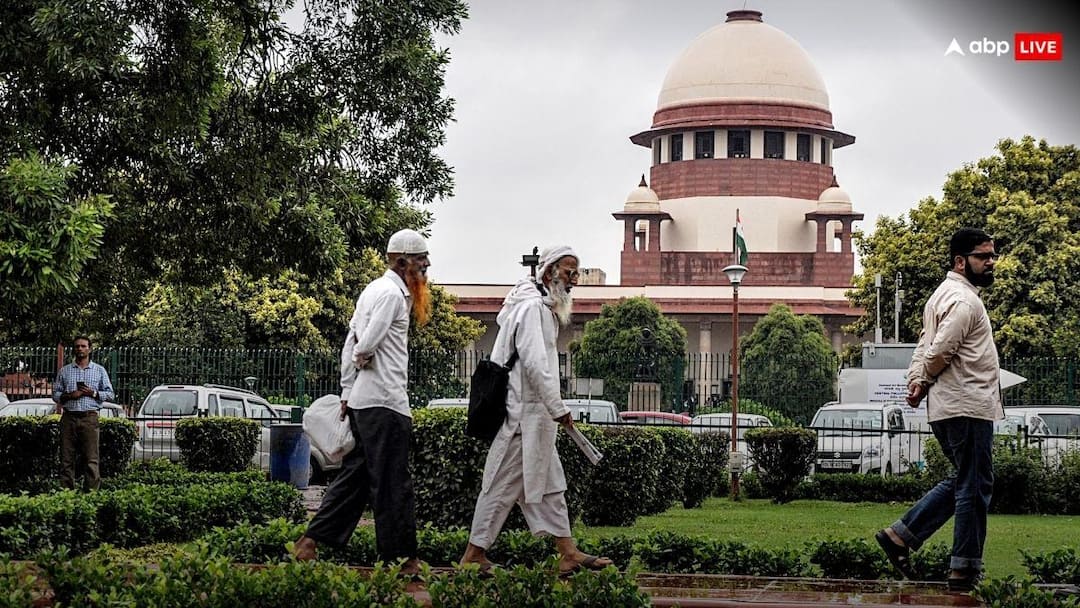
The Supreme Court has once again expressed the need for a Uniform Civil Code. The court made this comment during the hearing of a petition related to the succession of Muslim women. The bench of Chief Justice Surya Kant and Justice Joymalya Bagchi has said that UCC will eliminate many inequalities, but it is the job of Parliament to decide on it.
The case in which the judges made this comment during hearing was filed by lawyer Paulomi Pavani Shukla and Ayesha Javed, director of an organization named Nyaya Nari Foundation. The petition opposed the provision of the Shariat Act of 1937 which gives Muslim women half the share in property compared to men. Advocate Prashant Bhushan, appearing on behalf of the petitioners, termed this provision as a violation of the right to equality granted to every citizen by the Constitution.
Prashant Bhushan said that the Supreme Court has declared triple talaq unconstitutional in the case of Shayara Bano vs Government of India. This needs to be done in this case also. On this the court said, ‘You have challenged the Muslim Personal Law Application Act, 1937. Suppose it is repealed, then which law will apply after that? This is a very important question. It is important to consider the void that will be created by removing the law.
Justice Bagchi said that even if the 1937 law is removed, Muslim succession will still be governed by traditional personal law due to Article 372 of the Constitution. On this, Prashant Bhushan suggested that the court should order that after the abolition of the 1937 law, the succession cases of Muslims will be conducted under the Indian Succession Act, 1925 because this law gives equal rights to men and women.
After this, the judges declared this subject to be within the jurisdiction of Parliament. The bench said that it is the job of the legislature to make laws. Only Parliament can make comprehensive reforms. The Chief Justice said, ‘Real solution to such issues is possible only through Uniform Civil Code. With this, equal civil laws will be applicable to all citizens. We have suggested this earlier also. The decision has to be taken by the Parliament.
At the end of the hearing, the court asked the petitioners to amend their petition and file it again. The court said that the petitioner should give practical suggestions. Only then will he be able to consider the matter further. Prashant Bhushan agreed to this and said that he will file an amended petition.

