
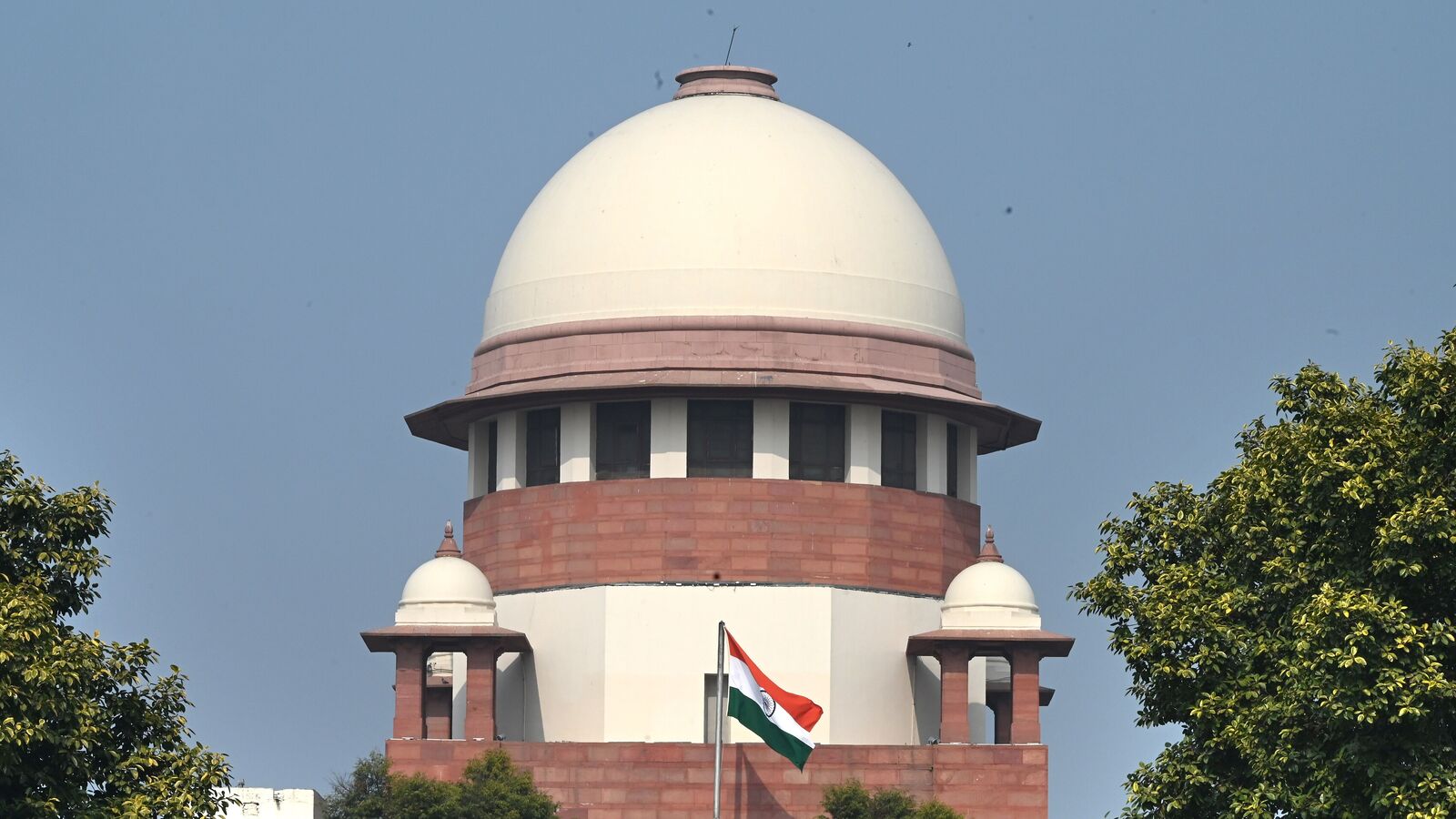
The Supreme Court on Friday declined to hear a PIL requesting a nationwide policy granting menstrual leave to women students and workers, noting that such a rule could discourage employers from hiring women and might inadvertently reinforce gender stereotypes, as reported by PTI.
The top court, however, said the competent authority may consider the representation and examine the possibility of framing a policy on menstrual leave after consulting all relevant stakeholders.
The PIL was accordingly disposed of with the direction to the authorities to take an appropriate decision on the representation.
“These pleas are made to create fear, to call women inferior, that menstruation is something bad happening to them..this is an affirmative right…but think about the employer who needs to give paid leave,” a bench comprising Chief Justice Surya Kant and Justice Joymalya Bagchi said.
Senior advocate MR Shamshad, representing the petitioner, highlighted that some states and institutions have already implemented menstrual leave measures. He cited Kerala as an example, where schools have introduced relaxations, and noted that several private companies voluntarily offer such leave to employees, PTI reported.
The Chief Justice responded that while voluntary policies are commendable, making menstrual leave mandatory through legislation should be approached with caution.
“Voluntarily given is excellent. The moment you say it is compulsory in law, nobody will give them jobs. Nobody will take them in the judiciary or government jobs; their career will be over. They will say you should sit at home after informing everyone,” the CJI said.
The bench also emphasized the possible effects of mandatory menstrual leave on workplace perceptions and women’s professional growth.
Acknowledging the petitioner’s arguments, the bench noted that a representation had already been made to the appropriate authorities. It added that it was unnecessary for the petitioner to repeatedly approach the court seeking a mandamus.
Currently, India has no law regulating menstrual leave. Legislative efforts have included the Right to Menstrual Hygiene and Paid Leave Bill, 2019 (a Private Member’s Bill), which proposed both menstrual leave and access to menstrual products, but it was never enacted, according to a report by LiveLaw.
Karnataka offers menstrual leave to all working women
In November 2025, Karnataka became the first state in India to provide paid menstrual leave to all women employed in formal jobs. Under this policy, women aged 18 to 52 working in government and private sectors are entitled to one day of menstrual leave per month, which cannot be carried forward, and no medical certificate is required to avail it.
The policy benefits around 350,000 to 400,000 women in the formal sector but does not cover the much larger group, estimated at six million, working as domestic workers, daily-wage labourers, or gig workers in the unorganized sector.
Meanwhile, Bihar and Odisha provide two days of menstrual leave every month for government employees.
Several other countries, including Indonesia, Japan, and Italy, have established policies granting menstrual leave. In Canada, no law mandates menstrual leave, though some employers provide it as a workplace benefit. Similarly, in India, certain companies voluntarily offer menstrual leave to women employees as a goodwill measure, without waiting for legal compulsion.
(With inputs from agencies)