

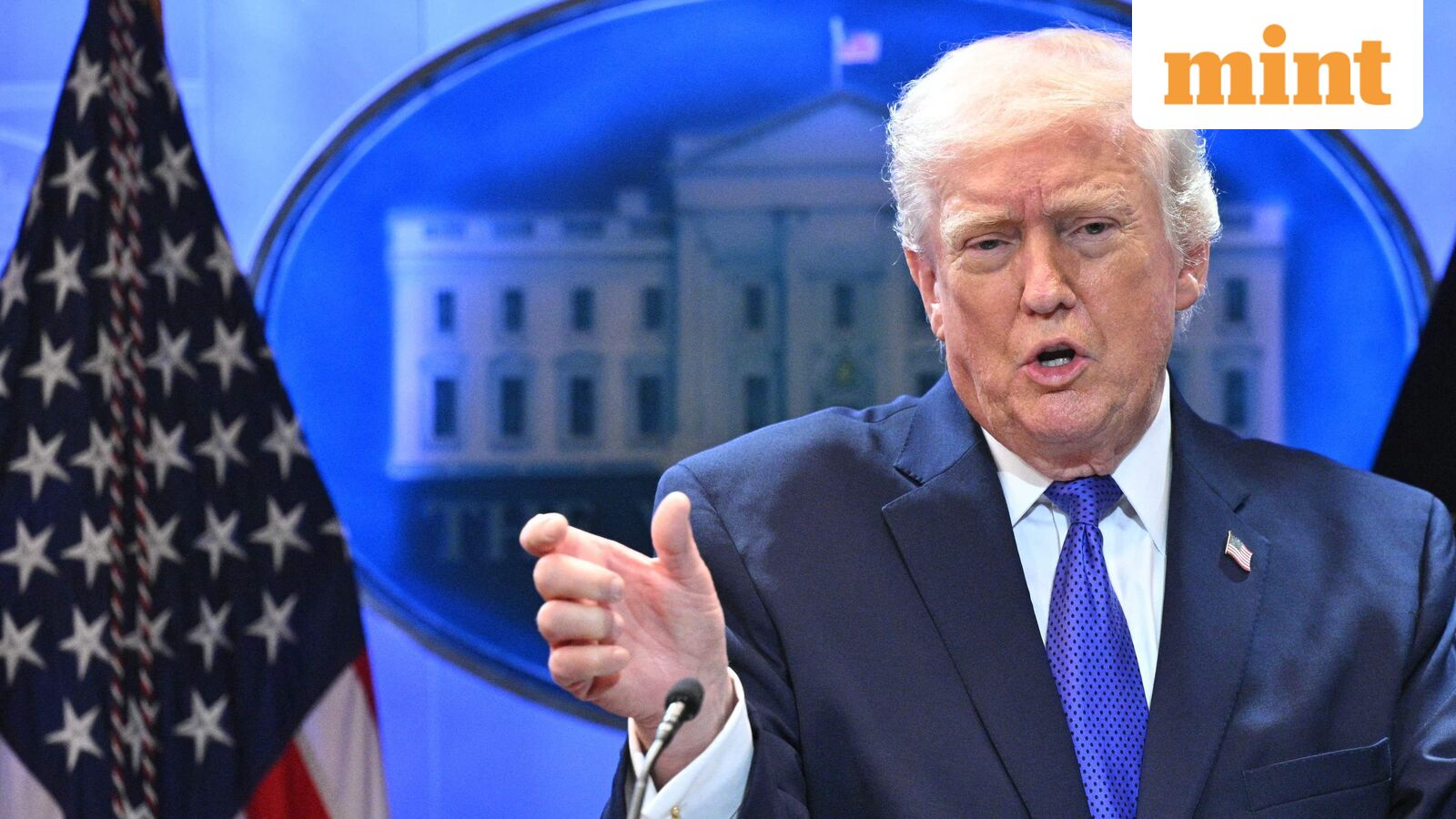
US President Donald Trump said on Saturday he will increase the global 10 percent tariff he announced one day ago to 15 percent. Trump imposed global tariffs on countries in reaction to the US Supreme Court’s ruling that his mechanism for applying tariffs was illegal.
“I, as President of the United States of America, will be, effective immediately, raising the 10% Worldwide Tariff on Countries, many of which have been ‘ripping’ the US off for decades, without retribution (until I came along!), to the fully allowed, and legally tested, 15% level,” Trump said in a Truth social-media post on Saturday.
After the Supreme Court ruled 6–3 on Friday that Trump had acted unlawfully in using the International Emergency Economic Powers Act (IEEPA) of 1977 to justify his “reciprocal” tariffs, Trump applied the new 10 percent baseline tariff under Section 122 of the 1974 Trade Act.
Trump said on Saturday that he would impose a 10 percent global tariff under Section 122, over and above tariffs already being charged after the Supreme Court struck down his economic policy. He also declared all national security tariffs under Section 232 and existing Section 301 tariffs to be in “full force and effect”.
Trump had invoked “International Emergency Economic Powers Act (50 USC 1701 et seq.) (IEEPA), the National Emergencies Act (50 USC 1601 et seq.), section 232 of the Trade Expansion Act of 1962, as amended (19 USC 1862) (section 232), section 604 of the Trade Act of 1974, as amended (19 USC 2483), and section 301 of title 3, United States Code” to impose and modify “reciprocal” tariffs on several countries.
Here, we explain the IEEPA, Section 122 of the 1974 Trade Act, Section 232 of the 1962 Trade Expansion Act and Section 301 of the Trade Act of 1974.
IEEPA
Title 50 of War and National Defenseunder Chapter 35 of the International Emergency Economic Powers, refers to “Unusual and extraordinary threat; declaration of national emergency; exercise of Presidential authorities”
It states that powers granted to the President once he/she declares a national emergency regarding an “unusual and extraordinary threat,” which has its source in whole or substantial part outside the United States.
Under the IEEPA, the President, in every possible instance, shall “consult” with the Congress before exercising any of the authorities granted and shall consult regularly with the Congress so long as such authorities are exercised.
Trump had claimed nearly boundless authority to impose tariffs under the 1977 International Emergency Economic Powers Act (IEEPA). He never consulted with Congress regarding these tariffs.
While sanctions and asset freezes are allowed under the act, the Supreme Court ruled that IEEPA does not grant the President the power to impose general tariffs.
Section 122 of the 1974 Trade Act
Section 122 grants the President Balance-of-Payments (BOP) Authority. Under this section, the President can impose a “temporary import surcharge” (a tariff) of up to 15 percent or implement import quotas.
These measures are valid for only 150 days — without congressional approval. However, the President must get a vote of approval from Congress if he/she wants to extend these surcharges.
They are imposed to address “large and serious United States balance-of-payments deficits.” Holland and Knight explains that any attempt to recreate the Reciprocal Tariffs under Section 122 would need to conform to those limits and satisfy the statute’s balance-of-payments criteria.
Section 232 of the 1962 Trade Expansion Act
If the IEEPA is for foreign policy sanctions and Section 122 is for “balance-of-payments emergencies”, Section 232 of the Trade Expansion Act of 1962 deals with protecting “National Security.”
Section 232 of the 1962 Trade Expansion Act allows tariffs on imports deemed a “national security” threat, separate from IEEPA.
It empowers the president to “adjust the imports” of an article where the US Department of Commerce Secretary finds that imports threaten to impair national security, again following an investigation and report.
Unlike Section 122, Section 232 has no 15 percent cap on tariffs and no 150-day expiration date. However, its implementations precede an investigation, a report of which must be submitted within nine months (270 days).
The President then has 90 days to decide whether to use their statutory authority. If the President acts, they have 15 days to implement the measure (usually via a Presidential Proclamation).
Congressional approval is not required for the President to impose tariffs or quotas under Section 232. Congress is only entitled to a written statement from the President within 30 days explaining why the action was taken.
There is only one category where Congress has a “veto” over Section 232 actions: Petroleum (oil). This means Congress can override presidential actions if the President uses Section 232 to adjust oil, petroleum or petroleum product imports.
Section 301 of the Trade Act of 1974
The United States has long had a handy cudgel to wallop countries it accuses of engaging in “unjustifiable,” “unreasonable” or “discriminatory” trade practices. That is Section 301 of the Trade Act of 1974.
Under this section, the US Trade Representative (USTR) investigates and determines whether foreign acts, policies or practices are “unjustifiable” or “discriminatory” and burden or restrict US commerce and may recommend duties or other actions.
In his first term, Trump had cited Section 301 to impose sweeping tariffs on Chinese imports in a dispute over the sharp-elbowed tactics that Beijing was using to challenge America’s technological dominance, the Associated Press reported.
The US is also using 301 powers to counter what it calls unfair Chinese practices in the shipbuilding industry.
There are no limits on the size of Section 301 tariffs. They expire after four years but can be extended, AP reported. But the administration’s trade representative must conduct an investigation and typically hold a public hearing before imposing 301 tariffs, the report added.
Experts have said Section 301 is useful in taking on China. But it has drawbacks when it comes to dealing with the smaller countries that Trump has hammered with reciprocal tariffs.

