

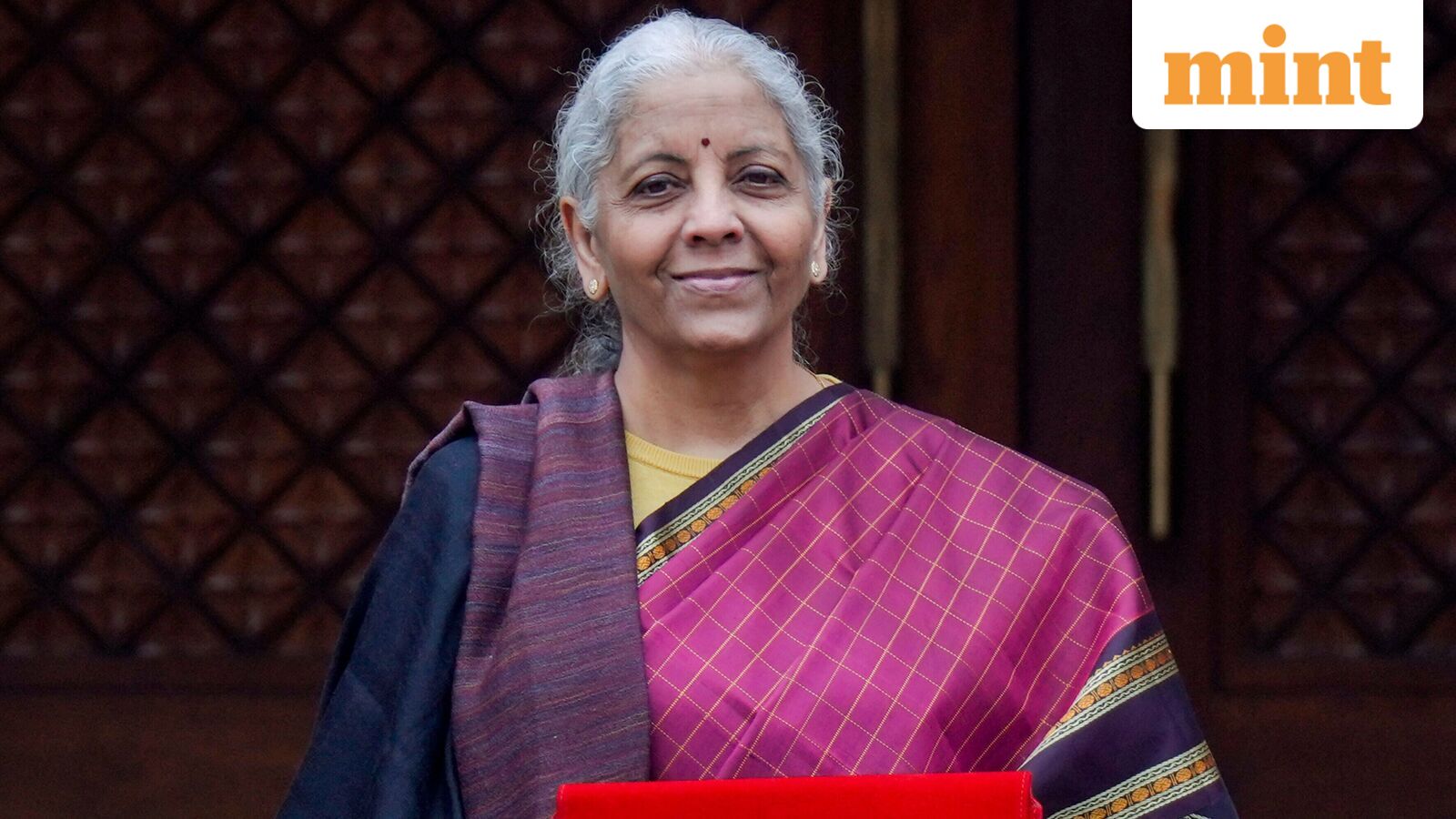
Finance Minister Nirmala Sitharaman on Sunday presented her ninth consecutive Union Budget in the Lok Sabha, setting out a reform-led economic roadmap anchored in three core ‘kartavyas’ (duties) as India navigates global uncertainty while sustaining domestic growth.
Follow LIVE updates of Union Budget Speech 2026
Ninth Budget of FM Nirmala Sitharaman
Delivering the Union Budget 2026 during the ongoing Budget Session of Parliament, Sitharaman said the government under Prime Minister Narendra Modi had consistently “preferred reform over rhetoric”. The presentation marks a record ninth Budget for Sitharaman and the first to be delivered from the newly inaugurated Kartavya Bhawan.
Outlining the broad direction of fiscal and economic policy, the finance minister said the government’s approach would prioritize accelerating growth, ensuring inclusive development and maintaining the momentum of structural reforms.
Three kartavyas to steer economy amid global uncertainty
Presenting the Budget, Sitharaman identified three central kartavyas, or duties, that would guide India’s economic strategy in the coming year. These duties, she said, are aimed at balancing growth with equity while responding to a challenging international environment.
“Today we face an external environment where trade and multilateralism are imperative,” said Finance Minister Sitharaman in the Lok Sabha.
She added that the government remained committed to broad-based development, stating: “We will ensure that dividends of growth reach every farmer, scheduled caste, scheduled tribe, and youth.”
Labor Codes and GST reforms shape policy backdrop
Union Budget 2026 assumes significance as it comes in the wake of major structural reforms, including the consolidation of labor laws and the next phase of goods and services tax changes. The government has merged 29 labor laws into four Labor Codes covering wages, industrial relations, social security and occupational safety.
The new labor framework seeks to extend social security benefits to unorganized, gig and platform workers, improve workplace safety and simplify compliance for employers.
On indirect taxation, the government has outlined what it has described as ‘GST 2.0’, aimed at simplifying the tax regime through a two-rate structure of 5% and 18%. The reforms are intended to reduce compliance costs and lower the cost of living by cutting rates on essential goods and services.
Focus on exports amid global trade headwinds
This year’s Budget is also being closely watched for measures to boost export growth, particularly after the United States imposed a 50% tariff on Indian goods. Economists expect targeted interventions to support exporters and strengthen India’s competitiveness in global markets.
Earlier last week, Sitharaman tabled the Economic Survey of India for the 2025–26 financial year in Parliament, providing a macroeconomic assessment ahead of the Budget.
Budget session schedule and parliamentary process
The Union Cabinet, chaired by Prime Minister Modi, approved the Union Budget 2026–27 following a meeting in Parliament on Sunday. The Budget Session will comprise 30 sittings spread over 65 days and is scheduled to conclude on 2 April.
Both Houses of Parliament will adjourn for a recess on 13 February and reconvene on 9 March, allowing Standing Committees to examine the demands for grants of various ministries and departments.

