US-Israel-Iran War: She was flying a combat mission over Kuwait when her own allies shot her out of the sky. Within hours, the footage of what happened next had gone viral on social media and was viewed millions of times.
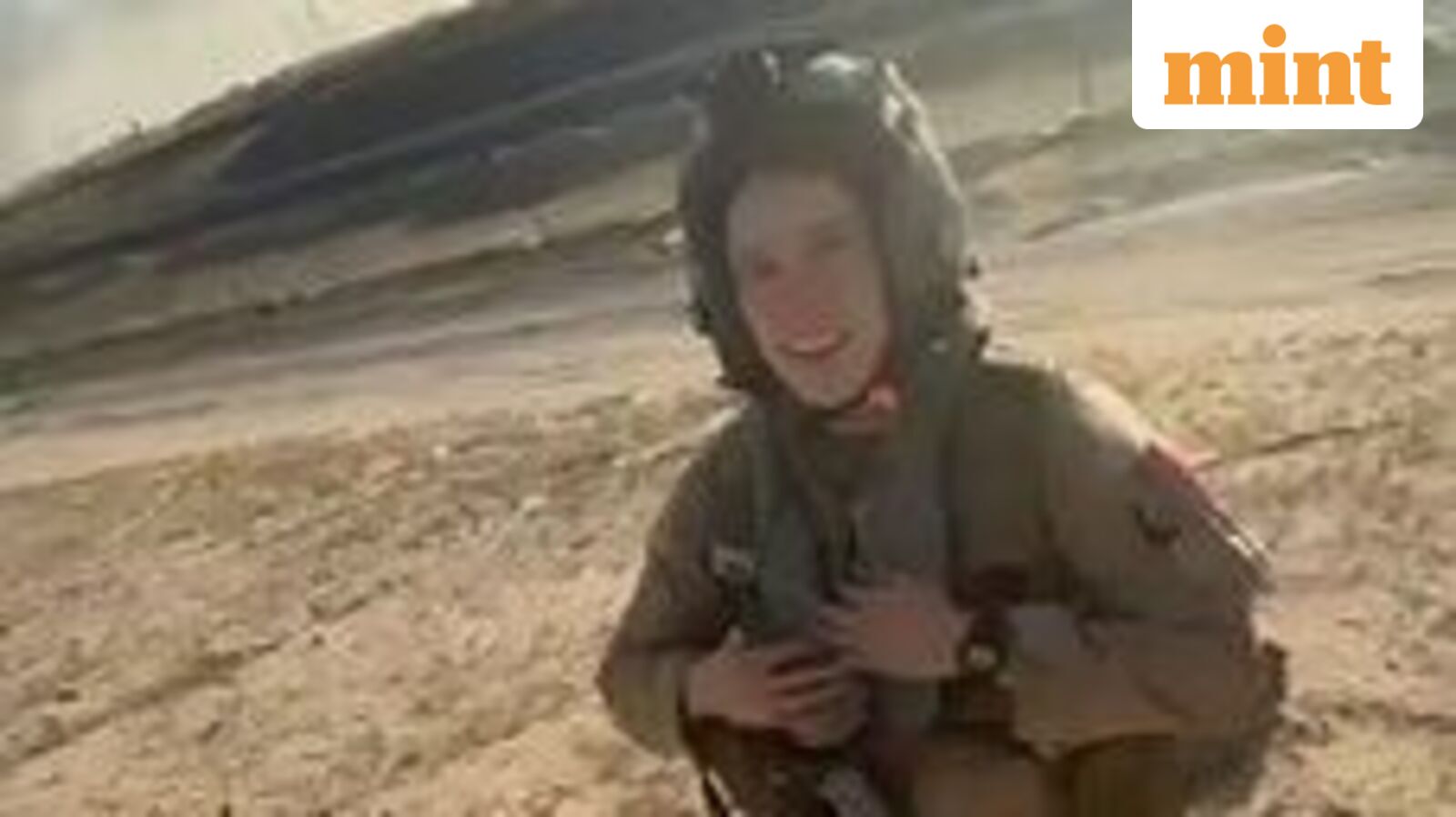
A female US Air Force pilot, still in her flight gear, sitting on the Kuwaiti desert floor after ejecting from her stricken F-15E Strike Eagle — composed, unhurried, and smiling. Not the hollow grin of someone in shock. A real smile. The kind that stops you mid-scroll.
It is, by any measure, one of the most striking images to emerge from Operation Epic Fury.
What Actually Happened
On the night of 1 March 2026, three F-15E Strike Eagles were engaged and destroyed over Kuwait — not by Iranian forces, but by allied air defense systems operating in one of the most saturated, high-tempo airspaces the Gulf has seen in years.
All six aircrew ejected. All six survived.
US Central Command confirmed the incident, stating that the aircrew had “been safely recovered and are in stable condition,” adding that Kuwait had acknowledged what happened. Nobody is using the word accident. Nobody is using the word negligence either. What officials are quietly acknowledging is something far older than any of the technology involved: friendly fire.
The F-15E Strike Eagle is one of the most fearful aircraft ever built. A twin-engine, supersonic multirole fighter capable of hitting Mach 2.5, it can carry out deep strike missions in all weather, day or night, while simultaneously holding its own in aerial combat. It weighs over 36,000 pounds fully loaded, costs roughly $87 million a piece.
The Violence Nobody Talks About
Ejecting from a fighter jet is not a clean, cinematic exit. It is an explosion beneath your body. It is G-forces that can shatter vertebrae, fracture bones and cause concussion — all in under a second. Then you are falling, alone, in the dark, over unfamiliar terrain, running on adrenaline and training.
She did all of that. Then she landed, drew her sidearm, scanned her surroundings — and waited.
A Kuwaiti civilian spotted her parachute and ran towards her.
“You fine? Really? You need something to help you? No problem. You’re safe. You are safe, you’re safe. Everything good?”
She holstered her weapon. She smiled.
“Thank you for helping us!” the man said.
Why That Smile Matters
cnn national security analyst Alex Plitsas put it plainly: “What a badass. Look at the female pilot who was just shot down by friendly fire, ejected, and is still smiling and unshaken.”
But the smile is not bravado. It is not shock. It is the product of years of military conditioning specifically designed to produce that exact moment — the ability to absorb catastrophe, execute under pressure, and come out the other side still functional, still professional, still present.
The US Air Force spent years building that response into her. Over Kuwait, it held.
She Is Not the First
Friendly fire is as old as warfare itself — and the Gulf has seen it before.
In 2024, a US Navy F/A-18 Super Hornet operating from the USS Harry S. Truman was mistakenly engaged by the USS Gettysburg in the Red Sea, after the ship identified the jet as a Houthi anti-ship cruise missile. Both Navy pilots ejected safely. Air & Space Forces Magazine
A decade earlier, in 2003, a Patriot battery engaged a Royal Air Force Tornado GR4 returning to base in Kuwait — killing both crew members. The inquiry that followed pointed to the same culprit that haunts every coalition operation: compressed decision timelines in a saturated battlespace.
The technology gets better. The friction never fully goes away.
One Netizen said, “This lady ate a surface-to-air missile, sustained a 12-14 G rocket-propelled ejection, likely hit the ground at 15+ miles per hour… And then she popped up smiling at the locals who came to help her. Tell me again that women don’t belong in combat.”
The Bigger Picture
Three F-15Es are wreckage in the Kuwaiti desert. Kuwaiti air defenses mistakenly shot down three US F15 fighter jets flying in Iran-related operations, the US military said on Monday. All six aircrew ejected safely, have been safely recovered, and are in stable condition, it said.
But in the viral fog of a breaking story, one image keeps cutting through: a woman who fell out of a burning sky, landed in a foreign desert, and smiled at the first person who came to help her.
That is not luck. That is training. That is discipline. That is exactly who she was built to be.