The United States and its Middle Eastern allies are turning to Ukraine for guidance on countering Iran’s Shahed drones, Ukrainian President Volodymyr Zelenskyy said, as reported by Associated Press.
Zelenskyy explained that several countries, including the US, have reached out to Ukraine for assistance in defending against the Iranian drones. In recent days, he has discussed potential cooperation with leaders from the United Arab Emirates, Qatar, Bahrain, Jordan, and Kuwait, AP reported.
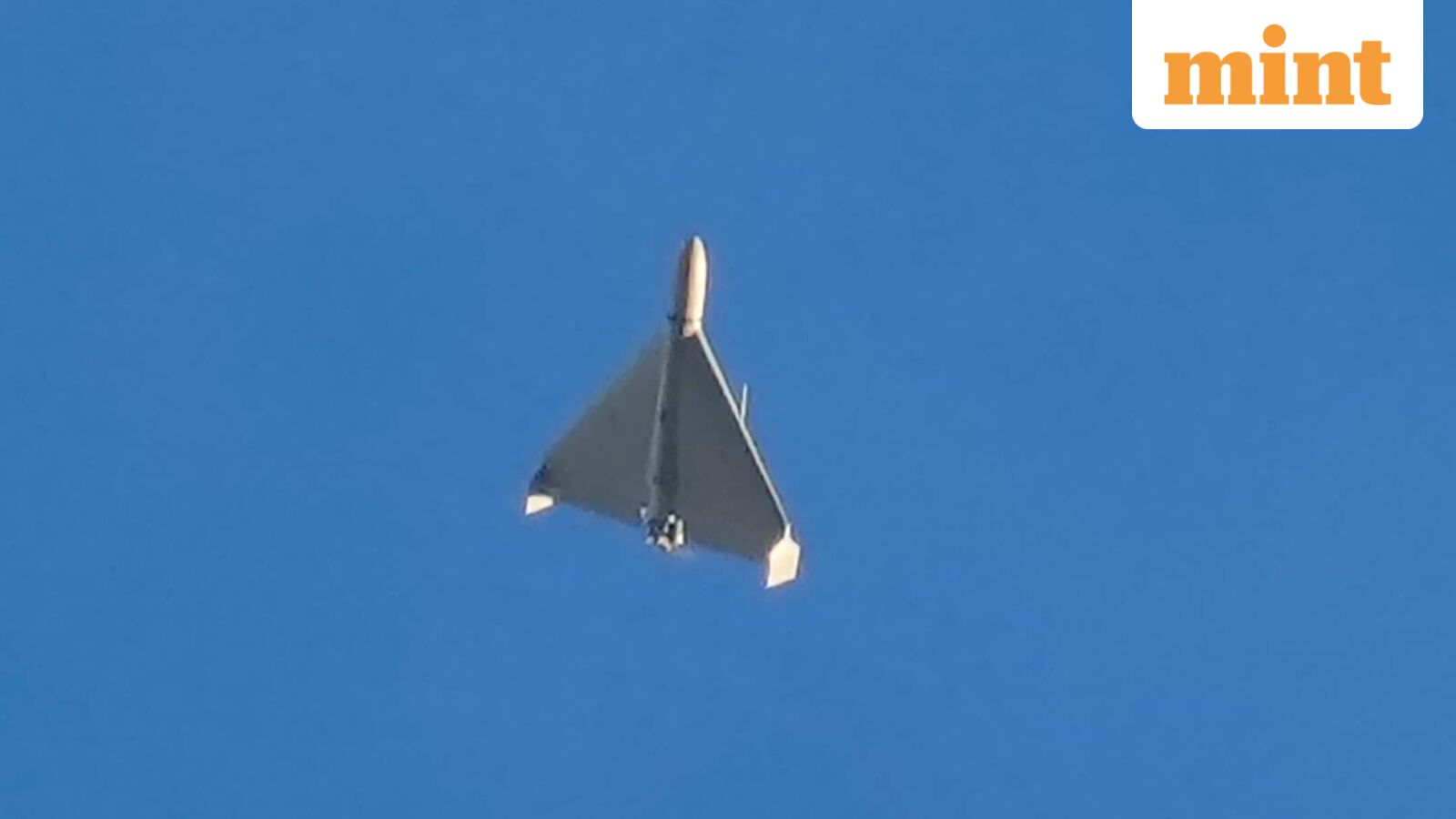
Developed in Iran and costing only around $20,000, the Shahed has become a prominent weapon in modern conflicts, with Tehran’s ally Russia deploying the drones extensively during its long-running invasion of Ukraine.
Small Shahed-136 one-way attack drones and basic cruise missiles continued striking targets across the Middle East on Monday, 2 March, as reported by Bloomberg.
In recent days, these drones have hit US military bases, oil facilities, and civilian structures following US and Israeli air strikes on Iran that began Saturday, which involved cruise missiles, drones, and precision-guided bombs.
US-made Patriot air-defense systems too expensive
Air defense systems used by Gulf states and Israel can be extremely expensive — in some cases requiring interceptor missiles that cost between $3 million and $12 million per shot, according to US Department of Defense budget data.
That huge difference in cost highlights a major dilemma for Iran’s adversaries, that these air defenses have limited stocks of interceptor missiles, and every time one is used to shoot down a low‑cost Iranian drone or missile, a valuable and finite defensive resource is consumed.
The United Arab Emirates Ministry of Defense said on Tuesday that out of 941 Iranian drones detected since the start of the Iran war, 65 fell within its territory, damaging ports, airports, hotels and data centres.
US-made Patriot air-defense systems have been highly effective in intercepting Iranian Shahed drones and other ballistic missiles, with the UAE noting interception rates above 90%.
However, destroying a drone that costs around $20,000 with a missile worth about $4 million highlights a major challenge for Western militaries: inexpensive weapons can quickly drain resources designed to counter far more advanced threats, Bloomberg reported.
After last year’s conflict with Israel, Iran was believed to possess roughly 2,000 ballistic missiles. It likely has an even larger supply of Shahed drones. Russia, another key producer, has reportedly managed to manufacture several hundred of these drones each day, according to Becca Wasser, defense lead at Bloomberg Economics.
Tehran has fired more than 1,200 projectiles since the start of this year’s conflict, with many — perhaps most — of them being Shaheds. That suggests they could be saving more damaging ballistic missiles for sustained attacks, Wasser added, as reported by Bloomberg.
Iran supplied Russia with Shahed‑136 “kamikaze” drones and transferred the technical know‑how that allowed Moscow to build them itself as the Geran‑2. This cooperation was formalized under a contract signed in early 2023, worth about $1.75 billion, which included the drones and the technology for domestic production in Russia, Bloomberg reported.
“The Shahed‑136, among other unmanned aerial systems, has allowed states like Russia and Iran a cheap way to impose disproportionate costs,” said Patrycja Bazylczyk, analyst with the Missile Defense Project at the Center for Strategic and International Studies in Washington DC, as reported by CNBC.
“They force adversaries to waste expensive interceptors on low‑cost drones, project power, and create a steady psychological burden on civilian populations.”
Those Arab Gulf states are also more vulnerable to attacks from Iran’s Shahed explosive drones, because these unmanned weapons are far easier to launch than missiles, carry less risk for the attacker, and can reach some targets in the Gulf in just minutes. Iran is thought to have a very large stockpile, possibly around 80,000 of these drones, according to The Conversation.
lucas drone
The Low-Cost Uncrewed Combat Attack System (LUCAS) drone, built by Arizona-based SpektreWorks, was unveiled in July 2025 at a Pentagon event, where Defense Secretary Pete Hegseth toured the inner courtyard alongside more than a dozen companies competing to provide the military with new equipment, Reuters reported on 3 March.
Drones have increasingly become a cornerstone of modern warfare, a trend highlighted by their successful deployment in the Ukraine war, including Iranian-made Shahed systems operated by Russia, which bear a strong resemblance to the LUCAS, reuters reported.
(With inputs from agencies)