

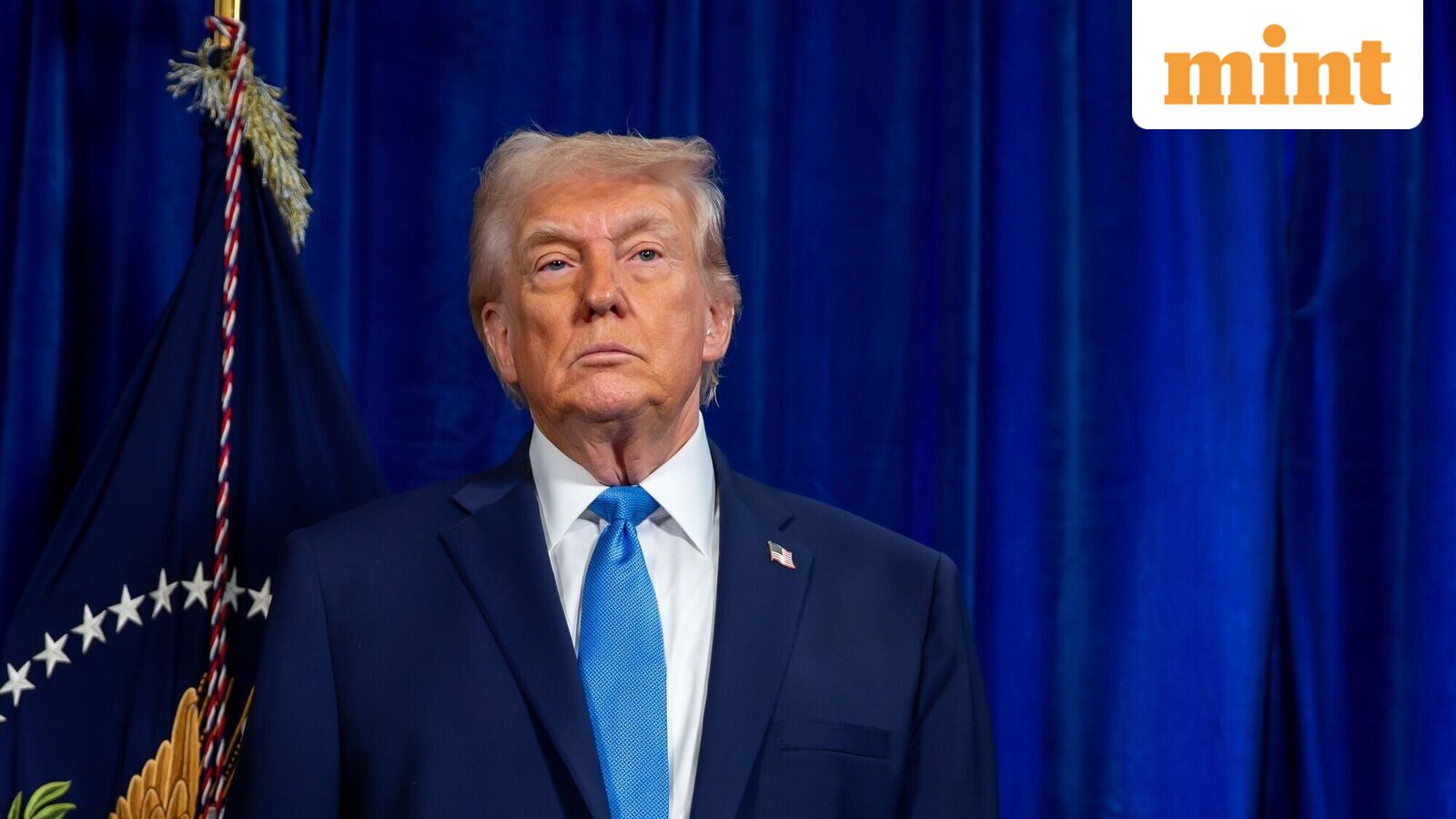
All eyes are on the US Supreme Court today as it prepares to rule on tariffs imposed by former US President Donald Trump on the country’s trade partners. The top court is expected to issue its order on Friday, having scheduled January 9 as an “opinion day,” which marks the first opportunity for a ruling on the Trump tariffs.
The court does not announce in advance which decisions it will deliver. Media reports note that the US Supreme Court typically releases rulings around 10:00 am Eastern Time (ET) on opinion days.
Tariffs beyond presidential authority?
This will be the first time the US Supreme Court will issue a ruling on Trump’s sweeping tariffs. On April 2 last year, Trump imposed tariffs in the range of 10-50%, terming it as “Liberation Day”.
Trump’s tariffs were challenged in courts, and lower federal courts, as Mint reported, have already ruled that many of the tariffs exceeded presidential authority under existing laws.
They stated that the statute used by the Trump administration does not explicitly empower a president to impose broad import duties. This power has traditionally been reserved for Congress under the US Constitution.
The US Supreme Court will now give its verdict on whether Trump can invoke the International Emergency Economic Powers Act (IEEPA) to impose tariffs without Congress’s approval.
Arguments on November 5 indicated that a 6-3 conservative majority expressed “deep concerns” over the use of federal law by the Trump administration to impose tariffs.
Tariff ruling may have a significant impact not only on the US fiscal health, but also on its trade policies. For Trump, it could be his biggest legal defeat so far in his second term as the President of the US.
How could the US Supreme Court’s tariff ruling affect the Indian stock market?
Experts see a strong possibility of the Court ruling going against Trump, which could have a positive impact on the Indian stock market.
They say if the Court gives a verdict that the tariffs are completely illegal, it will be a big hit to Trump, and it will be very favorable to markets like India, which have been severely impacted by Trump’s tariffs.
“There is a high probability of the verdict going against Trump. But the details are significant: that is, whether it would be a partial striking down of the tariffs or completely declaring the tariffs illegal,” said VK Vijayakumar, Chief Investment Strategist, Geojit Investments.
Vijayakumar said the market reaction would depend on the details.
“If the Supreme Court declares Trump tariffs illegal, there would be a rally in India since India has been the worst affected by the 50% tariffs,” said Vijayakumar.
The Supreme Court’s decision could go against Trump because the tariffs were imposed under emergency provisions that cited a widening US trade deficit as justification.
“That widening trade deficit for the US is not something that happened overnight or within a few years. It has been there for the past more than 15 years. So, a problem which has been hanging fire for 15 years cannot be addressed using the emergency powers. So, that is a valid argument,” Vijayakumar said.
Even though the Court rules against Trump’s tariffs, it may be a temporary relief to global markets because the US President has the option to get the tariffs approved by Congress.
For India, a trade deal with the US remains critical, especially now when Trump is exhibiting renewed aggression against Russian oil importers.
On January 7, Republican Senator Lindsey Graham said that Trump had backed the Russia sanctions bill, which could raise US tariffs to at least 500% on countries that buy Russian oil.
The potential impact on gold and silver
Increased uncertainty is considered positive for gold and silver. However, experts expect precious metals to remain volatile in the near term due to geopolitical developments, the dollar, and the movement of bond markets.
According to Anuj Gupta, a SEBI-registered analyst, gold has a strong support zone at $4,300-$4,400 in international markets, while in the domestic market, 1,20,000- 1,30,000 is a key support area.
On the higher side, Gupta said $4,500 is an important resistance, and for domestic gold is around 1,42,000. Further resistance is seen near $4,700, or roughly 1,50,000 in the domestic market.
Read all market-related news here
Read more stories by Nishant Kumar
Disclaimer: This story is for educational purposes only. The views and recommendations expressed are those of individual analysts or broking firms, not Mint. We advise investors to consult with certified experts before making any investment decisions, as market conditions can change rapidly and circumstances may vary.