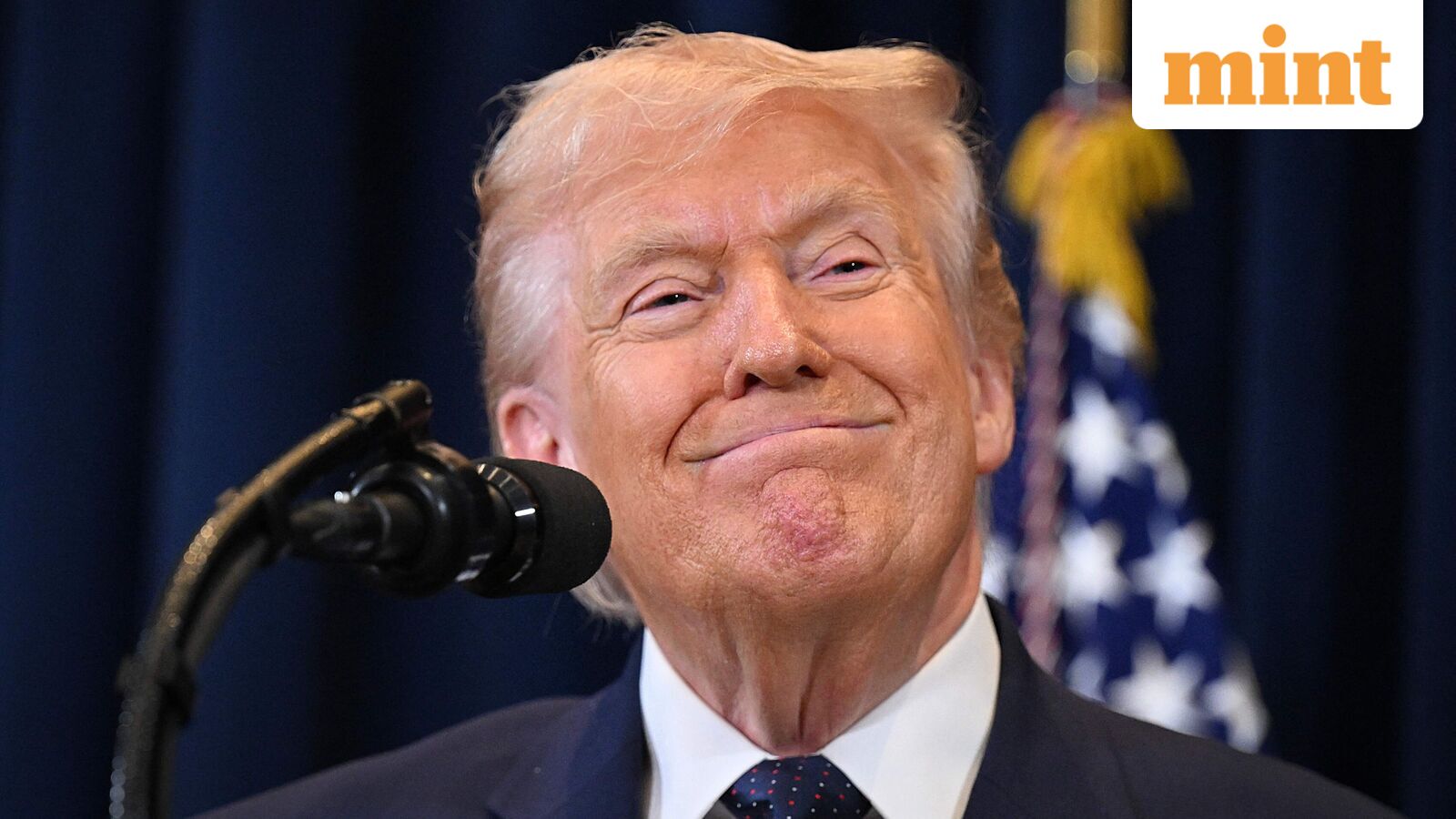
President Donald Trump offered sharply conflicting signals on Monday about the trajectory of the United States-Israeli war against Iran, first suggesting the campaign was nearly complete “very complete, pretty much,” before warning hours later that American forces could escalate their attacks if Tehran attempted to disrupt global energy supplies.
Trump suggests war may be nearing completion
Earlier Monday, Trump appeared to indicate that the campaign had already achieved much of its objective. In a phone interview with cbs news reporter Weijia Jiang, the president characterized the operation as largely finished.
“The war ‘is very complete, pretty much,’” Trump said. He added, “We’re very far ahead of schedule.”
Those remarks briefly calmed global energy markets, which had been shaken by fears that the conflict could spread across the Middle East. Oil prices, which had surged overnight amid concerns about supply disruptions, fell after the interview.
Yet the apparent signal of de-escalation proved short-lived.
Which is it? Trump replies ‘you can say both’
Later in the day, after financial markets had closed, Trump adopted a far more combative tone during a gathering of Republican lawmakers in Florida.
“We have won in many ways, but not enough,” Trump told the audience. “We go forward more determined than ever to achieve ultimate victory that will end this long-running danger once and for all.”
Speaking again to reporters Monday evening, the president warned of severe consequences if Iranian leaders attempted to block global oil flows, particularly through the strategically vital Strait of Hormuz.
“We will hit them so hard that it will not be possible for them or anyone else helping them to ever recover that section of the world,” Trump said.
When asked whether the war might end within days, the president offered a vague timetable: “No.” He added only “soon, very soon.”
Meanwhile, Secretary of War Pete Hegseth appeared far from signaling an end to the Iran war, emphasizing that the campaign had only just begun.
Oil Prices Soar Then Retreat as Markets Digest Contradictory Signals
The volatility in Trump’s messaging was mirrored in global commodity markets. The international benchmark crude price, which had sat below $70 a barrel the previous month, briefly surged to nearly $120 late on Sunday night before retreating following a statement from the Group of Seven nations that they were actively exploring intervention to stabilize prices. A further slide came on the back of Trump’s morning remarks to CBS, with the benchmark ultimately closing below $90.
Trump claimed in the CBS interview that the Strait of Hormuz had reopened to maritime traffic — an assertion flatly contradicted by international shipping monitors, who reported the waterway remained effectively closed. The president also said he was “thinking about taking it over,” though the White House did not clarify what such a move would entail.
Iran Names New Supreme Leader as US-Israeli Airstrikes Continue
As the conflict entered its tenth day, US and Israeli forces have conducted more than 3,000 airstrikes, according to Trump’s own figures, killing approximately 1,300 people in Iran, per Iranian officials. Israeli military sources put the toll at more than 1,900. Iranian retaliatory strikes across the broader region have killed more than 30 people.
In a development that drew Trump’s public displeasure, senior Iranian clerics formally appointed Mojtaba Khamenei — son of Supreme Leader Ayatollah Ali Khamenei, who was killed on the first day of the war — as his father’s successor. Trump had previously declared any such appointment “unacceptable.” “I was disappointed,” he said Monday, “because we think it’s going to lead to more of the same problem for the country.” He declined to answer directly when asked whether Mojtaba Khamenei might face the same fate as his father.
The appointment was celebrated by Iran’s military and hard-line political establishment, though in Tehran itself, opponents were reported to have chanted “Death to Mojtaba” from their windows overnight — a reflection of widespread if carefully suppressed dissent.
Trump-Putin Call Raises Questions Over Russia’s Role in Conflict
In a significant diplomatic development, Trump spoke by telephone with Russian President Vladimir Putin on Monday — the first such exchange since the outbreak of the Iran war. The Kremlin said the call lasted approximately an hour and was described by Putin’s foreign policy adviser Yuri Ushakov as “frank” and “businesslike.” Ushakov said Putin presented Trump with “several proposals” for ending the conflict.
Russia’s status as a key Iranian ally has raised considerable concern in Washington. White House envoy Steve Witkoff told reporters on Saturday that he had communicated directly to Russian officials that sharing intelligence with Iran would be unacceptable. Trump downplayed the prospect of Russian assistance to Tehran, though the administration’s public statements on the matter have remained measured.
Iran’s foreign minister, Abbas Araghchi, took to social media to celebrate the spike in oil prices, branding the allied assault on his country “Operation Epic Mistake” and warning: “We, too, have many surprises in store.”
Iran’s deputy foreign minister Kazem Gharibabadi separately confirmed on state television that France, China, and Russia had all reached out to discuss potential ceasefire conditions. The White House had not responded to requests for comment on those contacts at time of publication.
Lebanon, Saudi Arabia and Turkey Drawn Into Widening Regional Conflict
The conflict’s regional dimensions continued to expand on Monday. In Lebanon, Israeli strikes killed almost 500 people and displaced more than 600,000, according to President Joseph Aoun. Israeli forces have pushed into southern Lebanon in response to rocket fire from Iranian-backed Hezbollah militants, bombarding strongholds across the south of the country.
Saudi Arabia announced it had intercepted drone and ballistic missile attacks targeting the kingdom’s vast Shaybah oil field, the capital Riyadh, and a Saudi air base. In Bahrain, the state-owned energy company declared force majeure, announcing it could no longer fulfill existing contracts owing to the ongoing fighting and a recent attack on its refinery complex.
Turkey reported that a ballistic missile launched from Iran had been intercepted by NATO air defenses on Monday — the second such incident in six days. The Turkish defense ministry said a previous Iranian missile, launched on 4 March, had targeted the Incirlik Air Base in southern Turkey. Iran denied deliberately targeting Turkish territory and had yet to comment publicly on Monday’s incident. Under the NATO treaty, an attack on one member state constitutes an attack on all — a threshold that Western officials have not yet publicly invoked.
In Israel itself, at least one person was killed during an Iranian missile strike on Monday morning, according to Magen David Adom, the country’s emergency medical service, raising the Israeli death toll to at least eleven since the war’s outbreak.
Iran Shows No Sign of Capitulation Despite Trump’s Demands
Tehran has shown no indication of acceding to Trump’s demand for unconditional surrender. With a new supreme leader installed, Iran’s military apparatus continues to fire missiles and drones at neighboring states, and its foreign ministry officials are publicly boasting of the economic damage being inflicted upon global energy markets.
What remains conspicuously absent — despite more than a week of intensive aerial bombardment and mounting casualties on all sides — is any coherent public articulation from Washington of what a post-war settlement might look like, or what conditions Iran would need to meet for hostilities to cease.