


Stock Market Sensex Nifty Prediction: Market experts say that market fluctuations may continue in the coming sessions…
highlights
- The fear of a protracted war in West Asia has shaken Indian markets.
- It is advisable for investors to adopt a cautious strategy at present.
- Experts say that for those who are active in the stock market, it is important to keep a close eye on global signals.
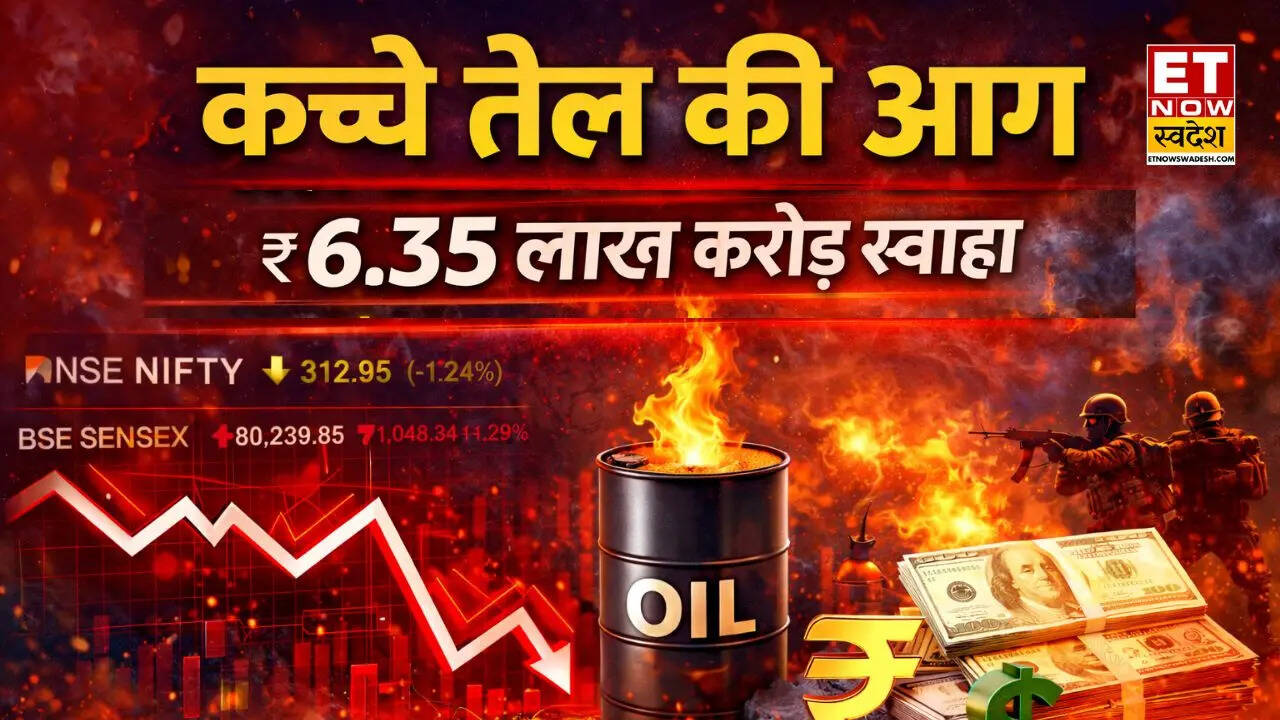
On Monday, March 2, a historic fall was seen in Sensex-Nifty. The BSE Sensex fell 1,048.34 points (1.3%) to close at 80,238.85, while the NSE Nifty slipped 312.95 points (1.2%) to 24,865.70. After this huge fall, the market capitalization i.e. market cap of BSE listed companies decreased by Rs 6.35 lakh crore in a single day. The rupee also weakened against the dollar, while safe haven investment instruments like gold and silver showed a rise.
Investors are dejected after seeing such a huge decline. Now the most important question for investors is what will happen next in the market?
Read full article
Rise in oil prices, pressure on import bill
Global benchmark Brent crude remained around $79 per barrel on Monday after opening the day above $81. Reports of blockage in the Strait of Hormuz, a vital transit route off Iran’s coast, have increased fears about supplies. The news of temporary stoppage of work after a drone attack on a refinery of Saudi company Aramco also deepened concerns.
Experts say that if this conflict prolongs then the possibility of Brent going up to $100 per barrel cannot be ruled out. This will increase India’s import bill, put the rupee under pressure and increase the risk of imported inflation. Due to this, the Monetary Policy Committee, which takes decisions on policy rates, may face great difficulties in controlling the interest rates.
FIIs selling, risk aversion
Foreign portfolio investors sold shares worth Rs 3,295.64 crore on the first trading day of March. They were net buyers in February. Negative AI news in emerging markets and uncertainty over US tariff policy were already weighing on valuations; Now the geopolitical risk arising from the Iran-US war has further increased vigilance.
What will happen next?
US President Donald Trump fears this conflict will last for several weeks. If tensions do not subside soon, markets could remain volatile with pressure on oil prices and the currency.
Which sectors were affected?
Tire, paint and oil marketing companies (OMCs) were directly hit by the rise in crude oil. Due to increase in the cost of crude oil, there was pressure on the margins of these companies and a sharp fall in the shares was seen.
The aviation sector also remained under pressure. Fears of expensive fuel and possible flight disruptions weakened shares of airline companies.
The auto industry was also affected, as concerns over selling in tire companies and rising input costs made investors cautious.
Buying was seen in companies related to defense and drone technology. In the war-like environment, investors’ interest in defense-related stocks increased. Strength was also recorded in some selected metal packaging companies.
How will the market be in future, what should investors do?
He said that it is possible that there may be consolidation at these levels for some time, because despite so much selling, PCR is still consolidating around 90 to 91, not much pull off is visible, so due to that, some consolidation may be seen happening around this range in the coming days.
He said that until geopolitical tensions subside, it is better to remain cautious. In such a situation, investors should avoid making big bets and proceed with limited positions.
Market expert Nandish Shah said that India is a big importer of crude oil, hence keeping oil prices in the range of $78-80 increases pressure on both the rupee and the equity market. However, if war-related tensions subside soon, there is potential for a sharp market recovery from lower levels. India’s domestic economic data currently shows a strong situation, which could form the basis of a bounce.
Message to investors
Experts say that market fluctuations may continue in the coming sessions. In such an environment, it would be wiser to adopt a ‘stock-specific’ strategy i.e. betting on selected stocks. Until the international situation stabilizes, it would be better to focus on sectors with limited investment and strong fundamentals.
Disclaimer: This article is for informational purposes only and should not be construed as investment advice in any way. ET NOW Swadesh recommends its readers and viewers to consult their financial advisors before taking any money-related decisions.
related news
end of article

