

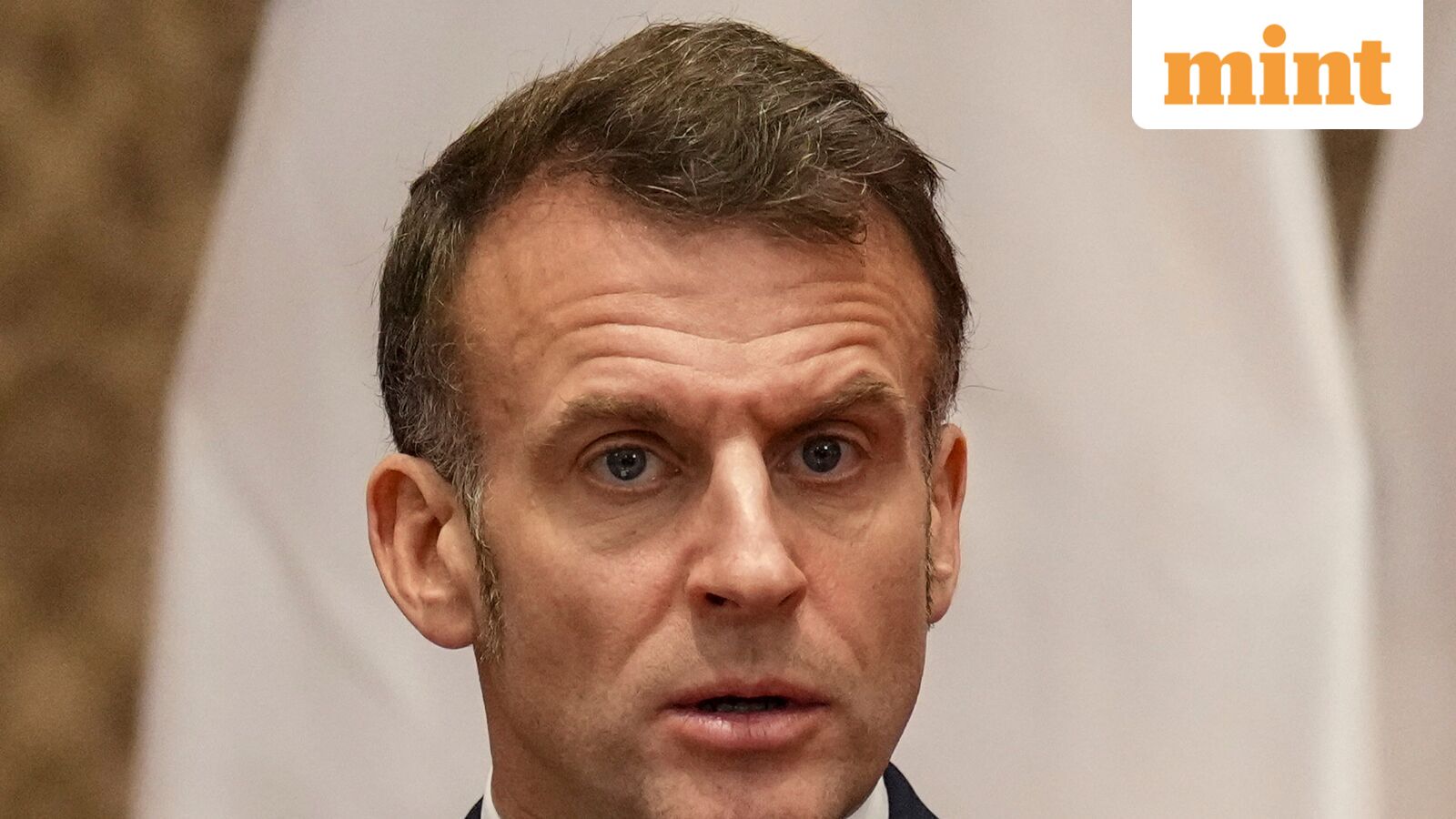
French President Emmanuel Macron on Monday (local time) said that France and its allies were planning a “defensive” mission to reopen the Strait of Hormuz and warned that an attack on Cyprus is an attack on Europe, AFP reported.
Macron’s statement came as he visited Cyprus to discuss regional security and demonstrate “full solidarity” with the island, which sustained the first drone attack of the US-Israel-Iran war on European territory. The visit comes days after he dispatched a warship to the eastern Mediterranean island nation, after a Shahed drone struck a British air base on its southern coast last week.
He said, “When Cyprus is attacked, it is Europe that is attacked. We are bound to one another by strategic partnerships.”
Macron’s remark on reopening the Strait of Hormuz
Speaking during the visit, the French president said that the mission would aim to escort container ships and tankers to gradually reopen the Strait of Hormuz, after the end of the hottest phase of the conflict. Iran’s Islamic Revolutionary Guards Corps (IRGC) shut the Strait of Hormuz days after the United States and Israel launched strikes, targeting key military and naval forces, killing several of its top commanders and former Supreme Leader Ayatollah Ali Khamenei.
Commenting on the reopening of the Strait of Hormuz, Macron said in Paphos that it is crucial for international trade, but also for the flow of gas and oil, which must be able to leave the Middle East region once again.
European allies to put together a mission
Macron, who was speaking alongside Cypriot President Nikos Christodoulides and Greek Prime Minister Kyriakos Mitsotakis, said that European and non-European allies will put together a “purely defensive, purely support mission”.
On Monday (local time), the European Union said that it was ready to “enhance” all its operations to protect maritime traffic in the conflict-ridden Middle East. Reports suggest that the European Union has been holding discussions to reinforce its naval mission in the Red Sea after the US-Israeli strikes triggered a broader regional military confrontation.
US-Israel attacks Iran
On 28 February, the US and Israel launched “Operation Epic Fury” and “Operation Rising Lion”, respectively, against Iran, days after talks between Washington and Tehran stalled over the latter’s nuclear program. The strikes prompted Tehran to retaliate, following which it launched strikes at Israel and US military bases in the Middle East.
The conflict, now in its tenth day, has escalated, with oil prices surging to a record high level, after Iran closed the Strait of Hormuz and targeted several oil facilities across countries in the Middle East. Loud explosions were heard across cities in the Middle East, including Dubai, Abu Dhabi, Manama, Riyadh, and Doha, with the Gulf countries intercepting drones and missiles.
The conflict has also sent the aviation sector for a toss. Amid airspace restrictions in the Middle East, hundreds of flights have been canceled in the past week, with many carriers continuing to suspend flights until the situation improves. Thousands of stranded passengers from across the world are also stuck in the Middle East as Gulf countries discuss the way forward.

