

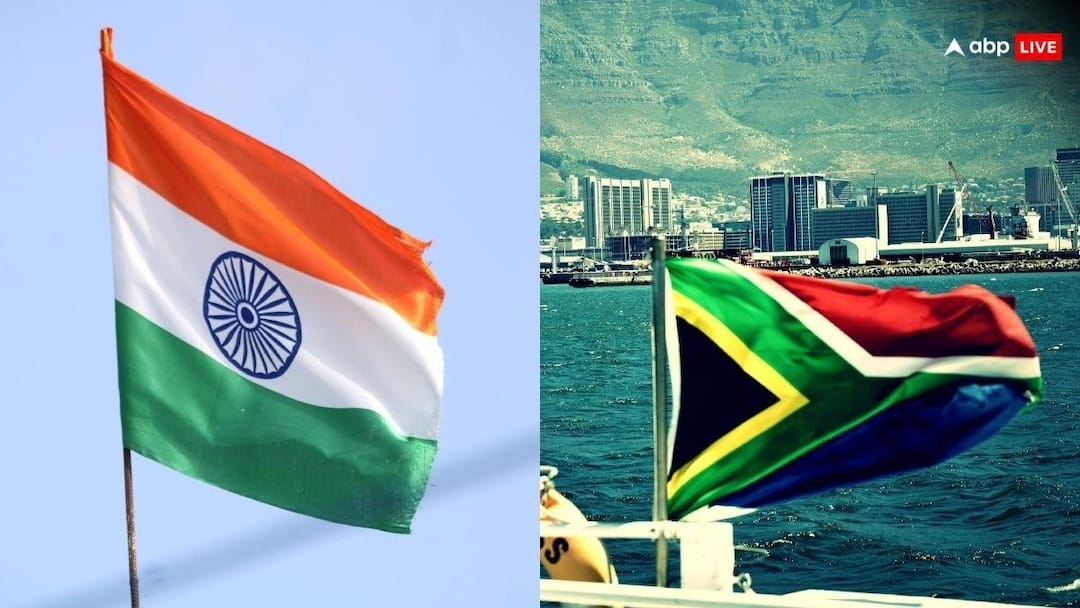
Juko Godlimpi, Deputy Minister of the Ministry of Trade and Industry of South Africa, said on Monday (March 9, 2026) that India has played an important role in the reconstruction of the post-World War II world order which is now on the verge of collapse. He said this while addressing a gathering of industry leaders, academicians and policy-makers in Pretoria.
Godlimpi addressed the second annual India-South Africa Business Summit organized by the Indian High Commission and II-India Business Forum. The South African minister said that two years after the end of the Second World War, independent India was born within the framework of the global trading system which was created by the Western countries.
He said, ‘India is an emerging democracy in a world being shaped by major powers.’ On India’s plans to become a major global power by 2047, the centenary of its independence, the minister said that India is now in a different and special situation. He said, ‘India will find itself in a situation where instead of merely following the existing global order, it will also assume the responsibility of playing the role of co-creator of a new global order.’
He said, ‘India had emerged as a supporting partner in that system after the Second World War, but now it has to face the reality that it is in a situation where it will have to play the role of a main partner in rebuilding that system, because that system is now on the verge of collapse.’
Godlimpi said that India and South Africa are not just trading partners. Juko Godlimpi said, ‘We are strategic partners in development, industrialization and global economic recovery.’ He quipped that these two countries are called Terrible Twins in the World Trade Organization (WTO) because their representatives are always vocal in bringing changes in the interests of the Global South.
He said, ‘In all discussions related to global development, South Africa and India support a strategic vision of the Global South based on the principles of fair and equitable international trade and also emphasize that the views of developing countries should be taken as seriously as the views of countries with greater economic power.’

