

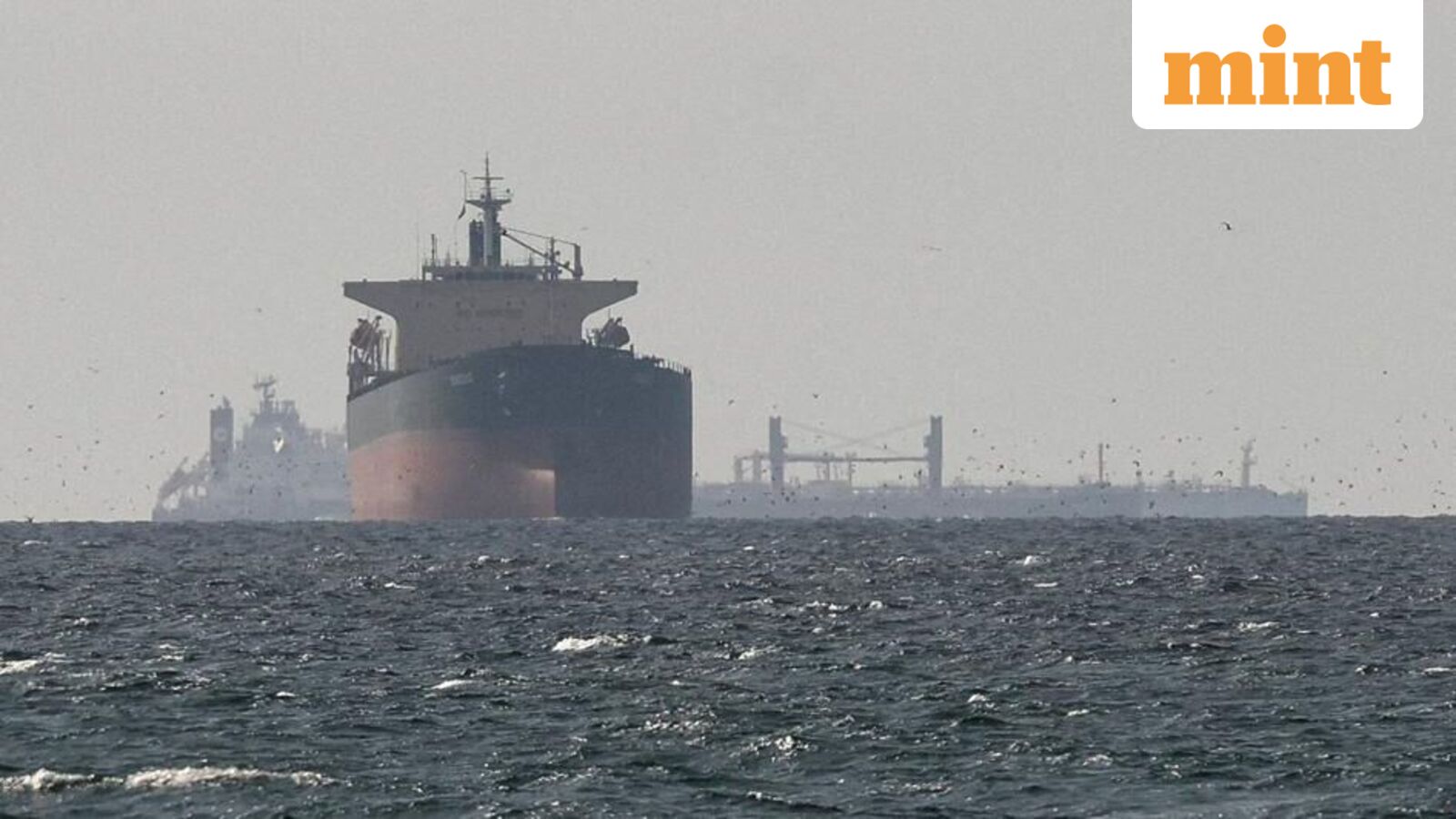
Two tankers carrying liquefied petroleum gas (LPG) have crossed the Strait of Hormuz and are heading to India, offering some relief as disruptions linked to the war in West Asia trigger concerns about cooking gas shortages.
Rajesh Kumar Sinha, special secretary at the Union ministry of ports, shipping and waterways, said the vessels — Shivalik and Nanda Devi — crossed the strait early on Saturday and are expected to reach Indian ports by 17 March.
The development comes amid an LPG shortage in the country, with the government prioritizing household consumers as supply disruptions raise concerns over cooking gas availability.
“As of yesterday, there were 24 India-flagged vessels, out of them two vessels — Shivalik and Nanda Devi — carrying LPG early in the morning today cross the Strait of Hormuz safely and they are coming towards India. Both of these vessels are carrying about 92,700 metric tonne LPG and they will arrive at Mundra and Kandla. Their expected arrival dates are 16 March and 17 March,” he said.
Sinha added that 22 India-flagged vessels remain stuck on the western side of the Strait of Hormuz, including six LPG carriers, four crude carriers and one LNG carrier, with 611 Indian seafarers onboard.
Six LPG vessels have arrived at major ports in the past few days, Sinha said.
The two LPG carriers were chartered by state-run Indian Oil Corp., people familiar with the matter told Bloombergwho asked not to be identified due to the sensitivity of the issue. The vessels are owned by Shipping Corp. of India Ltd.
The ships were granted safe transit through the strait — which has been all but closed for nearly two weeks — after a deal between New Delhi and Tehran, the people said, without providing details.
India’s Ministry of External Affairs didn’t immediately reply to a request for comment, reported. Bloomberg. An Iranian official familiar with the matter, who also declined to be named as he’s not authorized to speak to the media, said he could not confirm an agreement. Indian Oil did not immediately reply to an email seeking comment, it added.
Ship-tracking data shows that Shivalik has already sailed through the strait, while Nanda Devi appears to be in transit, though electronic interference around the waterway complicates accurate monitoring. Both ships loaded LPG from Ras Laffan in Qatar, Bloomberg added.
Vessels in limbo
The Strait of Hormuz, one of the world’s most critical energy chokepoints, has seen severe disruption since the conflict escalated in West Asia, leaving several vessels stranded near the waterway.
According to Sinha, 22 India-flagged vessels remain stuck west of the strait, including ships carrying LPG, crude oil and LNG.
India, which imports nearly 90% of its crude and LPG from the Persian Gulf, has been in discussions with Iran to ensure safe passage for its vessels through the strait. A number of LPG vessels are now lined up to make the crossing, the people told Bloomberg.
Surge in LPG demand
On Friday, the government acknowledged concerns over cooking gas supplies in the country.
Addressing the media on Saturday, Sujata Sharma, joint secretary for marketing and oil refinery at the ministry of petroleum and natural gas, said concerns around LPG supply remain, though no distributor in the country has run dry so far.
The country has around 25,000 retail LPG distributors.
Amid panic booking, daily LPG cylinder bookings have risen to 88 lakh from a pre-war average of 55 lakh, she said.
India has an annual LPG requirement of 31-32 million tonnes, of which 60-65% is imported, making it the world’s second-largest LPG importer. Around 90% of imports come from West Asian countries, mainly Saudi Arabia, Qatar and the UAE.
To manage supplies, the government earlier increased the lock-in period for booking household cylinders to 25 days, and later extended it to 45 days for rural consumers. Urban consumers can continue to book a cylinder after 25 days of the previous booking.
Sharma also noted that oil marketing companies are trying to source LPG from other countries.
BRICS discussions
Responding to a question on the position of BRICS members on the ongoing war in West Asia, Randhir Jaiswal, spokesperson of the ministry of external affairs, said discussions are underway to develop a common position.
“Some members of the BRICS as you know are directly involved in the current situation in West Asia. This has obviously impacted forging a consensus on a common BRICS position on the ongoing conflict. As chair of BRICS, we have been facilitating discussions among BRICS members through Sherpa channel. The last meeting of the Sherpas of the BRICS took place virtually on 12th March. We are trying our best to develop a position, but because of differing positions, it has been difficult,” he said.
“In addition, our leadership is also in talks. They are engaged with member countries of BRICS, and we will continue to remain engaged with BRICS member countries so that we can arrive at a position on this particular conflict,” Jaiswal added.

