

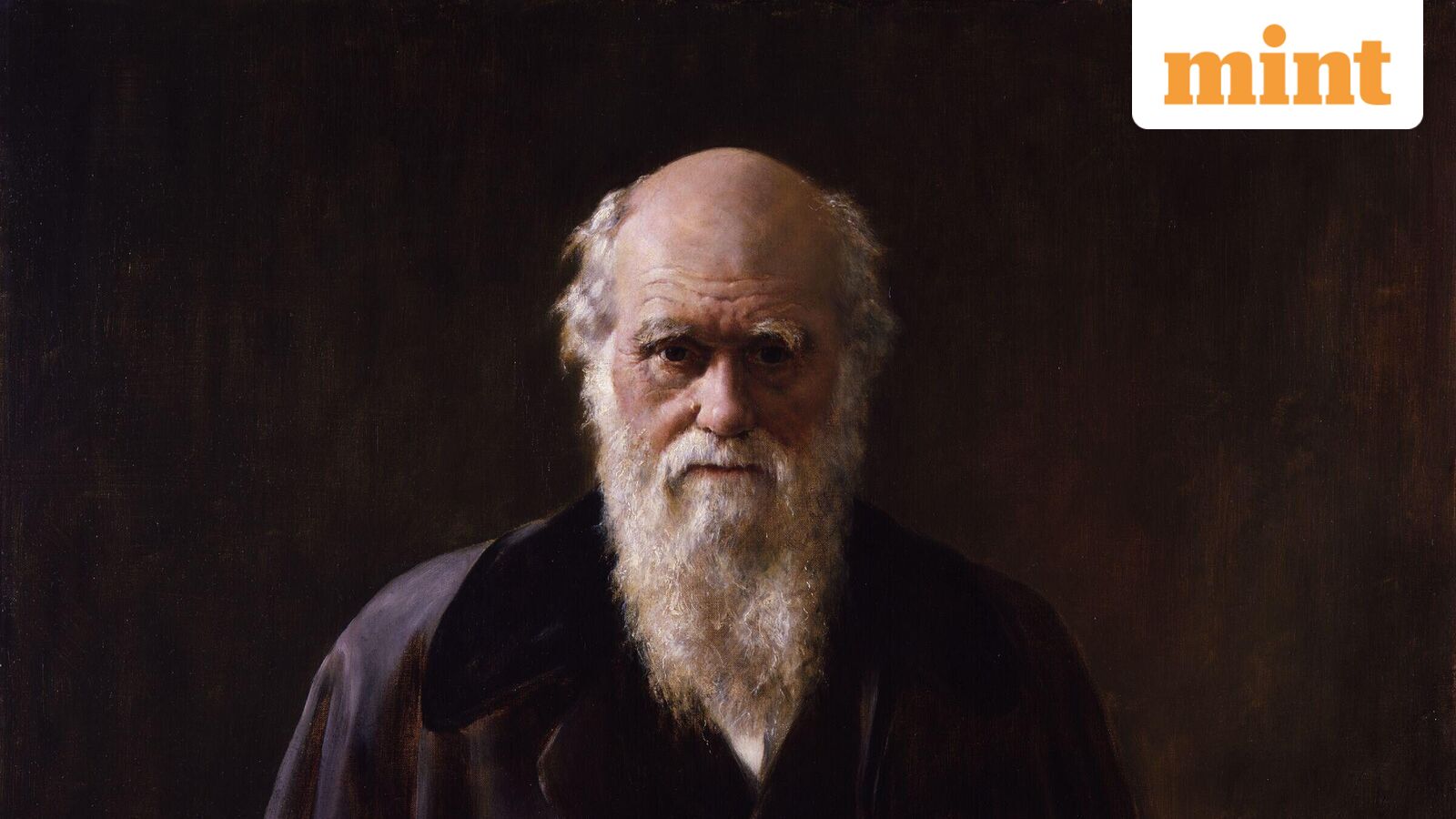
Charles Darwin, the progenitor of the theory of evolution, was also a fierce advocate for human dignity.
While Darwin’s work on evolutionary biology was revolutionary and laid the foundation of modern scientific thinking on the subject, his views on social injustice are equally important, and carry considerable weight in today’s world, marked by stark wealth inequality.
Quote of the Day by Charles Darwin
“If the misery of the poor be caused not by the laws of nature, but by our institutions, great is our sin.”
What does Charles Darwin’s quote mean?
Charles Darwin’s work on evolution is often associated with the phrase “survival of the fittest”—a term actually coined by philosopher Herbert Spencer, not Darwin—which is frequently misused to justify ignoring the vulnerable.
However, Darwin himself believed in monogenism—the shared ancestry of all human races—contrary to many thinkers of the time who believed in polygenism (that different races are different species). He was a staunch abolitionist who spoke out passionately against slavery, which he witnessed firsthand in Brazil during his voyage on the HMS Beagle.
In the quote above, Darwin states unequivocally that “nature” cannot be blamed for the widespread suffering of those in the lower rungs of society: if human beings are impoverished, starving, or oppressed because of the way our governments, economies, and social frameworks operate, then the blame, the “great” sin, lies squarely on us.
Darwin’s words here are a profound moral indictment that asserts that society must take absolute accountability for the structures it creates.
Rather than waving away poverty as an inescapable fact of life, a part of “nature,” Darwin suggests that we must recognize it for what it is—a structural failure and a moral “sin” that we have a duty to correct.
The famous reflection by Darwin appears in the scientist’s renowned journal, The Voyage of the Beagle (1839), which details his legendary five-year scientific expedition around the world.
While traversing through South America, Darwin came face to face with the horrors of the trans-Atlantic slave trade, especially in Brazil.
Coming from a family of staunch abolitionists, Darwin was deeply disturbed by the cruelty and exploitation he witnessed. His observations during his travels heavily influenced his worldview, making him realize that the immense suffering he saw was not the result of a natural hierarchy, but the outcome of brutal economic institutions created by powerful men.
Who was Charles Darwin?
Born in 1809, Charles Darwin was a British scientist who fundamentally altered human understanding of life on Earth.
Prior to Darwin, most people believed that plants and animals had been created exactly as they appeared in the present—static throughout history, never changing.
However, Darwin challenged this notion and introduced a revolutionary new idea: that all living things are connected and have gradually changed or “evolved” over millions of years.
His work, most famously laid out in his groundbreaking book On the Origin of Species (1859), introduced the world to the concept of evolution, which shook widely held creationist myths and became the foundation of modern biological science.
Darwin’s ideas were gleaned from his five-year voyage around the world on board the HMS Beagle.
As the British scientist, then in his twenties, explored the coast of South America and the remote Galápagos Islands, he carefully observed plants, animals, and fossils. He found something fascinating: species that lived on different islands were incredibly similar, yet they had developed unique physical traits—like different beak shapes in birds or shell shapes in tortoises—that perfectly suited the specific environments they lived in.
These observations led Darwin to develop his famous theory of “natural selection.” Simply put, he realized that in the wild, animals and plants face a constant struggle to survive, and those born with naturally helpful traits—like a thicker coat for cold weather or better camouflage to hide from predators—are more likely to live long enough to have offspring. They then pass those helpful traits down to the next generation. Over vast amounts of time, these tiny advantages accumulate, eventually creating entirely new species.
Disclaimer: This story is for educational purposes only.

