

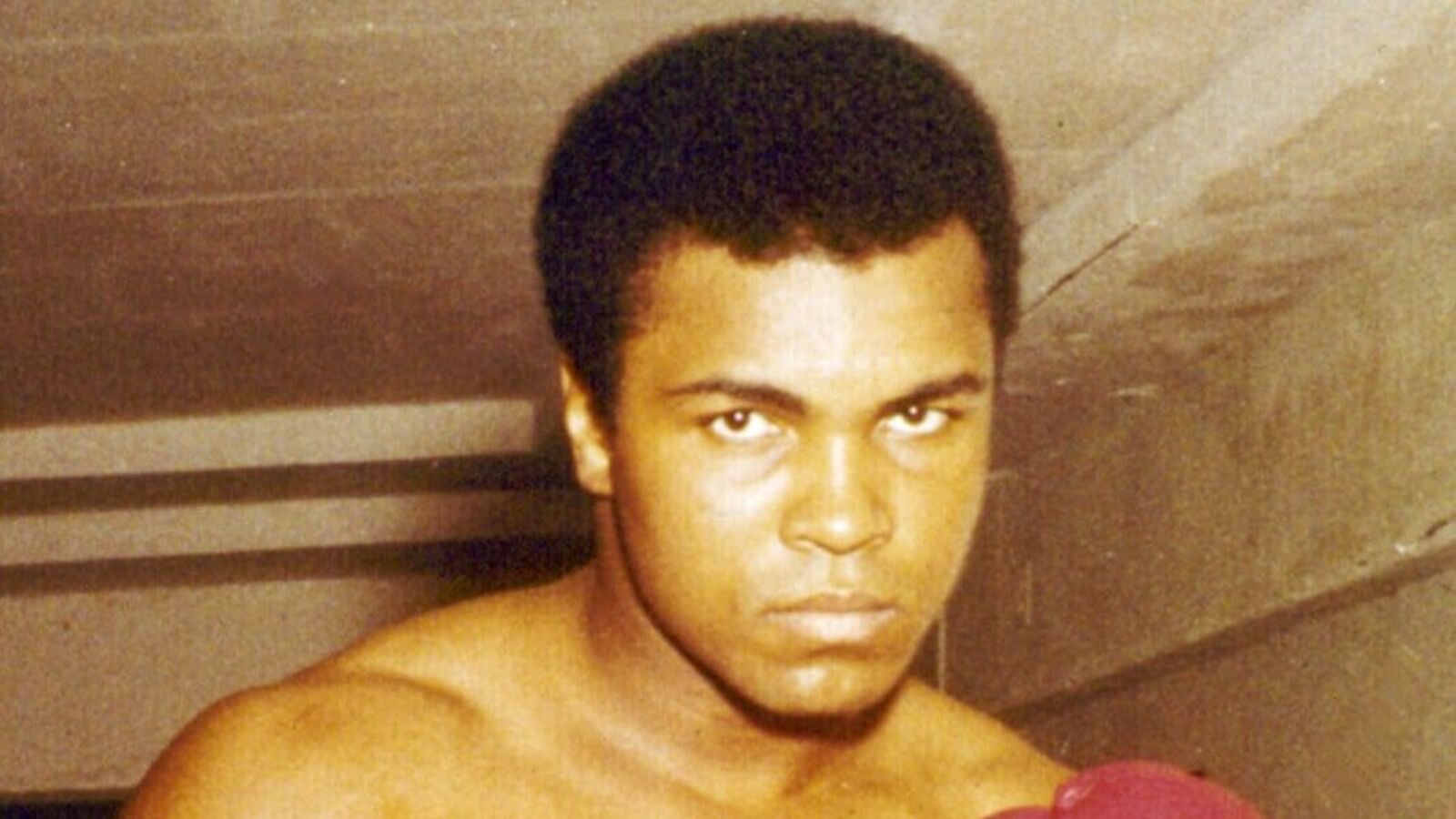
“If my mind can conceive it, if my heart can believe it—then I can achieve it”— This is a famous quote by legendary boxer Muhammad Ali, who is considered to be one of the greatest boxers in the history of the sport.
He officially “claimed” the quote in his autobiography, The Soul of a Butterfly: Reflections on Life’s Journeywhich was released in 2004.
Muhammad Ali enjoyed a stellar boxing career, becoming the first boxer in history to win the World Heavyweight Championship on three separate occasions. In 1960, Muhammad Ali won Light Heavyweight gold at the Rome Olympics, when he was just 18 years old.
What it means
Muhammad Ali’s quote explains a three-step process for an individual to turn an invisible idea to a reality that can be visible.
He tries to convey the message that success is not just about having physical talent, but also it’s about being mentally and emotionally strong. The “conceive” in his quote means that one has to be able to imagine the goal before starting to work on it.
If there is no clear mental clarity, then you are likely to exhaust all your energy. The “believe” phase is all about emotional certainty. When things are not going right, or if you are in a difficult situation, then the mind might tell you to quit. However, the heart might tell you to face your fears and endure the pain because of the passion you have to achieve your goal.
The “achieve” bit is where the result has been achieved, when a clear mind and motivation to work towards the goal comes together. This is when you spend the time and take the effort to achieve your goal, instead of riding on luck.
Where it comes from
This quote comes from Napoleon Hill, who was a famous motivational author. “Whatever the mind can conceive and believe, it can achieve,” Hill had written in his bestselling book Think and Grow Richwhich was first released on 1 January, 1937.
In the 1970s, American civil rights activist Rev. Jesse Jackson added a more positive touch to the quote, and said: “If my mind can conceive it, and my heart can believe it, I know I can achieve it!”. According to The New York times, Jackson said this while addressing students at Indiana’s Anderson College in 1979.
How to apply it today
Concept: You shouldn’t just think that “I want to be successful in life”. Achieving a major goal begins from grassroots, and that includes intense planning.
Mohammad Ali often imagined what his knockout fights would be like even before the fights took place.
He used a visualization technique called “Future History” to practice his knockout victories before stepping up onto the boxing ring.
He did not just imagine winning fights, but he practiced in such a way where he could hear the roar of the crowd and felt the referee raising his hand after winning the fight.
Believe: You cannot believe in yourself if you are surrounded by people who doubt you or criticize you. You have to find the people who believe in you.
You have to replace “I can’t do this” with “I will learn how to do this”. Big belief also runs on small goals. For example, if you want to run a marathon, you have to take it step-by-step, by running one mile at the start.
Then run two miles, three miles and so on. Ali even famously said that he called himself the greatest even before he was the greatest.
Achieve: Achieving a goal isn’t as straightforward as one might think. Muhammad Ali lost just five fights in his professional boxing career, but his career was hindered by obstacles.
In 1967, Ali was banned from boxing for three-and-a-half years because of his refusal to be drafted into the US Army for the Vietnam War. As a result, he was stripped of his boxing license by New York State Athletic Commission.
He was also stripped of his heavyweight championship by World Boxing Association (WBA) and the other boxing associations.
This goes to show that achieving goals do not come without obstacles and challenges, and despite these obstacles, Ali went on to become an influential figure on and off the boxing ring.
About Muhammad Ali
Muhammad Ali was born Cassius Marcellus Clay Jr. on 17 January, 1942. He began learning boxing at the age of 12. In 1964, when he was 22 years old, he converted to Islam, and his name was changed from Cassius Clay to Muhammad Ali.
He made his professional boxing debut in 1960, and went onto win gold in the light heavyweight category at the Rome Olympics. On February 25, 1964, he won the world heavyweight championship by beating Sonny Liston.
Some of his most notable wins in his professional career include beating George Foreman in the Rumble in the Jungle, and a victory over Joe Frazier in 1975, in the third match of their iconic trilogy of fights.
That was one of the most brutal fights in history. After 14 rounds of fighting in a 38°C heat, Frazier decided to stop fighting because his eyes were swollen badly. Ali later said that “this was the closest to death” that he has ever experienced.
In 1967, Ali was handed a three-and-a-half year ban from professional boxing after he refused to join the US Army for the Vietnam war. He said that his decision to withdraw was due to his religious beliefs as a Muslim and his opposition to the war.
His boxing license was eventually suspended by the New York State Athletic Commission (NYSAC), and the World Boxing Association (WBA) and other boxing associations stripped him of his titles. He was also sentenced to five years in prison and a fine of $10,000 after he was convicted of tax evasion.
In 1971, the Supreme Court unanimously reversed Ali’s conviction, and the decision allowed Ali to return to boxing. In 1978, following his win over Leon Spinks, Ali became the first-ever three-time heavyweight champion in boxing. He had beaten Sonny Liston in 1964 and George Freeman in 1974.
He passed away on 3 June, 2016, aged 74 after battling respiratory problems.

