
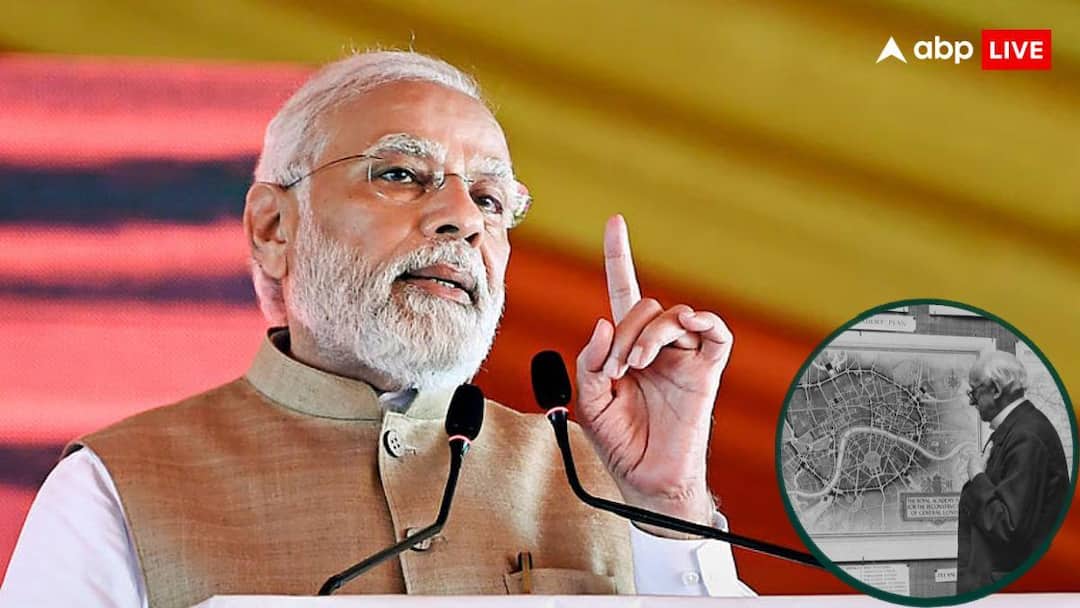
Prime Minister Narendra Modi made an important announcement regarding Rashtrapati Bhavan on Sunday (22 February). He said during the ‘Mann Ki Baat’ program that the statue of British architect Edwin Lutyens installed in Rashtrapati Bhavan will be removed. In its place, a statue of C. Rajagopalachari, the first Indian Governor-General of independent India, will be installed. PM Modi said that unfortunately, even after independence, the statues of British administrators remained in Rashtrapati Bhavan, while the statues of the great sons of the country were not honored by being placed there.
The Prime Minister said that today the country has left behind the symbols of slavery and has started giving importance to things related to Indian culture. He said, ‘A statue of British architect Edwin Lutyens was also installed in Rashtrapati Bhavan. Now the statue of Rajaji (C. Rajagopalachari) will be installed in place of this statue.
Will get freedom from slavery mentality – PM Modi
Modi said that during the Amrit Mahotsav of Independence, he had spoken of ‘Panch Pran’ from the Red Fort. One of them is freedom from the mentality of slavery. He said that Rashtrapati Bhavan has also taken an important step in this direction. ‘Rajaji Utsav’ will be celebrated at Rashtrapati Bhavan on 23 February. On this occasion, the statue of C. Rajagopalachari will be unveiled in the central courtyard of Rashtrapati Bhavan.
What did Prime Minister Modi say about Rajagopalchari?
The Prime Minister said, ‘Rajagopalachari was one of those people who saw power not as a position but as a service. His conduct in public life, self-control and independent thinking, inspires us even today. Along with this, an exhibition based on Rajagopalachari will also be organized during Rajaji Utsav. This exhibition will continue from 24th February to 1st March. Modi said, ‘Take a chance and go to see it.’
Edwin Lutyens, in collaboration with Sir Herbert Baker, designed many grand and historic buildings in New Delhi, including Rashtrapati Bhavan, North Block, South Block and India Gate. In recognition of his contribution, a part of New Delhi is also known as ‘Lutyens’ Delhi’.