

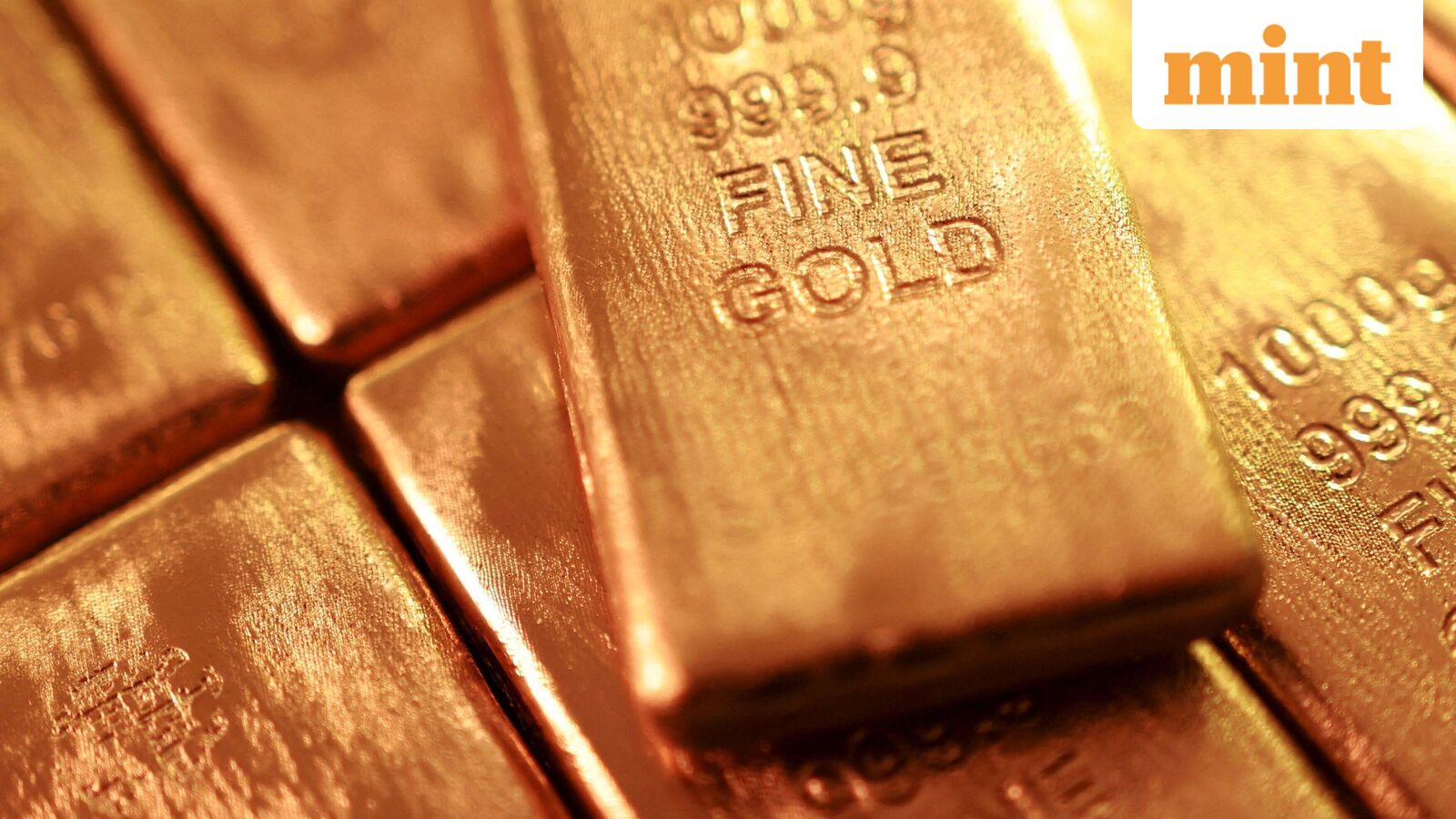
Gold rate today: Gold prices have turned increasingly volatile as geopolitical tensions in the Middle East intensify, forcing investors to balance safe-haven demand against macroeconomic headwinds such as a stronger US dollar and rising bond yields.
The conflict entered its seventh day with intensified bombing, while Iran vowed retaliation following reports of a US attack on an Iranian ship thousands of miles away from the battle zone. Earlier hopes of de-escalation quickly faded after Tehran warned Washington would “bitterly regret” the sinking of an Iranian warship near Sri Lanka.
Gold prices rose on Friday, recovering after a drop of more than 1 percent in the previous session, as investors returned to safe-haven bullion amid growing uncertainty over the escalating conflict in the Middle East.
Spot gold gained 0.8% to $5,117.27 per ounce as of 0650 GMT. Despite the rebound, the metal has declined about 3% so far this week and is set to end its four-week winning streak, as expectations of interest rate cuts have weakened and inflation worries have intensified due to a surge in global energy prices.
The precious metal, which touched a record high of $5,594.82 on January 29, briefly climbed above $5,400 earlier this week as the US-Israeli air campaign triggered a surge in safe-haven buying. However, gains proved short-lived as the US dollar strengthened, attracting its own flight-to-safety flows and pressuring bullion prices.
Market sentiment in bullion is also being shaped by expectations around potential global tariffs, speculation about Kevin Warsh’s nomination as the next Federal Reserve Chair, and the outlook for US interest rates. Investors widely expect the Federal Reserve to keep rates unchanged at its March 18 policy meeting, while the upcoming US February jobs report is being closely watched for signals about the central bank’s future policy path.
Gold is traditionally viewed as a hedge against long-term inflation, but it tends to perform better in a falling interest-rate environment. As a result, the metal is currently navigating a delicate balance between geopolitical uncertainty and macroeconomic constraints.
US Iran War vs Strong dollar
Commodity experts say gold is currently caught between two powerful and opposing forces. While geopolitical instability is boosting demand for safe assets, rising real yields and a stronger dollar are limiting the upside.
NS Ramaswamy, Head of Commodity & CRM at Ventura, highlighted that the metal is facing an unusual market environment.
“Gold is facing an unusual dynamic. Its benefitting from fear of the geopolitical tensions but suffers from the economic ramifications of that same fear. Can the safe-haven demand overwhelm the traditional macro headwinds?”
He noted that historically gold has also rallied during rate-hike cycles when uncertainty is elevated, although sustained rallies typically require accommodative monetary policy. Ramaswamy said the metal’s long-term appeal remains intact despite short-term pressures.
“Historically gold could also rally during rate-hike cycles during elevated levels of uncertainty. It certainly requires an accommodative monetary policy. Long term appeal has not deteriorated despite short term headwinds.”
He added that structural factors continue to support gold’s long-term outlook. Central banks around the world are still accumulating gold reserves as part of de-dollarization strategies, while persistent fiscal deficits in major economies are also underpinning demand for the metal.
Oil shock, inflation fears reshape gold outlook
Another major factor influencing bullion markets is the rise in crude oil prices as geopolitical tensions in the Middle East threaten supply disruptions.
NS Ramaswamy of Ventura said inflation concerns triggered by higher energy prices could complicate the outlook for gold. According to him, the inflationary consequences of the conflict—particularly rising oil prices—could push real yields higher and work against gold prices despite strong safe-haven demand.
He noted that the surge in energy costs is already forcing markets to reprice expectations of US Federal Reserve rate cuts. The possibility of fewer rate cuts in 2025 is strengthening the US dollar and creating additional pressure on bullion.
Ramaswamy added that gold is currently being pulled in two different directions, with geopolitical uncertainty supporting the metal while macroeconomic headwinds such as rising yields and dollar strength limit the upside.
Technical Outlook
Despite the volatility, technical indicators suggest that gold continues to retain a bullish bias.
Renisha Chainani, Head of Research at Augmont, said the metal remains well supported at key levels.
“Gold continues to maintain a bullish bias, with prices expected to move towards $5250 (~ ₹165,000) and $5300 (~ ₹167,000) in the near term. Strong support is seen around the $5000 (~ ₹158,000) level.”
According to Chainani, the $5,000 mark is likely to remain an important psychological and technical support zone for gold. She believes this level could act as a strong buying area during market corrections.
Ramaswamy also pointed out that the metal’s $5,000 level is emerging as a long-term floor despite recent volatility. He said gold briefly dropped nearly 5% during the recent geopolitical turmoil before recovering about 1.50% to around $5,180 as safe-haven demand returned.
Going forward, market participants are expected to closely monitor US bond yields and the dollar index, which remain key drivers for gold prices. If geopolitical tensions escalate further or monetary policy turns more accommodative, analysts believe gold could eventually enter a stronger phase of its ongoing bull market, potentially extending beyond $5,600 after April 2026.
Disclaimer: The views and recommendations made above are those of individual analysts or broking companies, and not of Mint. We advise investors to check with certified experts before making any investment decisions.

