

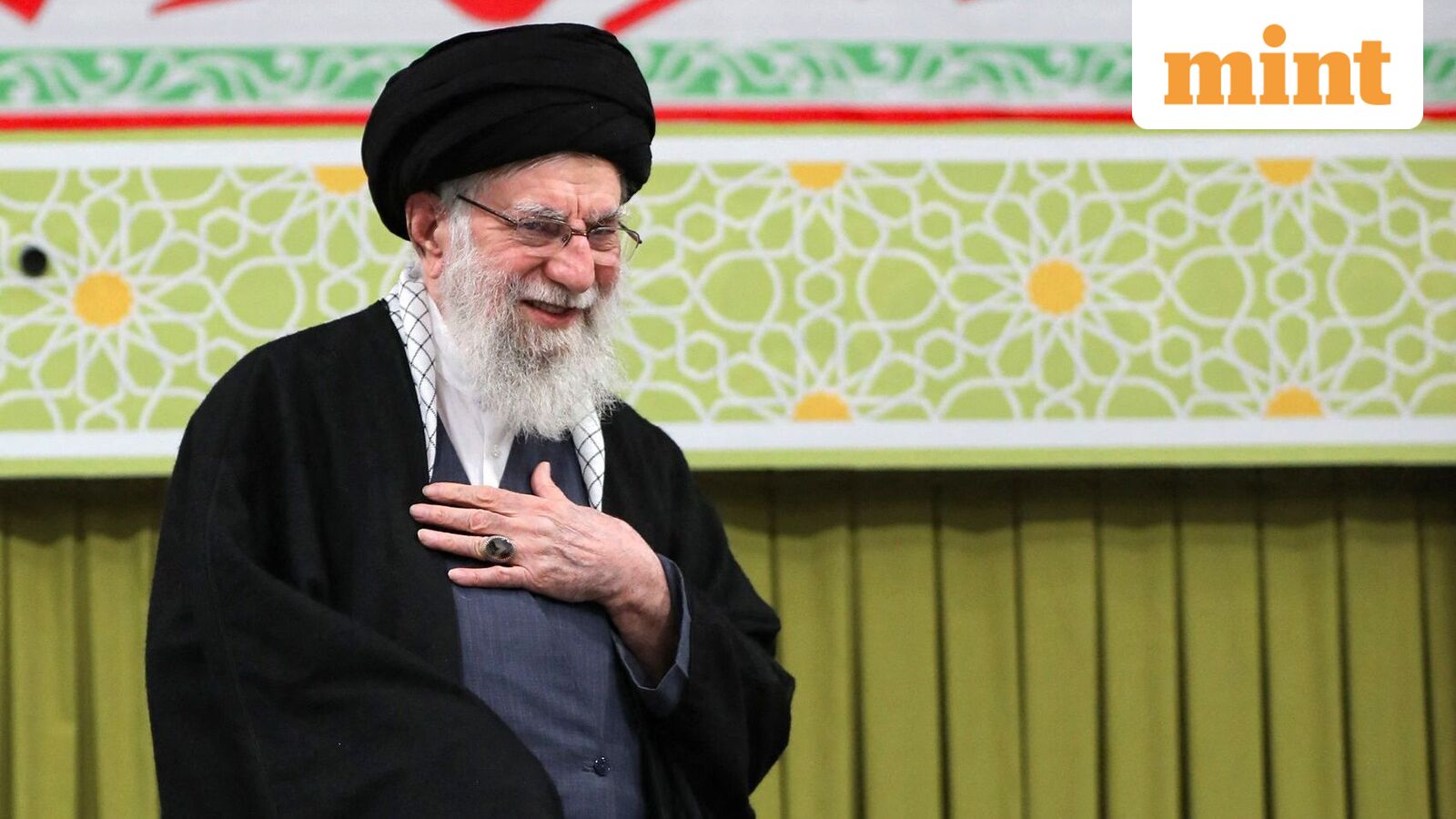
with intensifying US military expansion in the Gulf, Iran’s Supreme Leader Ayatollah Ali Khamenei has reportedly ended his 37-year-old practice by skipping the annual 8 February meeting with air force generals.
Khamenei has joined the annual session every year since taking leadership in 1989 — even through the COVID-19 outbreak, according to a report by Iran International.
The annual meeting commemorates the anniversary of 8 February 1979, when a cohort of air force officers swore loyalty to Ruhollah Khomeini to topple the Pahlavi monarchy. Khomeini was the founder of the Islamic Republic and Khamenei’s predecessor as Supreme Leader.
Through the subsequent four decades, the date became a symbolic ritual, with air force staff and superiors meeting Iran’s clerical elite on that same date each year.
The report noted that this year, instead of Khamenei, the chief of staff of the armed forces, Abdolrahim Mousavi, consulted with the army and air force commanders on Sunday.
The development comes as frictions between Tehran and Washington have intensified, with the US growing its military footprint in the region and anxieties of a possible US military strike hanging over the Islamic Republic.
The absence of Khamenei is being interpreted as the Supreme Leader dodging exposure to potential danger or being busy with issues of national defense.
Iran-US talks
Iran and the United States staged indirect discussions in Oman on Friday, negotiations that seemed to revert to the initial stage on how to handle dialogues over Tehran’s nuclear project. But for the first time, America included its top military officer in the Middle East at the table.
The visibility of US Navy Admiral Brad Cooper, chief of the military’s Central Command, in his formal attire at the talks in Muscat, the Omani capital, acted as a warning that the aircraft carrier USS Abraham Lincoln and further warships were now near the coast of Iran in the Arabian Sea.
President Donald Trump remarked that the United States had “very good” talks on Iran and stated more were scheduled for early next week. But he maintained the pressure, cautioning that if the nation didn’t strike a deal over its nuclear programme, “the consequences are very steep”.
“Iran looks like they want to make a deal very badly — as they should,” Trump told reporters aboard Air Force One.
Ali Larijani, an advisor to Iran’s Supreme Leader Ayatollah Ali Khamenei, will travel to Oman joined by a delegation on Tuesday, the semi-official Tasnim news agency claimed on Monday.
“During this trip, (Larijani) will meet with high-ranking officials of the Sultanate of Oman and discuss the latest regional and international developments and bilateral cooperation at various levels,” Tasnim said.
The date and venue of the next round of talks are yet to be announced.

